






Oil prices surged past $100 last week as flows through the Strait of Hormuz slowed. Tankers hesitated, insurers raised premiums, and traders began adjusting portfolios.
The US asked its allies to secure the passage — a straightforward request in any previous crisis. This time, the response was almost universally negative.
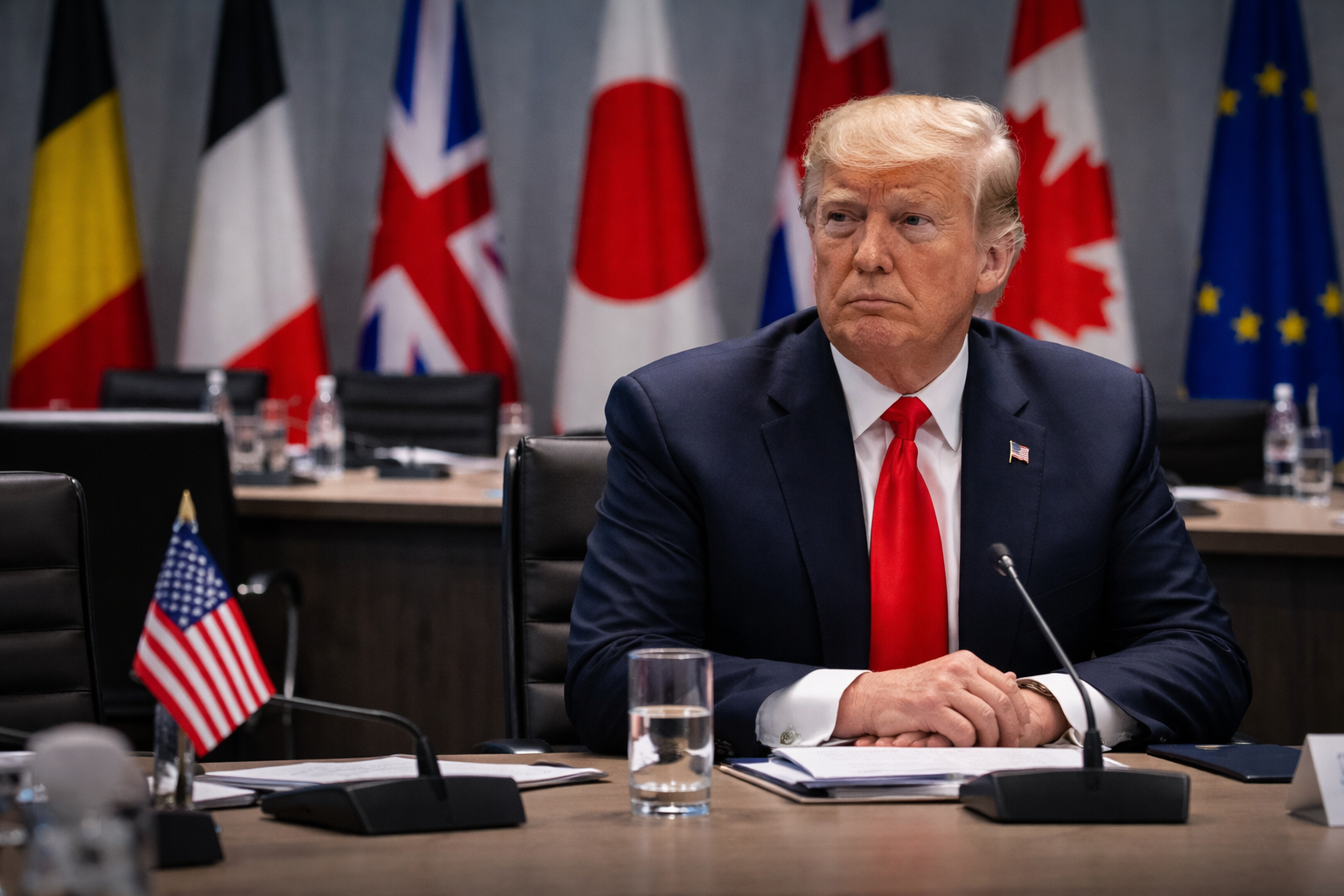
That refusal goes beyond Hormuz. It marks the latest and most visible signal in a longer story — one of a US president increasingly estranged from traditional partners, with consequences stretching from diplomacy to markets.
How protectionism reshaped alliances
When Trump returned to office in 2025, he revived many of the policies that proved controversial during his first term. Tariffs were imposed on rivals and allies alike.
Trade deals were recast around transactional logic: “You benefit, you pay.”
European and Asian partners came under repeated economic pressure, from automotive exports to technology access.
The thinking was simple — more leverage for the US, better domestic outcomes.
The effect on alliances was far less so.
Over time, repeated unilateral actions eroded trust.
Requests from Washington no longer carried automatic weight. Allies began to weigh each appeal against a growing perception of unpredictability and self‑interest.
Now, every negotiation prompts the same question: What is the risk of being dragged into a US‑led action?
The Board of Peace and the illusion of multilateralism
In early 2026, Trump introduced the Board of Peace.
At first glance, it looked like a reconstruction and conflict‑management body. By mid‑year, its remit had expanded globally.
Membership required financial contributions, and decision‑making was centralised in the president’s office.
Traditional multilateral institutions such as the UN were effectively sidelined.
European nations viewed the board with scepticism. Emerging powers joined selectively, motivated more by contracts or access than by shared purpose.
What the board revealed, however, is that US leadership increasingly prioritises control over coordination.
Allies were invited but not empowered. Cooperation became transactional, conditional, and ultimately selective.
The Strait of Hormuz as a test
The conflict with Iran escalated sharply in March 2026. Iran disrupted the Strait of Hormuz, which carries roughly 20% of the global oil supply.
Prices spiked immediately, but the diplomatic fallout was even more telling.
When the US requested naval support from allies to secure the passage, the answer was largely negative.
Germany, France, and the United Kingdom declined. Japan, South Korea, and India avoided direct involvement.
China opened talks with Tehran rather than joining a US‑led effort.
Even NATO partners stayed on the sidelines.
These refusals were calculated. Governments drew a line between defending economic flows and joining a war they had not authorised.
Their risk assessments placed the danger of escalation, regional conflict, and direct retaliation above the cost of supply disruptions.
Doubt over Washington’s objectives compounded the hesitation. In effect, the world allowed a US‑initiated conflict to unfold without coordinated support — even as the stakes reached globally significant levels.


Markets and investors adjust
The market reaction reflects more than lost barrels — traders are now pricing in prolonged disruption.
Shipping insurance premiums have surged.
Tankers have rerouted or anchored in wait, tightening supply further.
Pipelines bypassing Hormuz and alternative sourcing from the Americas and Africa have drawn new attention.
Equities show the split clearly: energy producers are reaping windfalls, while fuel‑intensive sectors such as chemicals and airlines face shrinking margins.
Central banks sit uncomfortably between inflationary pressure and slowing growth.
Supply chain shocks, price volatility, and geopolitical fractures are no longer cushioned by assumed US‑led coordination.
The multiplier effect of allied support — once the key stabiliser — is fading fast.
Why is this moment unique?
Trump’s isolation did not emerge overnight. Protectionist policies created friction; the Board of Peace institutionalised unilateral control over shared initiatives.
The Hormuz crisis now crystallises the consequences.
Allies evaluate US requests through a new filter — legitimacy, risk, and shared interest. Automatic alignment has vanished.
Strategic autonomy is accelerating: Europe is pursuing diplomacy beyond US‑led frameworks; Asian economies hedge rather than align; and China positions itself as a parallel interlocutor.
These are not marginal shifts but the foundations of a more multipolar system — one in which US military power remains unmatched, but coalition capability, the true amplifier of influence, is waning.
This shift also changes how risk is priced.
Markets, investors, and policymakers now treat disruptions as longer‑lasting and more contagious. Energy supply risk and geopolitical risk are increasingly intertwined.
Oil shocks are no longer viewed as temporary anomalies cushioned by coalition presence. Investor strategy must now account for the structural limits of US‑led intervention.
The larger insight
Trump’s approach underscores a fundamental shift in alliance behaviour. Military power remains; coalition‑building does not. Economic interdependence no longer guarantees political alignment.
Even in crises that threaten global trade, allies now weigh legitimacy, exposure, and national interest before acting.
The Strait of Hormuz has become more than a chokepoint — it is a test of the current global order. Empty seats at negotiation tables, refusals to join, and selective engagement reveal a new reality: the US can still act, but it can no longer assume others will follow.
Markets react, investors adjust, and the geopolitical landscape recalibrates in real time.
In practical terms, oil flows will resume eventually. Strategic reserves, alternative routes, and diplomacy will ease the pressure.
But US influence is now conditional. The coalition multiplier — the mechanism that once amplified American power — is eroding.
And its erosion carries consequences for markets, supply chains, and global risk assessment far beyond the Persian Gulf.
https://invezz.com/news/2026/03/17/is-the-strait-of-hormuz-crisis-exposing-the-limits-of-us-power/


