






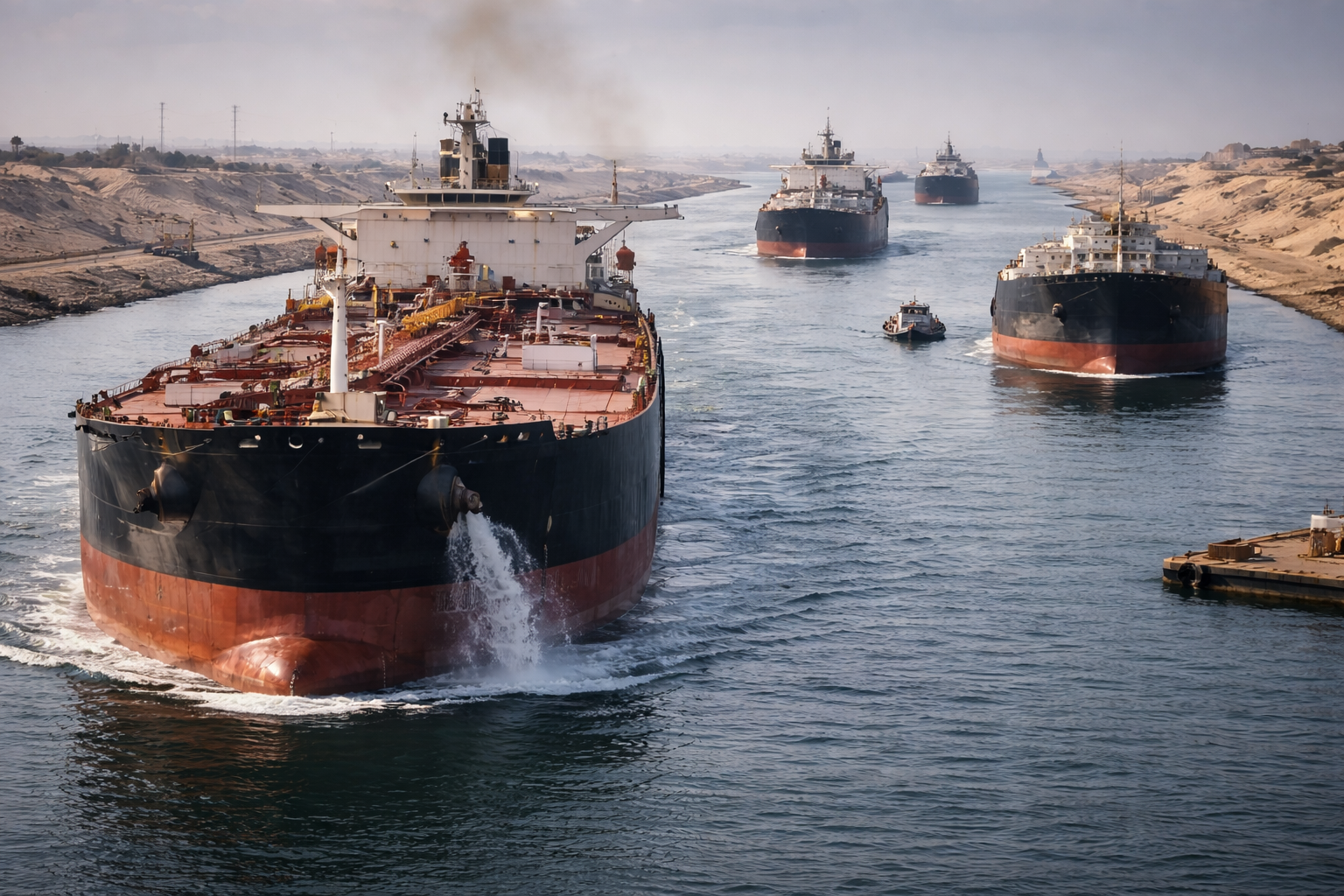
Oil prices surged more than 2% on Tuesday, recovering from earlier losses as fears over constrained supply mounted with the Strait of Hormuz largely closed and key US allies refusing to commit naval assistance for tankers in the crucial shipping lane.
Brent futures climbed more than 4% on Tuesday to over $104 per barrel after settling nearly 3% lower in the previous session.
Meanwhile, West Texas Intermediate crude oil was also 4.6% higher at $96.77 per barrel after sliding more than 5% on Monday.
Despite some vessels passing through the Strait of Hormuz, tensions remained high with no certainty about the future of the critical chokepoint.
Oil continued to remain high with Brent prices above $100 per barrel, which indicates that supply concerns from the Strait of Hormuz well and truly the dominant factor in the oil market.
Geopolitical tensions and global trade disruption
The US-Israeli conflict with Iran, now entering its third week, has severely disrupted traffic through the Strait.
This vital chokepoint, which accounts for roughly 20% of the global trade in oil and liquefied natural gas, is experiencing significant disruption.
The ongoing situation has sparked fears of potential supply shortages, escalating energy expenses, and a resultant surge in inflation.
“The risks remain stark: It only takes one Iranian militia to fire a missile or plant a mine on a passing tanker to reignite the entire situation,” IG market analyst Tony Sycamore said in a note.
US President Donald Trump criticised several American allies on Monday for their refusal to send warships to help escort shipping through the Strait of Hormuz.
The US president accused the Western partners of ingratitude, claiming their decision came after decades of American support.
Immediate market effects and security concerns
Middle East crude benchmarks have surged to unprecedented highs, now making their oil the most costly globally.
Traders attribute this price escalation primarily to a reduced availability of supply for delivery.
Furthermore, prices received additional support after a fire erupted in the Fujairah Oil Industry Zone following a drone attack during Asian morning trading hours.
However, no injuries were reported from the incident.
Iran is reportedly seeking the return of three tankers seized in February from India.
This request is part of broader negotiations aimed at securing the safe transit of Indian-flagged or India-bound ships through the Gulf and the Strait of Hormuz, according to a Reuters report.
In a related development concerning global energy security, the head of the International Energy Agency (IEA) has proposed that member nations consider releasing additional oil from strategic reserves.
This would supplement the 400 million barrels they have already committed to drawing down, a measure intended to help manage rising energy costs.
Analysts at ING Group have forecast that a prolonged disruption would largely result in higher oil prices in the coming weeks.
“With us now in the third week of the conflict and no signs of energy flows resuming. We have therefore had a hard rethink of our scenarios, along with our base case,” Warren Patterson, head of commodities strategy at ING Group said in a report.
Supply disruption forecast scenarios
In ING’s scenario number one (base case), the Strait of Hormuz flows are cut off until the end of March due to intense US-Israel/Iran combat.
Lower-intensity strikes and diplomacy follow, allowing gradual recovery in the second quarter.
Production and flows near-normal only by the third quarter, aided by continued pipeline use to bypass the Strait and ease pressure on naval escorts.
In scenario number two (most optimistic), oil flows are mostly disrupted until the end of March, improving in April, and near-normal by May.
Requires very quick de-escalation and rapid ramp-up of oil/LNG, which may be too optimistic given the time needed for ramp-ups and vessel availability.
In a more aggressive scenario, high-intensity conflict continues into April, followed by a prolonged, lower-grade confrontation with limited diplomacy, ING said.
Continued attacks disrupt energy flows for an extended period.
Limited damage to regional infrastructure also slows the return to normal Persian Gulf supplies, it added.
Under the third scenario, energy flows are projected to remain almost completely halted through the end of May, followed by a slow, gradual recovery occurring between June and August.
“Oil prices spike to record highs under this scenario, and prices will need to remain elevated to balance the market through demand destruction, given the limited solutions on the supply side,” Patterson said.
https://invezz.com/news/2026/03/17/oil-surges-4-ing-warns-flows-may-halt-until-may-in-worst-case/


