









Crypto Journalist
Anas Hassan
Crypto Journalist


Share


A coalition of 125 crypto and fintech organizations delivered a forceful rejection of banking industry efforts to expand the GENIUS Act’s prohibition on stablecoin yields, warning that broader restrictions would eliminate consumer choice while protecting traditional banks from competition.
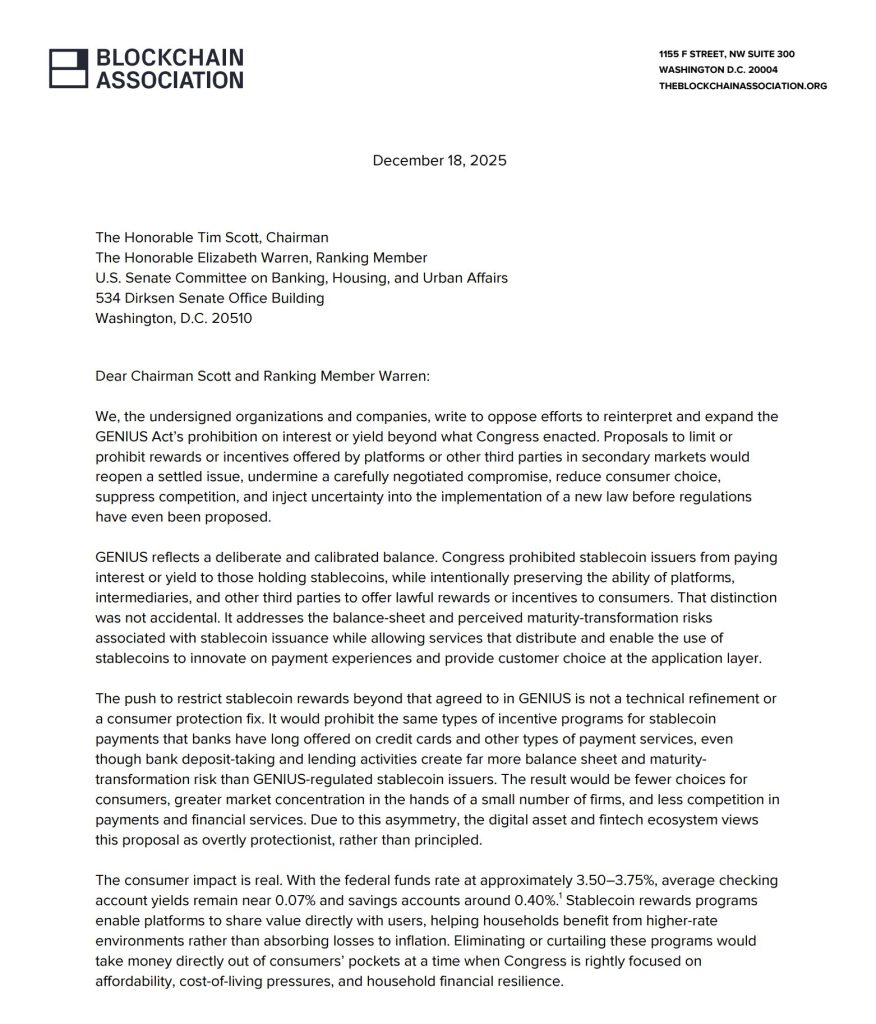
The Blockchain Association led the coalition in a letter to Senate Banking Committee Chairman Tim Scott and Ranking Member Elizabeth Warren on Wednesday, arguing that attempts to reinterpret the law’s yield ban represent protectionism rather than consumer protection.
“The push to restrict stablecoin rewards beyond that agreed to in GENIUS is not a technical refinement or a consumer protection fix,” the letter stated.
“It would prohibit the same types of incentive programs for stablecoin payments that banks have long offered on credit cards and other types of payment services.“
Banks Push Asymmetric Restrictions on Digital Payments
The dispute centers on whether platforms like Coinbase and PayPal can offer rewards to stablecoin users through loyalty programs and third-party incentives.
While the GENIUS Act explicitly prohibits stablecoin issuers from paying interest directly to holders, the coalition maintains that Congress deliberately preserved intermediaries’ ability to offer lawful rewards at the application layer.
Banking groups led by the American Bankers Association have urged Treasury to interpret “interest or yield” broadly enough to capture any economic benefit, including merchant discounts and platform rewards.
The coalition called this expansion “overtly protectionist,” noting that banks face no similar restrictions on credit card rewards despite engaging in riskier balance-sheet activities than GENIUS-regulated stablecoin issuers.
“With the federal funds rate at approximately 3.50–3.75%, average checking account yields remain near 0.07% and savings accounts around 0.40%,” the letter noted.
“Stablecoin rewards programs enable platforms to share value directly with users, helping households benefit from higher-rate environments rather than absorbing losses to inflation.“

Coalition Disputes Bank Deposit Flight Claims
Banking associations have warned that stablecoin yields could trigger deposit outflows resembling the 1980s money market fund crisis, when withdrawals drained $32 billion from banks between 1981 and 1982.
Treasury estimates suggested yield-bearing stablecoins could result in up to $6.6 trillion in deposit flight.
The coalition firmly rejected these projections, citing Charles River Associates’ analysis, which found no evidence of disproportionate deposit outflows from community banks between 2019 and 2025.
The letter questioned how banks can claim deposit constraints while holding roughly $2.9 trillion in reserve balances, earning interest at the Federal Reserve rather than deploying them into loans.
“Opposition to stablecoin rewards reflects protection of incumbent revenue models, not safety-and-soundness concerns,” the coalition wrote, arguing that restricting third-party incentives would prevent stablecoins from competing on a level playing field with legacy payment systems.
Regulatory Certainty and Market Competition at Stake
Beyond consumer choice, the coalition warned that reopening the yield issue before GENIUS implementation begins would undermine the regulatory certainty that defines Congressional frameworks.
“It would signal that even recently enacted compromises remain subject to almost immediate renegotiation, undermining the predictability that markets, consumers, and innovators rely on,” the letter stated.
The groups emphasized that rewards and incentives are standard competitive tools in markets with high network effects and switching costs, including the current payments market.
Stablecoins offer faster settlement, lower transaction costs, and greater transparency compared to traditional rails, but adoption requires incentives to overcome entrenched user habits.
The signatories include industry leaders such as Coinbase, PayPal, Stripe, Ripple, and Kraken, as well as Stand With Crypto chapters across 20 states and investment firms such as Andreessen Horowitz and Paradigm.
“Preserving the balance Congress struck is essential to protecting consumers, fostering competition, and ensuring that market structure legislation can advance on a bipartisan and durable basis,” the coalition concluded, urging lawmakers to reject any effort to expand the yield prohibition beyond issuer payments.
The dispute comes as stablecoin adoption accelerates, with a circulation of $310 billion.

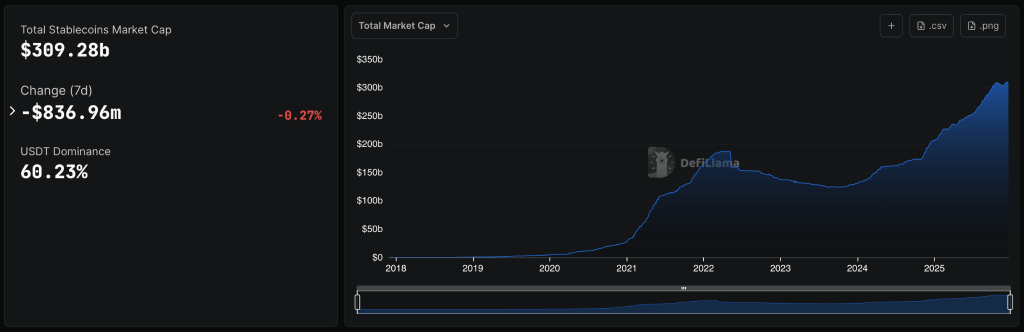
The market could triple to $1 trillion by 2026 as institutions integrate blockchain payments into financial infrastructure.
https://cryptonews.com/news/125-crypto-groups-tell-congress-stablecoin-yield-ban-favors-big-banks/


