






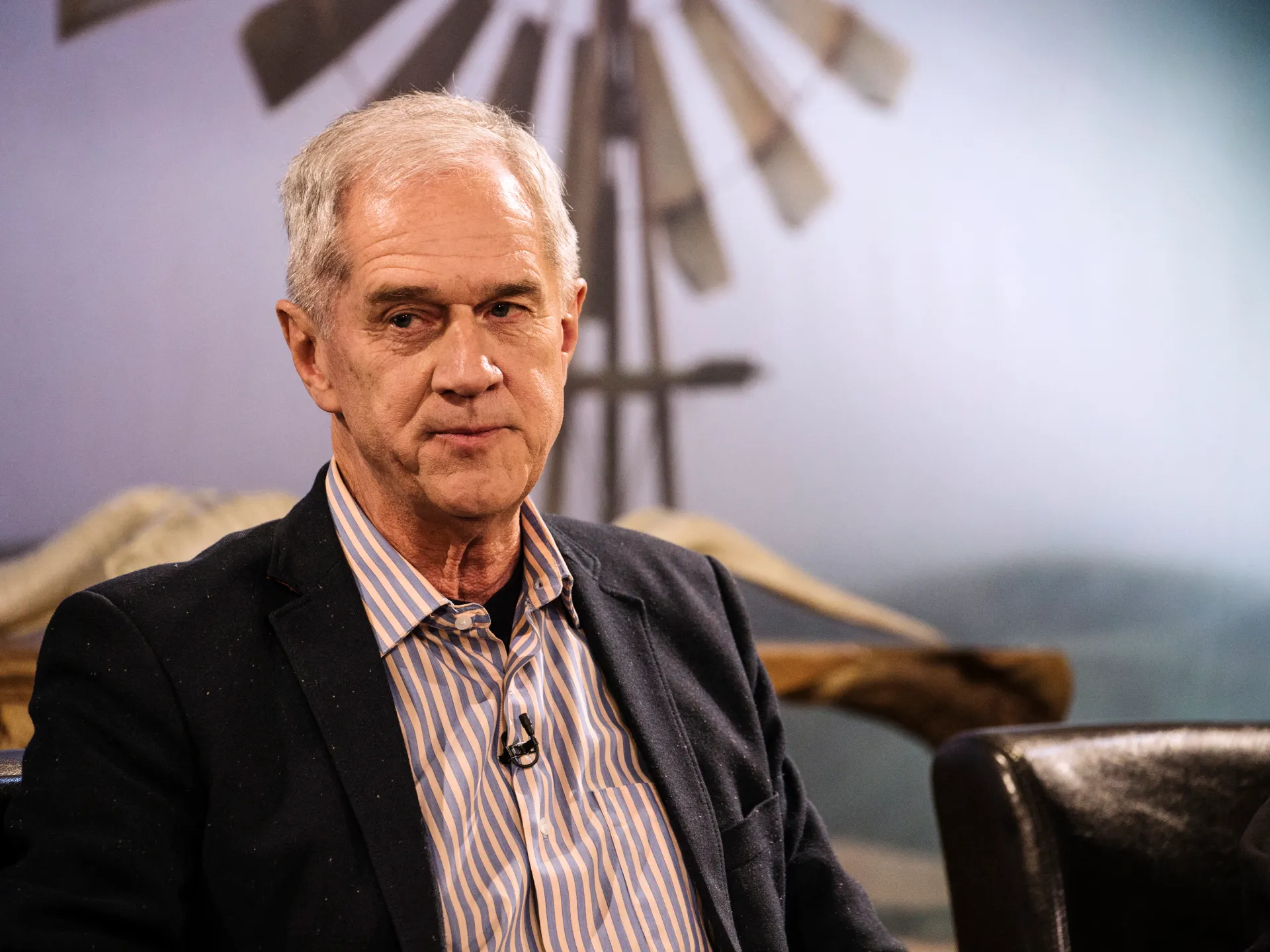
South Africa has appointed Roelf Meyer, a former minister and negotiator in the apartheid government, as the new ambassador to the United States in a move by President Cyril Ramaphosa to mend its strained ties with Washington.
Meyer, 78, replaces Ebrahim Rasool, who was expelled as South Africa’s ambassador to the US in March last year after he accused Donald Trump of leading a global “white supremacist” movement. South Africa has gone without diplomatic representation in Washington, DC, since then.
Recommended Stories
list of 4 itemsend of list
Meyer is a member of the white Afrikaner community, which led the apartheid government in South Africa for decades. Trump has accused the South African government of racial discrimination against Afrikaners.
So who is Meyer and will his appointment help improve ties between the two countries following a turbulent year?
Why have ties between the US and South Africa deteriorated?
The ties between the US and South Africa have deteriorated since Trump came to power in January 2024.
The US president has criticised the affirmative action policies to address inequalities that have continued since the end of the apartheid era. Trump has falsely claimed that there is a “white genocide” in South Africa. His administration has offered expedited citizenship for white Afrikaners “escaping government-sponsored race-based discrimination”.
South Africa’s move to file a case of genocide against US ally Israel at the International Court of Justice (ICJ) has also angered Washington. In January, the US accused South Africa of “cosying up to Iran” after Tehran was invited to participate in a BRICS wargames near South Africa’s coast. Iranian navy vessels were asked to withdraw from the wargames, which also included China and Russia.
South Africa is a founding member of the BRICS grouping that Trump sees as an economic threat.
The BRICS exercise came amid the buildup of US military assets in the Middle East. The US and Israel launched attacks on Iran on February 28, killing more than 2,000 people so far. A ceasefire was signed last week; diplomatic efforts are under way to end the war.
Trump has also frozen foreign assistance to South Africa over a land law that Trump falsely claims targets the white minority. Billionaire Elon Musk, a close aide of Trump, has also accused the South African government of pursuing racially discriminatory policies, biased against white citizens.
Musk has railed against a South African law that requires that at least 30 percent of a company’s ownership or economic involvement include Black South Africans in order to be eligible to operate.
“The South African laws are literally super racist, plain and simple. It’s not complicated: imagine if the law was called “White Empowerment”, instead of “Black Empowerment”! People would have a seizure,” he posted on his X platform on Wednesday.
“South Africa now has more anti-White laws than Apartheid had anti-Black laws. Think about that for a second …”
The law is part of the government’s affirmative action to help the Black majority, who remain poor. White Afrikaners, who form some 8 percent of the population, own more than 70 percent of the country’s land.
Why was Roelf Meyer appointed as the US ambassador?
In a statement on Wednesday, the South African president dubbed Meyer as “a very loyal and patriotic South African, who has distinguished himself in a number of areas where he has worked”.
“I found him to be more than qualified to be able to work in the United States, recalibrate our relationship with the United States and interface with a number of stakeholders,” Ramaphosa said.
“As it is now, he’s been interfacing with a number of people in the United States, both in Capitol Hill and in the various departments of the United States.”
In an interview last July, Meyer said South Africa needed to work to mend its ties with the US. He added that the relationship with the US has been ignored over the years.
He has criticised Afrikaner groups, which have promoted the idea that white farmers are racially targeted in crimes. Government figures, however, show that South Africa’s high murder rate affects all races.
Meyer has said that lobbying groups were “not speaking on behalf of me as an Afrikaner, let alone the rest of the nation”. He accused them of “distorting the picture”.
“Him being a white person of Afrikaner descent in the United States will push back Donald Trump’s continual accusation of South Africa engaging in a white genocide, said Thembisa Fakude, a South Africa-based researcher at the Al Jazeera Centre for Studies.


When Ramaphosa visited the White House in May last year, his entourage included two white South African golfers in an effort to assuage Trump’s concerns about the alleged persecution of white people.
However, Fakude, the analyst, says that South Africans are not interested in the political end to mend “artificial” accusations.
“I don’t think South Africans are really interested in him [Meyer] dispelling these accusations. Nobody talks about this in South Africa. It’s ridiculous, and most Americans, of course, have ridiculed it,” Fakude said.
South Africans are rather, looking at investment opportunities and how to grow the economy and create employment.
“We need to see investment in this country from the United States. We need to see opportunities for employment, and that’s what is supposed to be the priority, and I think that’s what he is going to prioritise,” Fakude said.
South African-US bilateral trade stands at $26bn, and Washington is Pretoria’s second-biggest trading partner after China.
Who is Meyer?
Meyer leads a global consultancy, the In Transformation Initiative, where he has used his negotiating skills globally, engaging in peace initiatives in countries around the world and in negotiating complex processes in South Africa.
In this regard, he has participated in peace processes in countries including Northern Ireland, Sri Lanka, Rwanda, Burundi, Kosovo and Bolivia. He was also involved in similar efforts in the Basque region and the Middle East.
Meyer, a lawyer by training, was the chief negotiator representing the country’s white minority government during the talks, which led to the end of the apartheid government in the early 1990s.
Ramaphosa, a leader of the African National Congress (ANC) that led the struggle against the apartheid system, sat opposite Meyer, representing the Black majority.
Meyer is a former member of the National Party, which introduced apartheid in 1948. He held several key positions within the white minority government, including deputy minister of law and order and later minister of defence.
After multiracial democracy was established in 1994, he was appointed constitutional development minister under President Nelson Mandela.
In 1997, Meyer co-founded the centre-left, social-democratic party, the United Democratic Movement and was its deputy president until his resignation from active politics in 2000. He joined the African National Congress in 2006.
Meyer was born as Roelof Petrus (Roelf) in Port Elizabeth, located on the southeastern coast of Eastern Cape province, in 1947.
Meyer’s appointment has not escaped criticism, with South Africa’s opposition party, the Economic Freedom Fighters (EFF), saying the government’s move reflects a “dangerous” willingness by government to appease US President Donald Trump’s “white supremacist whims”.
The EFF said Meyer’s involvement in South Africa’s transition process in the 1990s could not be used to “sanitise or erase” his earlier role in upholding apartheid.
“The Department of Law and Order was directly responsible for the police machinery that enforced apartheid laws, crushed political opposition, and maintained a regime built on fear and violence,” a statement from the EFF said.
Other critics say Meyer’s age, at 78, closes a door for young, talented diplomats to represent South Africa internationally.
“Age is a problem, not only in South Africa, but around the world, that you take people that are in advanced age and you give them these responsibilities and ignore people that are younger than 80 to take this,” said Fakude.
“When I say young people, I’m talking about people of 50 and above who are not given a chance to participate.”
https://www.aljazeera.com/news/2026/4/16/who-is-roelf-meyer-south-africas-new-ambassador-to-the-us-2?traffic_source=rss


