







Arun alleged that a specific group of “agenda movers” is deliberately demonising Hindu temples to cultivate a polarised environment and this time, social media is the primary engine of that hostility.
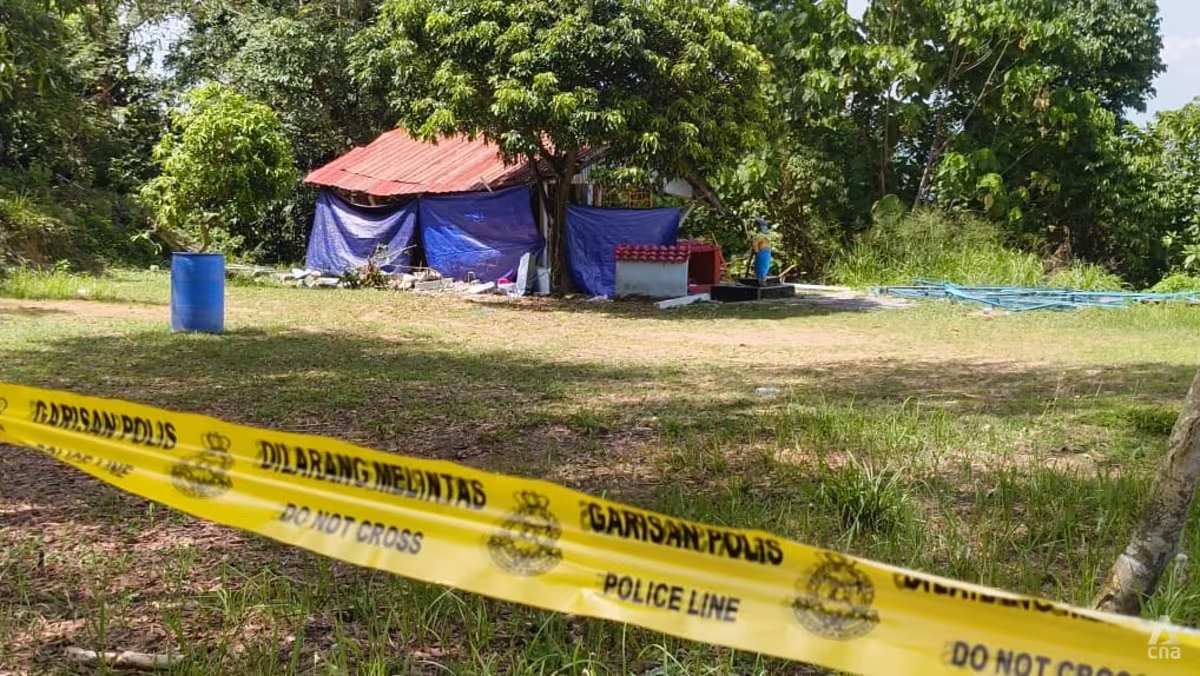
The backhoe used for the demolition of the Sri Uchimalai Muniswaran Temple was originally purchased for RM45,000 (US$11,555) following fundraising online by a group called Tanah Malaya.
On its webpage, the group said they managed to fundraise more than RM131,000 in a month through the selling of merchandise, including t-shirts, fridge magnets and keychains.
“Even if, in this world, they want to use this backhoe as evidence and a witness to punish us – God willing, through the blessing of every cent you contributed, this backhoe will instead stand as witness and proof of our steadfastness in defending justice and preventing evil for us in the hereafter!” it said on its webpage.
The group has almost 30,000 followers on its Facebook page which features frequent aerial “reports” using drones that identify specific Hindu temples which they claim are illegal.
While some have also questioned the presence of Chinese shrines and roadside altars, most of the attention has been focused on Hindu temples and shrines.
These include temples that are located in many of the country’s hospitals, some way before Malaysia’s independence.
Many of those involved in these groups insist their intent is strictly legal, not religious—arguing that they are targeting “illegal structures” regardless of their purpose, rather than the communities that worship within them.
On the forefront of the battle against “illegal temples” is Tamim Dahri who calls himself a “land activist”. He was one of the four people involved in the backhoe incident in Rawang.
CNA has reached out to Tamim, who has almost 120,000 Facebook followers, for comment.
James Chin, a professor of Asian studies from the University of Tasmania, said that the issue was being manufactured by two types of right-wing elements – Islamic non-government organisations and the members of youth wings of political parties.
“They are using this issue to rally the ground. This is an issue they know they can win, because no Muslim will support the building of temples, especially if you frame it as an issue of legality. But it goes back to identity politics,” he told CNA.
Among the political figures who have defended the actions of Tamim is the information chief of opposition Parti Islam Se-Malaysia (PAS) Ahmad Fadhli Shaari, who said that the activist’s actions were necessary to uphold the “rule of law”.
Fadhli also challenged his own Perikatan Nasional (PN) ally from Parti Gerakan Rakyat Malaysia, questioning if he would remain as patient if his own private land were “encroached” upon by illegal structures.
Gerakan deputy president Oh Tong Keong had urged the government to take legal action against the four individuals involved in the incident involving the backhoe, saying that their actions were deeply offensive.
While it is a multiracial party, the majority of Gerakan members are ethnic Chinese.
https://www.channelnewsasia.com/asia/malaysia-temple-land-disputes-race-religion-politics-anwar-5954531


