


Fallout from President Trump’s war with Iran has made it harder for foreign leaders to stick to their time-honored playbook for currying favor with him. They are increasingly finding they must choose between appeasing the president or their own voters, and they aren’t picking Mr. Trump.
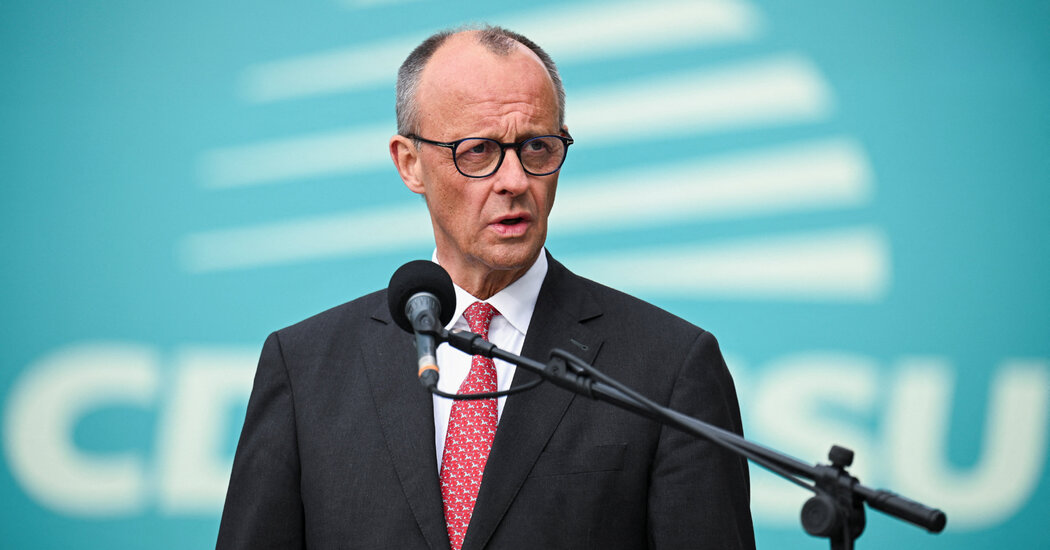
The latest example is Friedrich Merz, the chancellor of Germany, who drew Mr. Trump’s ire by saying what he really thinks, out loud, about the strategic shortcomings of the American war plan.
In nearly a year in office, Mr. Merz has invested heavily in a friendship with Mr. Trump. He has visited the White House repeatedly, including in the early days after the Iran war began. He flatters Mr. Trump on camera and texts him often. Mr. Merz has done nearly everything the president asked on Iran, including allowing America full use of military bases in Germany to launch attacks, and committing minesweepers to patrol the Strait of Hormuz after the war formally ends.
But the war has battered the German economy and cost Mr. Merz politically. German drivers and manufacturers have been shocked by fuel-price spikes caused by the blockage of the strait. The government has slashed its forecasts for economic growth this year. Since the war began, Mr. Merz’s party, the center-right Christian Democrats, have fallen from first place in national polls and now trail the far-right Alternative for Germany, or AfD, by a few percentage points.
Those pressures seemed to overwhelm the chancellor this week. Mr. Merz, who has a penchant for going off-script in less formal speaking sessions, told a group of German students that the Iranian government had “humiliated” the entire American nation with its slow-walk approach to negotiating an end to the war.
“The Americans obviously have no strategy,” Mr. Merz said at a high school assembly in western Germany on Monday, “and the problem with such conflicts is always that you don’t just have to go in, you also have to get out again. We saw that very painfully in Afghanistan for 20 years. We saw that in Iraq. So this situation is, as I said, at least ill-considered, and I do not see at the moment what strategic exit the Americans are choosing now.”
Mr. Trump, who has a penchant for attacking his allies when they criticize him publicly, was quick to respond. He accused Mr. Merz, who has repeatedly said Iran can never be allowed to build a nuclear weapon, of supporting Tehran’s nuclear ambitions.
“The Chancellor of Germany, Friedrich Merz, thinks it’s OK for Iran to have a Nuclear Weapon. He doesn’t know what he’s talking about!” Mr. Trump wrote in a social media post. For good measure, he added: “No wonder Germany is doing so poorly, both Economically, and otherwise!”
The exchange stirred a small media tizzy in Germany, with political reporters asking whether Mr. Merz had squandered his hard-won good will with the president.
It also revealed just how thin Europe’s patience has worn, for a war its leaders did not choose and were not consulted on.
Nearly every major European leader has, at some point since the war began, taken steps to criticize it, or Mr. Trump, or both.
Keir Starmer, the British prime minister, said this month he was “fed up” with Mr. Trump, complaining that the war had driven up energy costs for the British public. He has also feuded with Mr. Trump over restrictions on American usage of British bases for the war.
Giorgia Meloni, the Italian prime minister, riled the president by wading into his verbal battle with Pope Leo XIV over the war. Ms. Meloni, long viewed as a key ally of Mr. Trump in Europe, sided with the pope. She had realized, analysts said, that her association with Mr. Trump had become a liability in Italy, where the president is highly unpopular.
No European leader has made more political advantage out of clashing with Mr. Trump over Iran than Pedro Sánchez, the prime minister of Spain. His early and vocal opposition to the war, including refusal to allow American use of Spanish bases, angered the president but buoyed Mr. Sánchez’s sagging political fortunes at home.
Until this week, Mr. Merz had offered some measured critiques of the war but still won praise from Americans. He seemed to be in the president’s good graces. In the Oval Office in early March, he sat quietly by as Mr. Trump criticized Mr. Starmer and Mr. Sánchez.
Privately, though, German officials were skeptical of Mr. Trump’s war plan from the start, even when he announced a cease-fire with Iran. Mr. Merz and his cabinet braced for lasting economic fallout, approving some temporary relief for drivers stung by high gasoline prices.
Still, the chancellor is far from breaking with Mr. Trump, even if he is increasingly willing to criticize him.
“The personal relationship between the American president and me is, from my perspective, still good,” Mr. Merz told reporters on Wednesday.
Christopher F. Schuetze contributed from Berlin.
https://www.nytimes.com/2026/04/29/world/europe/trump-merz-iran.html
