






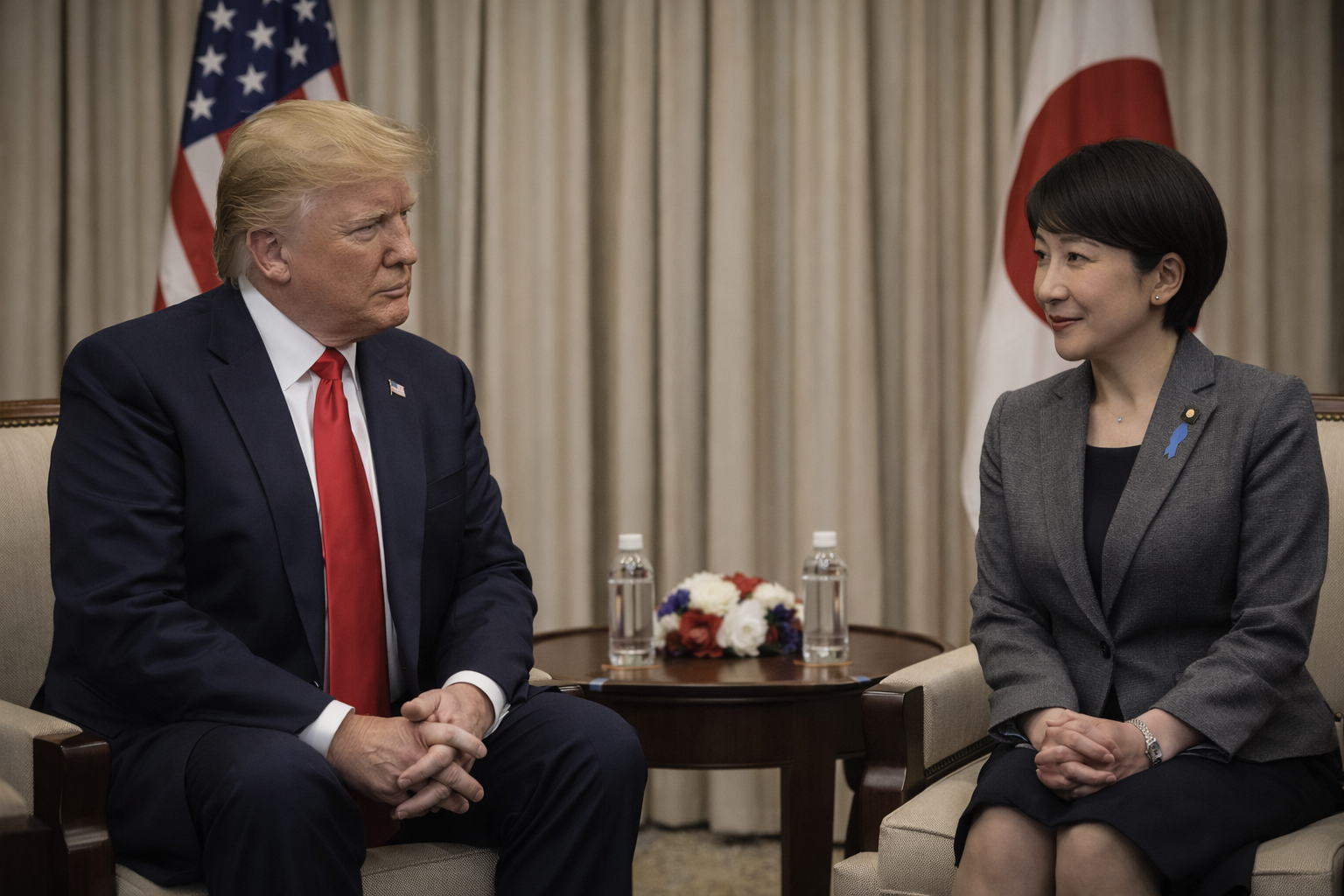
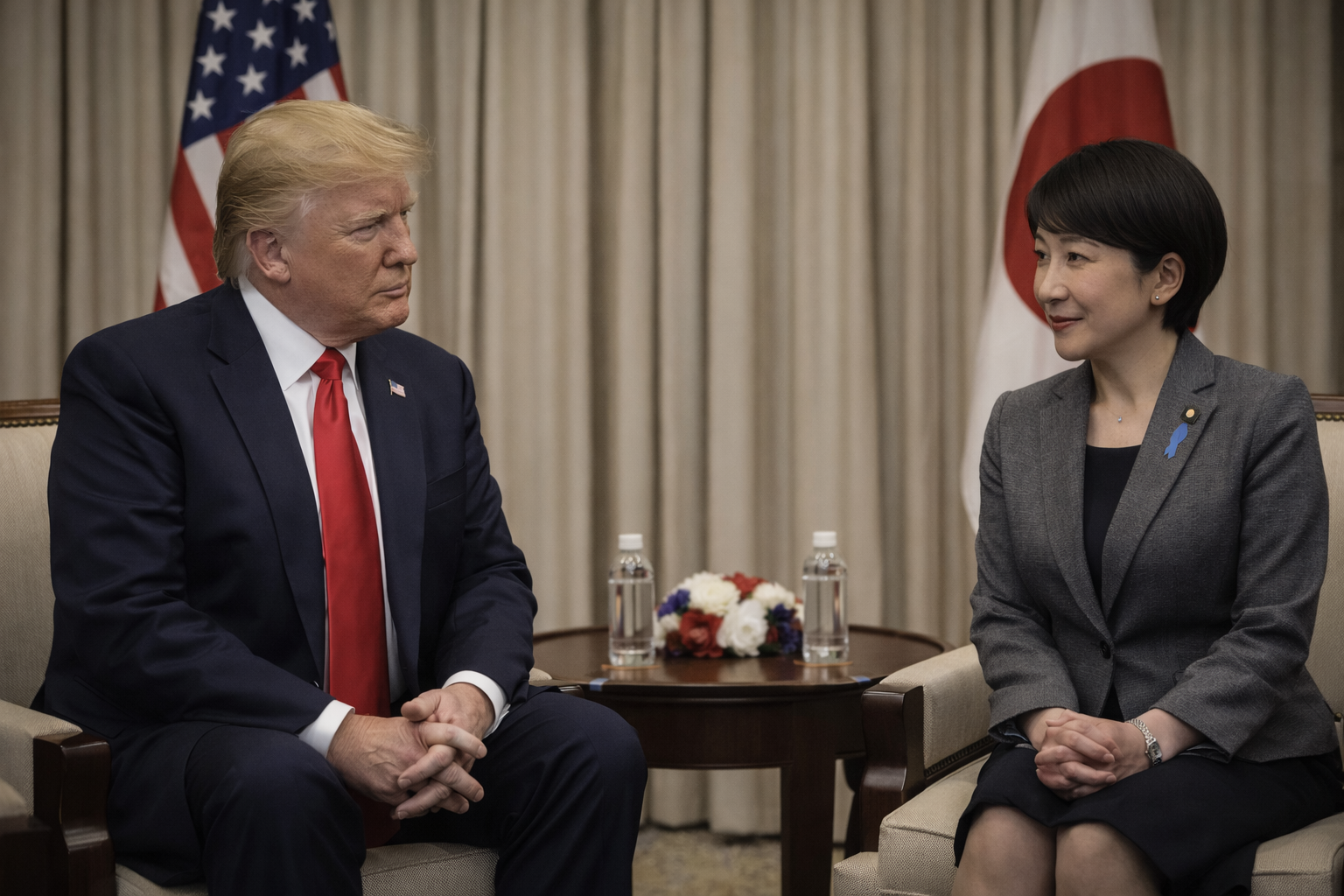

US President Donald Trump on Tuesday unveiled the first projects under Japan’s $550 billion investment commitment to the United States.
Trump is putting energy and critical minerals at the front of a deal he has framed as tariff-driven economic statecraft.
In a social media post, Trump said the opening tranche will back an Ohio gas-fired power plant, a critical minerals site in Georgia and a liquefied natural gas facility in Texas, early signals of where Washington wants Japanese capital to land.
The announcement comes weeks before Trump is due to meet Japan’s Prime Minister Sanae Takaichi on March 19.
US-Japan trade deal: First tranche targets strategic industries
Trump’s list was short but telling.
He highlighted projects spanning “Oil & Gas” in Texas, “Power Generation” in Ohio and “Critical Minerals” in Georgia, arguing the scale “could not be done” without tariffs and presenting the investments as a way to boost exports and reduce reliance on foreign mineral supply.
Trump announced three projects to be built in Texas, Ohio and Georgia, aligning the kickoff with sectors that are central to US energy security and industrial policy.
The projects sit inside a broader US-Japan trade and investment framework built to channel Japanese capital into areas Washington labels strategic: energy, supply chains and materials that underpin advanced manufacturing and defense.
Japan’s Foreign Ministry said a bilateral “consultation panel” held its first meeting online in December to exchange views on potential projects and confirm ongoing cooperation, with representatives from US Commerce and Energy and Japan’s foreign, trade and finance ministries participating.
That meeting launched the formal selection process: the consultation panel feeds input to an investment committee led by US Commerce Secretary Howard Lutnick, and Trump makes the final project decisions based on that committee’s recommendations.
What remains unclear is the financing detail.
Trump’s post did not specify how the projects would be financed or which companies would be involved.
Tariffs and the wider strategic agenda
The timing is inseparable from Trump’s tariff leverage.
Japan’s Foreign Ministry-linked account of the process says the investment pledge is tied to tariff levels.
Trump raised tariffs on most Japanese goods to 25% earlier in the year, then scaled them back to 15% after Japan agreed to boost investment through the $550 billion mechanism.
Japan could face higher tariffs again if it fails to fund a chosen project within 45 business days.
That creates a built-in enforcement clock, one that keeps Tokyo under pressure to show progress and gives Washington a lever if implementation slows.
It also explains why Trump is spotlighting projects that fit cleanly into his domestic political narrative: jobs, energy buildout and supply-chain independence.
On the Japanese side, the architecture points to a preference for projects with clearer cash flows and risk controls.
Japan’s Foreign Ministry said government-backed Japan Bank for International Cooperation (JBIC) and Nippon Export and Investment Insurance (NEXI) attended the December panel meeting and are expected to be key institutions providing equity, loans and loan guarantees.
That structure suggests Japan wants investments that look more like financeable infrastructure, assets that can produce stable returns, rather than open-ended industrial bets.
https://invezz.com/news/2026/02/17/trump-kicks-off-550b-japan-fund-with-us-energy-projects/


