







NEWYou can now listen to Fox News articles!
A set of photos taken over 70 years ago may hold the key to new revelations surrounding the existence of unidentified aerial phenomena (UAPs) – or UFOs – popping up near nuclear testing sites.
Scientists at California’s Palomar Observatory have recently discovered several instances of transient, star-like flashes in photographs from the 1950s, according to a research paper published in Nature’s Scientific Reports on Oct. 20, 2025.
“We speculate that some transients could potentially be UAP in Earth orbit that, if descending into the atmosphere, might provide the stimulus for some UAP sightings,” the paper states.
Researchers reportedly looked at digitized astronomical plates – pieces of glass that capture images of the night sky – from an initial survey conducted by the observatory from 1949 to 1957. Notably, the images were created prior to the launch of the first artificial satellite in October 1957, the report claims.
UFO TRACKER MAPS EERIE CLUSTERS OF UNIDENTIFIED OBJECTS LURKING BENEATH US SHORELINES: ‘WE’RE BEING LIED TO’

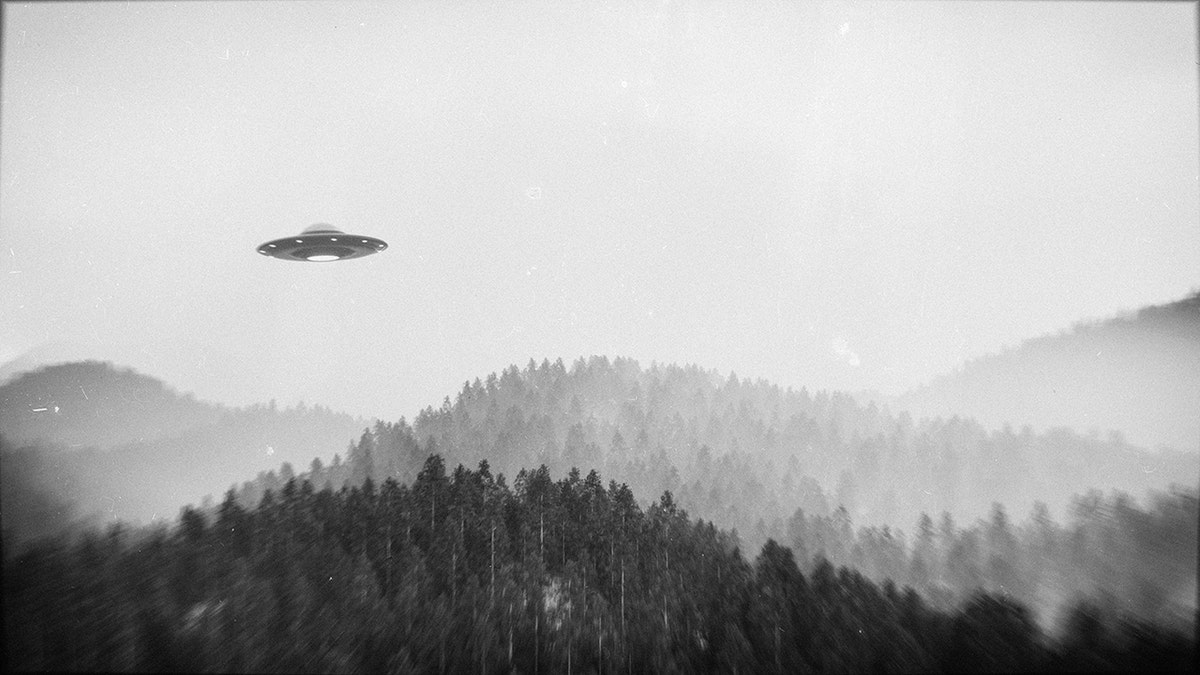
According to a recent research paper published by scientists at California’s Palomar Observatory, several instances of transient, star-like flashes were recorded in photographs from the 1950s. (iStock)
Astronomer Beatriz Villarroel from the Nordic Institute for Theoretical Physics revealed in the study that she and her research team used automated technology to identify 107,875 transient lights within the 12-year span of the images being taken.
While many of the objects, which often look as though they are stars in the night sky, were determined to be errors or markings on the plates, thousands of sightings reportedly correspond with various nuclear tests and UFO sightings.
The study notes that multiple bright transients were seen lighting up the night sky within the same two weeks when witnesses reported numerous UAPs above Washington, D.C., from July 19 to July 27, 1952.
HOUSE WITNESS TESTIFIES UFOS NEARLY ACTIVATED RUSSIAN NUCLEAR MISSILES DURING 1982 INCIDENT

The photographs show a connection between star-like transients being spotted near nuclear weapons activity and previous UAP sightings, according to the report. (iStock)
“We speculate that some transients could potentially be UAP in Earth orbit that, if descending into the atmosphere, might provide the stimulus for some UAP sightings,” the paper added.
Researchers also reportedly observed transients hovering over at least 124 above-ground nuclear testing sites that were active from 1951 until the launch of Sputnik in 1957, leading them to believe the phenomenon is a result of “high energy particles” within the atmosphere.
However, the study indicates that transients were 45% more likely to be spotted within 24 hours of nuclear testing, with “significantly more” UAP sightings being recorded within the test windows.
UFO MANIA GRIPS SMALL TOWN AFTER MYSTERIOUS GLOWING OBJECT SIGHTING GOES VIRAL

The report found that there are “small but statistically-significant associations” between transient sightings and nuclear testing events. (iStock)
The final sighting over a nuclear testing site took place on March 17, 1956, just one day after the “Joe 21” test conducted by Soviet Russia, according to The New York Post.
The study’s authors did not immediately respond to Fox News Digital’s request for comment.
The paper concludes with the researchers determining that instances of star-like transient objects correlating with nuclear weapons testing and eyewitness UAP accounts show “small but statistically-significant associations.”
CLICK HERE TO DOWNLOAD THE FOX NEWS APP
“Our findings provide additional empirical support for the validity of the UAP phenomenon and its potential connection to nuclear weapons activity, contributing data beyond eyewitness reports,” the scientists wrote.
https://www.foxnews.com/us/ufo-clues-emerge-decades-old-images-showing-strange-bursts-over-nuclear-testing-sites-report