Venezuela’s deposed leader Nicolas Maduro has arrived at a New York court to face drug charges while the United Nations is set to debate the legality of US President Donald Trump’s extraordinary operation to capture him.
US Special Forces swooped into Caracas on helicopters at the weekend to smash through Maduro’s security cordon and nab him at the door of a safe room.
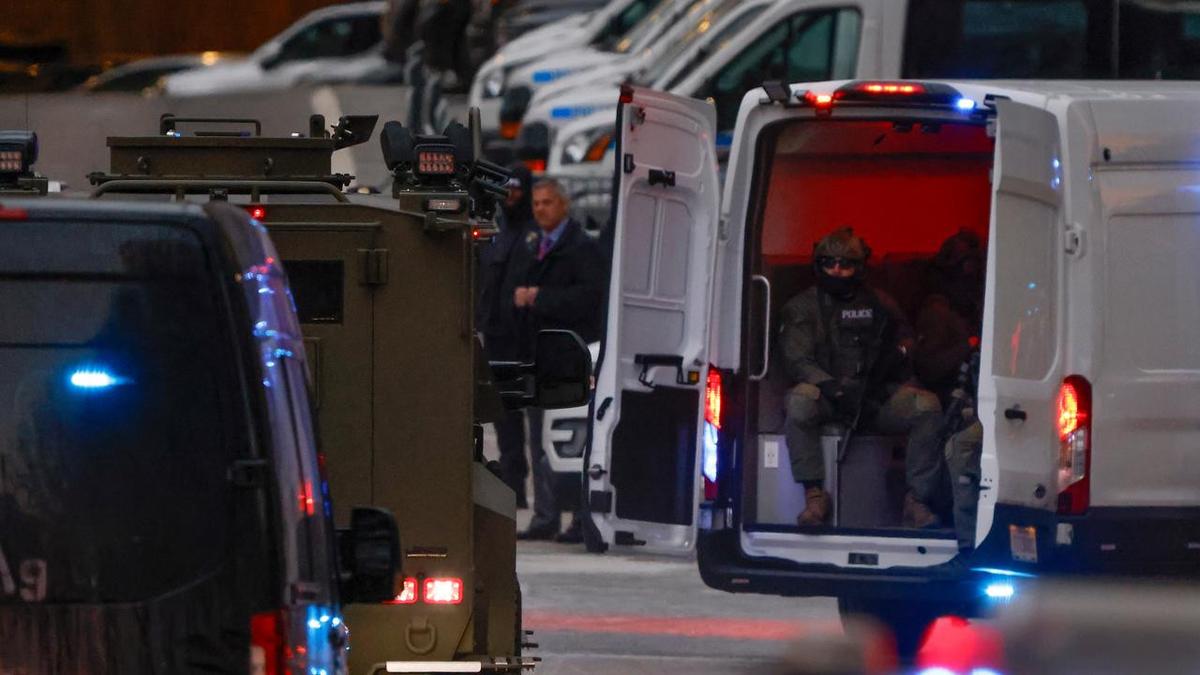
Maduro and his also-captured wife Cilia Flores were taken by armed guards soon after 7am on Monday from a Brooklyn detention centre to a helicopter that whisked them to the Manhattan federal court where they faced a midday hearing.
Maduro is accused of overseeing a cocaine-trafficking network that partnered with violent groups including Mexico’s Sinaloa and Zetas cartels, Colombian FARC rebels and Venezuela’s Tren de Aragua gang.
Maduro, 63, has long denied the allegations, saying they were a mask for imperialist designs on Venezuela’s oil.
The Maduros were transported under armed guard early on Monday from the Brooklyn jail where they have been detained to a Manhattan courthouse.
As a criminal defendant in the US legal system, Maduro will have the same rights as any other person accused of a crime, including the right to a trial by a jury of regular New Yorkers.
Maduro’s lawyers are expected to contest the legality of his arrest, arguing that he is immune from prosecution as a sovereign head of state.
Panamanian strongman Manuel Noriega unsuccessfully tried the same defence after the US captured him in a similar military invasion in 1990.
But the US does not recognise Maduro as Venezuela’s legitimate head of state – particularly after a much-disputed 2024 re-election.
Senior officials from Maduro’s 13-year-old government remain in charge of the South American country of 30 million people, first spitting defiance then pivoting to possible co-operation with Trump’s administration.
After first denouncing Maduro’s capture as a colonial oil-grab and “kidnapping”, Venezuela’s acting president Delcy Rodriguez changed her tune on Sunday, saying it was a priority to have respectful relations with the United States government.
“We invite the US government to work together on an agenda of co-operation,” Rodriguez said.
“President Donald Trump, our peoples and our region deserve peace and dialogue, not war.”
The daughter of a leftist guerrilla, the 56-year-old Rodriguez has been a fiery member of the ruling “Chavista” movement – named for late leader Hugo Chavez – earning her praise as a “tigress” from Maduro.
But she is also known as a pragmatist with good connections in the private sector and a belief in economic orthodoxy.
Many Venezuelans know her for the luxury clothes she likes to wear.
Amid global consternation at Trump’s seizure of a foreign head of state – albeit an unpopular one – the UN Security Council was due to debate its legality and implications.
Russia, China and allies of Venezuela have condemned the US raid.
Venezuela’s staunchest backer Cuba, long rumoured to be in charge of Maduro’s security, said 32 of its military and intelligence personnel died during the US operation.
US allies, most of whom did not recognise Maduro as president due to vote-rigging allegations, have been more muted, stressing the need for dialogue and adherence to law.
“Judging by the reactions from European leaders to date, I suspect that US allies will equivocate exquisitely in the Security Council,” International Crisis Group analyst Richard Gowan said.
Switzerland froze assets held by Maduro and associates.
Trump has additionally justified Maduro’s capture as a response to an influx of Venezuelan immigrants – one in five left during the country’s economic collapse – and the nationalisation of US oil interests decades ago.
“We’re taking back what they stole,” Trump said on Sunday, adding that US oil companies will return to Venezuela.
Venezuela has the world’s largest reserves – about 303 billion barrels, mostly heavy oil in the Orinoco region.
But the sector has long been in decline from mismanagement, under-investment and US sanctions, averaging 1.1 million bpd output last year, a third of its heyday in the 1970s.
Trump’s raid has created a political storm in the US, with opposition Democrats saying they were misled.
US Secretary of State Marco Rubio was due to brief top lawmakers later on Monday.
While a handful of conservative figures have criticised the Venezuela operation as a betrayal of Trump’s “America First” pledge to avoid foreign entanglements, many supporters have largely praised it as a swift, painless win.
with AP
https://thewest.com.au/news/conflict/maduro-to-face-us-court-venezuela-govt-softens-stance-c-21217799