






Washington — A federal judge on Friday ordered the Virginia man suspected of leaving two pipe bombs outside the headquarters of the Republican and Democratic National Committees in 2021 to remain detained in the run-up to a criminal trial.
U.S. Magistrate Judge Matthew Sharbaugh granted the Justice Department’s request to keep the suspect, Brian Cole, in custody while he awaits a trial on two criminal counts. He has not yet entered a plea to the charges, which stem from the alleged planting of two improvised explosive devices near the Washington, D.C., headquarters of the RNC and DNC on Jan. 5, 2021, the night before the Jan. 6 Capitol riot.
Sharbaugh wrote in a 19-page opinion that “the government carried its ultimate burden to demonstrate that there are no conditions of release the Court could impose to reasonably assure the safety of the community.”
The decision came after Cole appeared in court Tuesday for a hearing on whether he should remain detained pending trial.
Justice Department lawyers had argued in a legal filing that Cole poses an “intolerable risk” to the community and urged the court to keep him in custody “considering the extreme and profoundly serious nature of his crimes, the overwhelming evidence of his guilt, the years he has spent deceiving those around him to avoid accountability, and the intolerable risk that he will again resort to violence to express his frustration with the world around him.”
But in arguing for his release, Cole’s lawyers said he has lived “without incident” in the nearly five years since the bombs were planted and has no criminal history.
His legal team wrote in a filing ahead of the hearing that Cole had been diagnosed with Autism Spectrum Disorder, Level 1, and obsessive compulsive disorder. Level 1 is the least severe form on the spectrum, according to the Diagnostic and Statistical Manual of Mental Disorders, Fifth Edition.
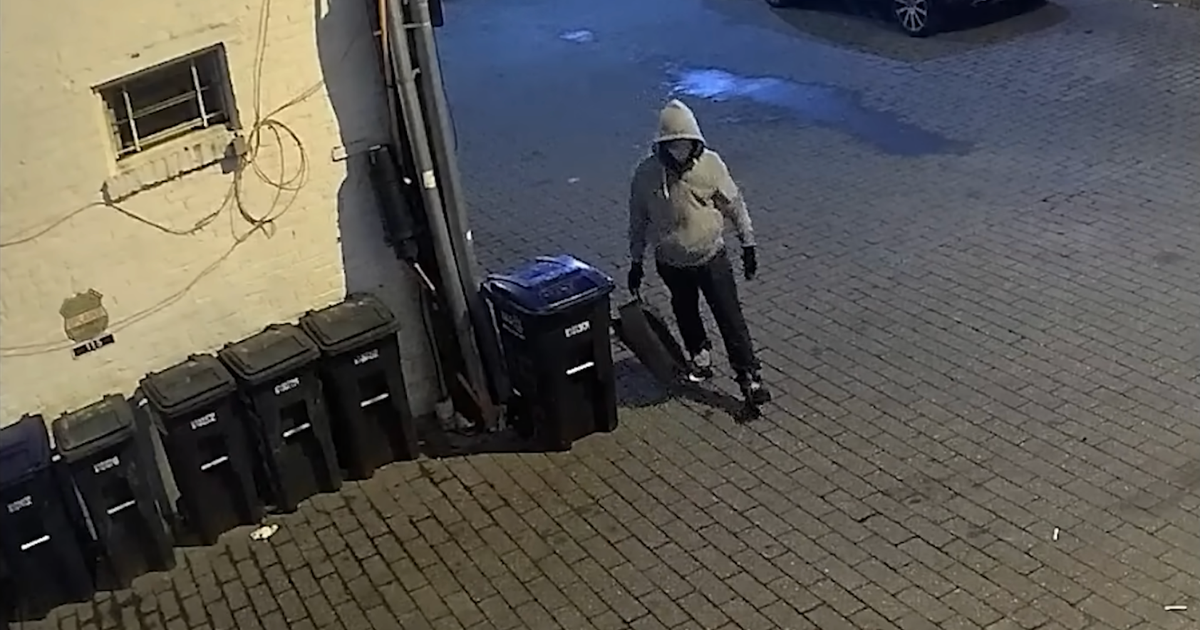
The FBI had worked for years to track down the perpetrator who planted the devices on Jan. 5, releasing video footage and photos to the public in hopes of identifying the suspect. The bombs, which did not detonate, were not discovered until the afternoon of Jan. 6, as local and federal authorities were overwhelmed when a mob of President Trump’s supporters breached the U.S. Capitol in an effort to stop Congress from certifying the results of the 2020 election.
Cole was arrested last month after investigators looked at cellphone records, purchasing history and vehicle movements. Prosecutors said that during an interview with investigators after his arrest, Cole confessed to constructing the devices, filling them with explosive powder and setting the timers to detonate.
He also said that he had driven to Washington on Jan. 5 to attend a protest over the outcome of the 2020 election and did not tell his family that he was going to a demonstration in support of Mr. Trump, Justice Department lawyers wrote in their filing.
During the post-arrest interview, Cole denied any intent to interfere with Congress’ certification of the 2020 election results, prosecutors said. Still, Sharbaugh, the magistrate judge, wrote in his opinion that “the resulting fear and alarm followed all the same — and how could it not?”
While Cole’s lawyers had noted that the devices did not detonate, and said they believe they would not have, the court called that argument “decidedly unpersuasive.”
“After all, Mr. Cole reportedly stated that he planted the devices — one of them underneath a public bench, no less — hoping they would detonate and that there would be news about it. Mercifully, that did not happen,” Sharbaugh wrote. “But if the plan had succeeded, the results could have been devas[ta]ting: creating a greater sense of terror on the eve of a high-security Congressional proceeding, causing serious property damage in the heart of Washington, D.C., grievously injuring DNC or RNC staff and other innocent bystanders, or worse.”
He continued: “Simply put, the nature and circumstances of the charged offenses here are gravely serious, so this factor points strongly toward pretrial detention.”
Sharbaugh also found the weight of evidence against Cole to be “significant,” citing phone, vehicle and financial records.
Cole faces two criminal offenses, but the magistrate judge has not yet accepted an indictment returned by a grand jury convened in the District of Columbia Superior Court on Monday. Sharbaugh, who serves in the U.S. district court, said the use of a local grand jury to charge federal crimes raises additional questions. While a different federal judge in Washington ruled in November that judges must accept indictments for federal offenses returned by local grand juries, he put his decision on hold while an appeals court considers the issue.
https://www.cbsnews.com/news/dc-pipe-bomb-suspect-brian-cole-detained-pending-trial/


