






In December, as it often has during the ongoing war between the Sudanese army and the Rapid Support Forces (RSF), the British government urged accountability, expressing concerns about the mass-scale death and devastation that civilians have suffered.
But reporting has shown that, behind the scenes, the United Kingdom rejected more ambitious plans to prevent atrocities as violence escalated.
Further east, the UK has officially backed the territorial integrity of Somalia – while holding a stake in a strategic port in the breakaway region of Somaliland that it does not recognise.
These decisions and moves by the UK, say analysts, raise doubts about whether its words are in keeping with its actions in the Horn of Africa.
Amgad Fareid Eltayeb, a Sudanese policy analyst, said the UK’s credibility is increasingly judged by the risks it is willing, or unwilling, to take.
“When people believe your words and your actions diverge, they stop treating you as a broker and start treating you as an interest manager,” he told Al Jazeera.
‘Enabler of aggression’ in Sudan
That judgement, analysts argue, now colours how the UK’s actions elsewhere in the region are being read.
In Sudan, earlier reports show how the UK government opted for what internal documents describe as the “least ambitious” approach to end the bloodshed, even as mass killings by the RSF mounted in Darfur, including around el-Fasher.
Eltayeb argues that this has led the UK to be viewed not as a marginal or distracted actor, but as a central one whose diplomatic posture has helped shape how the war is framed internationally.
He referred to reports that the United Arab Emirates has armed or supported RSF – allegations documented by UN experts and international media and denied by Abu Dhabi – and said the UK had emerged as “an enabler of the Emirati aggression in Sudan”. The aim: To “whitewash RSF atrocities in the diplomatic framing of the war”.
Asked about its approach to Sudan, the UK Foreign Office told Al Jazeera: “The crisis in Sudan is the worst we have seen in decades – the UK government is working with allies and partners to end the violence and prevent further atrocities from occurring.
“We need both the parties to support a ceasefire; this means unrestricted humanitarian access and a peace process with transition to a civilian government.”
Recognise Somalia, do business with Somaliland
The Foreign Office did not respond to questions about the UK’s role in Somalia or its commercial engagement in Somaliland, where scrutiny has increasingly centred on the port of Berbera.
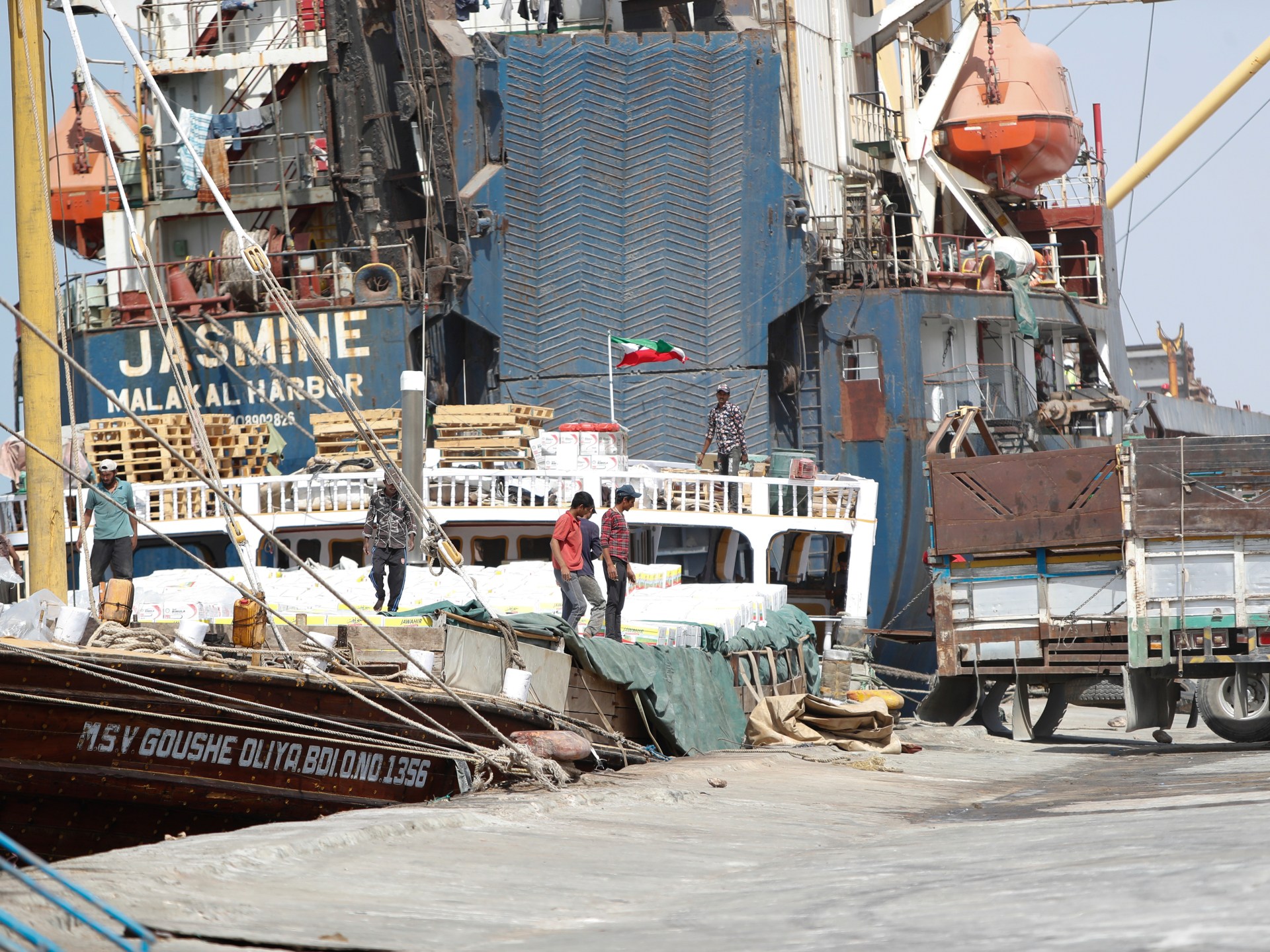
The British government co-owns the port through its development finance arm, British International Investment (BII). The port is jointly owned by the UAE-based logistics firm DP World and the government of Somaliland – even though the UK does not officially recognise that government. The UAE, too, formally does not recognise Somaliland.
Berbera sits near one of the world’s most important maritime corridors linking the Red Sea and the Indian Ocean. An impact assessment commissioned by the UK Foreign Office described it as “a strategic gateway” to Somaliland and a potential alternative trade corridor for Ethiopia, language that places it firmly within the region’s geopolitical architecture.
The port’s strategic value is not new. Matthew Sterling Benson, a social and economic historian of Africa at the London School of Economics (LSE), noted that Berbera has repeatedly been treated by external powers as strategic infrastructure first, and a political community second. It has served at different points as a British coaling station, a Soviet naval base during the Cold War, and now a commercial logistics hub shaped by Gulf and Western interests.
The Sudan-Somaliland link
That wider architecture has become more politically charged as Sudan’s war has spilled across borders.
Observers have suggested that Berbera is part of a broader Emirati logistics network that United Nations experts and international media have linked to alleged supply routes used to arm the RSF. The UAE has consistently denied these allegations.
For critics, the UK’s commercial entanglement with that alleged network raises uncomfortable questions. While London publicly calls for accountability in Sudan, it remains financially tied, via the BII, to a port operated by the UAE, a close regional partner accused of backing one side in the war next door.
Abdalftah Hamed Ali, an independent Horn of Africa analyst, said this highlights what many critics see as “a gap between principle and practice”.
“Even if London disputes those linkages,” he said, “the perception problem remains.”
The sensitivity has deepened as Somaliland’s political status has returned to the diplomatic spotlight. Last month, Israel became the only country to formally recognise Somaliland’s independence, a move condemned by Mogadishu and rejected by the wider international community.
For analysts, these developments underscore why claims that economic engagement can be kept separate from politics are increasingly difficult to sustain.
Ali said Berbera cannot be treated as a neutral commercial asset.
“Ports in the region are not just economic assets; they are nodes in a security and influence ecosystem,” he said. “When investment touches ports, free zones, and long-term trade access, it becomes politically legible. People interpret it as strengthening one authority’s bargaining position, whether that is the intention or not.”
In Somaliland’s case, that political legibility cuts several ways: Reinforcing its de facto autonomy, reshaping regional alliances, and entangling external actors, the UK included, in a dispute London – officially – says should be resolved through dialogue rather than external alignment.
Ali described the UK’s approach as a “dual-track” policy.
“Britain maintains its formal diplomatic line with the recognised Somali state, but it also works with Somaliland as a de facto authority because it is stable and functions and controls territory,” he said.
LSE’s Benson explained that after declaring independence in 1991, Somaliland was excluded from international recognition and large-scale foreign aid. Early governments were forced to rely on locally raised revenue, particularly taxation linked to Berbera port, a dependence that gave domestic actors leverage to demand representation and accountability.
In 1992, when a transitional government attempted to seize control of Berbera by force, local clan authorities resisted. The standoff ended in compromise, helping to entrench Somaliland’s power-sharing system.
Benson, who also serves as Sudan’s Research Director at LSE, described this dynamic as a “revenue complex”, in which fiscal control and political legitimacy are tightly intertwined.
Large external infrastructure investments, he warned, risk undermining that bargain.
“When states can finance themselves through deals with external investors rather than negotiations with local constituencies, the fiscal contract changes,” Benson said.
Such projects, he added, reconfigure who controls revenue flows, who benefits from the port economy, and who gains political leverage. In territories with unresolved political status, infrastructure investment can enable what he described as “governance through commercial presence” – allowing external actors to extract strategic value while avoiding explicit political responsibility.
Ambiguity by choice
The UK’s position, Benson argued, exemplifies this ambiguity.
British formal support for Somalia’s territorial integrity, paired with deepening commercial and security engagement with Somaliland, he said, gives it port access, counterterrorism cooperation and commercial returns, while avoiding the political costs of a clear position.
Over time, this can undermine institutional consolidation on both sides: Allowing Mogadishu to avoid meaningful negotiations over Somaliland’s status, while weakening Somaliland’s domestic accountability mechanisms by bypassing local political bargaining.
The UK’s posture in Somaliland has drawn scrutiny before. In 2023, Declassified UK reported that the British government suppressed the release of a report into the killing of civilians during clashes in Somaliland, a decision critics then said prioritised political relationships over transparency and accountability. British officials said at the time that decisions around the report were taken in line with diplomatic and security considerations.
Read together, analysts say the UK’s decisions in Sudan and Somalia reflect a single approach applied in different contexts: Preserving access and partnerships while avoiding moves – diplomatic pressure, public confrontation or policy shifts – that would narrow its room for manoeuvre.
Ali argued that while this approach may secure short-term influence, it carries longer-term costs, particularly in a region as politically entangled as the Horn of Africa.
“In the Horn, where alliances overlap with regional rivalries and the conflict economy, mixed signals can quickly become a liability,” he said. “You lose the moral authority to press for political compromise if local actors think your incentives lie elsewhere.”
https://www.aljazeera.com/news/2026/1/23/is-the-uk-playing-a-double-game-in-sudan-and-somalia?traffic_source=rss


