






Escalating tensions in the Middle East are starting to reshape the global technology landscape.
Drone and missile strikes on critical infrastructure are disrupting cloud services and casting uncertainty over billions of dollars in planned artificial intelligence investments across the Gulf.
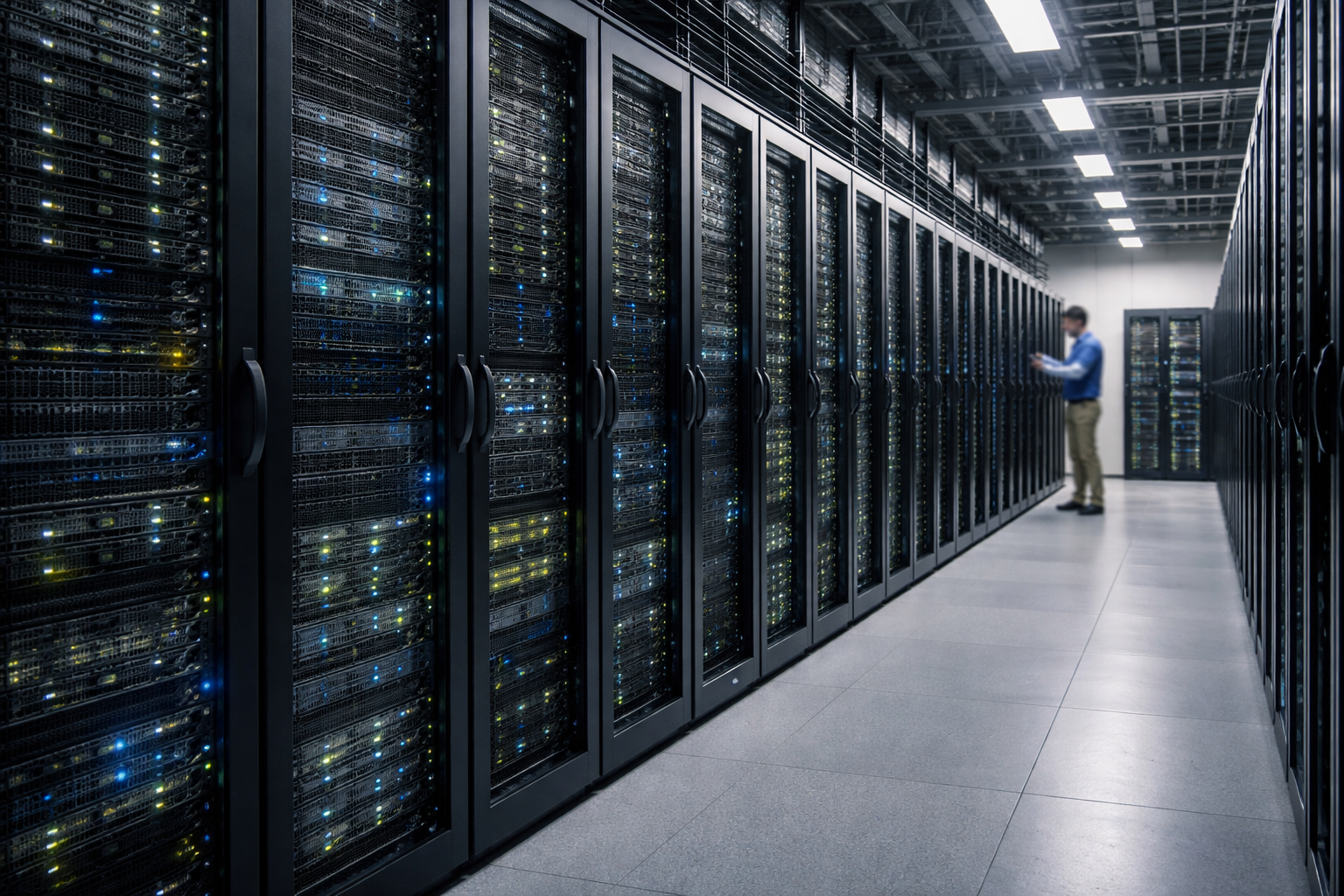
Recent attacks on data centres in the United Arab Emirates and Bahrain have knocked some digital services offline.
They have also exposed the vulnerability of hyperscale cloud infrastructure, a cornerstone of the modern economy.
These developments are raising questions about the sustainability of US President Donald Trump’s push to expand American technology presence in the region, as well as the Gulf’s ambitions to emerge as a global AI hub.
Data centres emerge as strategic targets
The conflict has underscored a shift in the nature of warfare, where digital infrastructure is increasingly seen as a high-value target.
Amazon recently confirmed disruptions at its Bahrain-based cloud operations following Iranian drone strikes on facilities in both the UAE and Bahrain earlier this month.
“Wars have always targeted the infrastructure of their age. Medieval armies burned granaries. Modern ones target communications and energy installations,” said Bobby Ghosh, a geopolitics analyst and commentator in a Rest of World report.
“When its drones struck three Amazon Web Services data centres in the United Arab Emirates and Bahrain on March 1 — the first confirmed military attack on a hyperscale cloud provider in history — Tehran was not lashing out blindly. It was making a calculated statement about the 21st century’s most valuable infrastructure.”
Threats escalate against US tech firms
The risks escalated further after Iran’s Islamic Revolutionary Guard Corps warned on Tuesday it could target American technology and defence companies operating in the region.
The IRGC said on Tuesday that 18 technology companies would be treated as “legitimate targets” in response to US and Israeli strikes on Iran.
The group named several major firms, including Microsoft, Google, Apple, Nvidia and Oracle, citing their involvement in technologies with potential military applications.
In a Telegram post, translated via Google, the group stated that attacks could begin at 8 pm on Wednesday, April 1 (10:30 a.m. ET) and urged employees at the named companies to evacuate their workplaces immediately to ensure their safety.
Responding to the threats, Trump dismissed their credibility. “With what? What did they threaten them with? BB guns or? They don’t have much left to threaten,” he said during remarks at the White House.
Still, analysts say the rhetoric alone could heighten operational risks and force companies to reassess their exposure in the region.
Gulf’s AI investment boom faces new uncertainty
Over the past two years, the Gulf has emerged as a major destination for AI-related investment, driven by abundant energy resources, government backing and access to sovereign wealth capital.
US technology companies have committed tens of billions of dollars to build infrastructure across the region.
Projects include a $15 billion commitment by Microsoft in the UAE, a $5 billion AI hub planned by Amazon in Riyadh, and a major partnership between Nvidia and Saudi-backed entities to supply advanced chips.
A separate initiative involving OpenAI, Oracle and Abu Dhabi’s G42 aims to develop one of the largest AI campuses outside the United States.
President Donald Trump visited the Middle East last spring, striking a series of deals aimed at positioning the Gulf as a major player in the global artificial intelligence race.
He was joined by leading technology executives, including Sam Altman of OpenAI and Andy Jassy of Amazon.
During a speech in Riyadh, Trump described the region as “forging a future where the Middle East is defined by commerce, not chaos.”
Separately, Gartner estimated in August that technology spending across Middle Eastern economies would reach $155 billion in 2025, including about $9.5 billion directed toward data centre investments—an increase of nearly 70% from the previous year.
However, analysts warn that prolonged instability could disrupt these plans.
“If it goes on for a couple of months, I think you have to reassess just about everything,” said Paul Meeks, head of technology research at investment bank Freedom Capital Markets in a CNN report.
Iran war brings physical security of data centres in focus
Experts note that while data centres have traditionally been protected against cyberattacks, physical threats are now becoming a pressing concern.
“The war is leaving data centre investment up in the air,” said Ginger Matchett, a geostrategist at Washington-based think tank the Atlantic Council, in the CNN report.
“Protection of data centres to date has largely focused on preventing cyberattacks, not drone or missile attacks physically damaging the infrastructure.”
The implications extend beyond commercial considerations.
“We can’t think about this AI infrastructure as purely a commercial asset anymore, and to some extent, it’s national security infrastructure,” Hamza Chaudhry, lead of AI and national security at the Future of Life Institute, told POLITICO earlier this month.
Economic fallout and long-term outlook
While security risks are immediate, analysts suggest that the broader economic impact of the conflict could prove equally significant.
Rising energy prices and inflationary pressures may influence central bank policies, potentially increasing financing costs for large-scale technology investments.
“At some point, if this drags on, companies are going to have to rethink timelines,” said Wedbush Securities analyst Dan Ives.
“Because this was never on the roadmap.”
Despite the uncertainty, the Gulf’s long-term appeal remains intact.
Governments in the region are expected to work to reassure investors and maintain momentum in their diversification strategies.
“The region remains attractive to companies in terms of capital from sovereign wealth funds, government buy-in, available energy, and its role as a gateway to markets in the global south,” Tess deBlanc-Knowles, senior director at the Atlantic Council, told CNBC.
For now, however, the conflict has introduced a new layer of risk to the global AI race, forcing companies and policymakers alike to reconsider how and where the infrastructure powering the digital economy is built.
https://invezz.com/news/2026/04/01/iran-tensions-expose-fragility-of-gulfs-big-tech-infrastructure-bet/


