


Bebin Djuana, a retired automotive executive and author on Indonesia’s car industry, said there are key lessons from the earlier attempt.
“There were many supporting factors that were not yet in place,” he said.
“Each vehicle model is different – you can’t apply a one-size-fits-all conversion. A model determines what motor to use, what battery, and where to place them. We need trained workers to handle conversions, but where is the training?”
Skilled manpower remains scarce. By the end of 2024, only 39 workshops had received certification to participate in the government’s conversion programme – and most were small operators.
“If one workshop can handle about 1,000 units a year, we would need around 20,000 conversion workshops nationwide to reach the 20 (million) to 30 million conversions per year the Prabowo government is aiming for,” said Fabby of IESR.
But perhaps the biggest hurdle that remains is consumer confidence.
“People are interested because they can save on fuel. But consumers don’t just think about efficiency, they think about reliability,” said Putra Adhiguna, managing director of think-tank Energy Shift Institute.
Beyond established players like Japan’s Honda and Indonesia’s Viar, much of the electric motorcycle market is dominated by relatively new entrants such as Gesits and Smoot, both of which launched their first models in 2021.
Then there is Polytron, a well-known Indonesian electronics brand which entered the motorcycle market in 2018 and introduced its first model three years later.
“Public confidence is not there yet, even for factory-made electric motorcycles. You can imagine how much lower it is for converted motorcycles using kits produced by lesser-known companies and installed by small workshops,” said Putra.
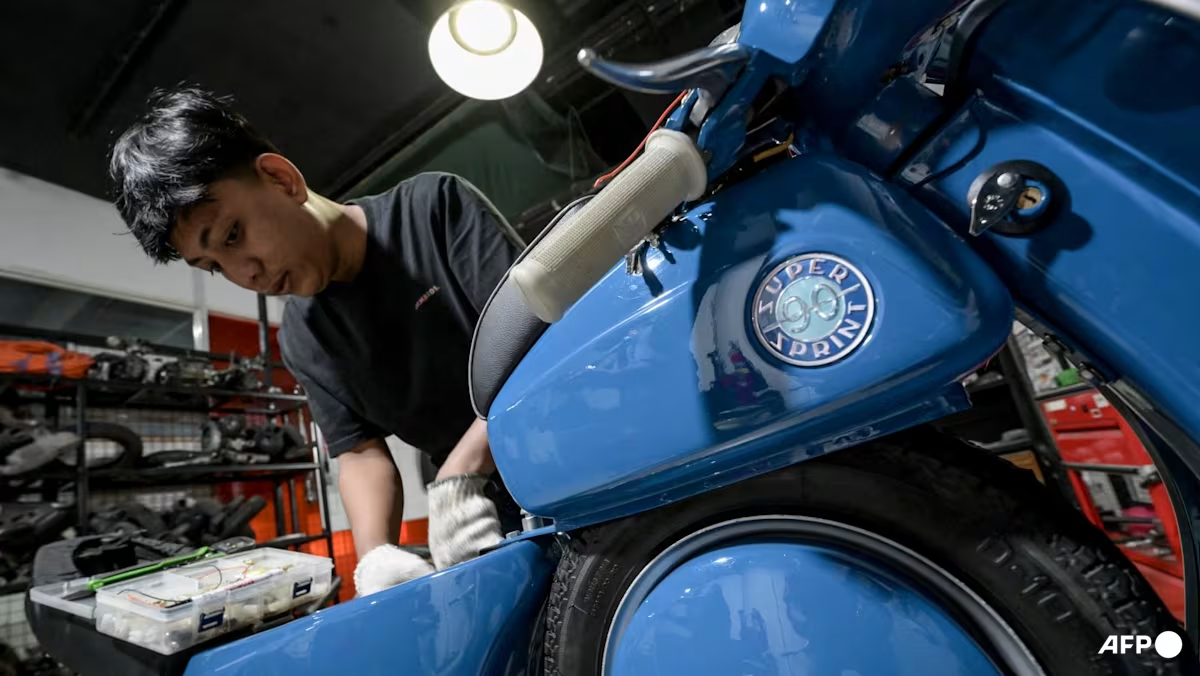
The conversion process involves removing a motorcycle’s fuel tank and engine and replacing it with a battery pack and an electric motor.
According to media reports, an experienced team of mechanics can take between 45 minutes and two hours to convert one bike from start to finish.
Today, there are several Indonesian companies such as Bintang Racing Team, Elders Garage and Spora EV which offer their own conversion kits using in-house motors along with Chinese or South Korean made batteries.
Most workshops however use third-party motors from a plethora of small American and Chinese companies.
https://www.channelnewsasia.com/asia/indonesia-prabowo-plans-electric-vehicle-push-experts-say-challenges-abound-6058016
