


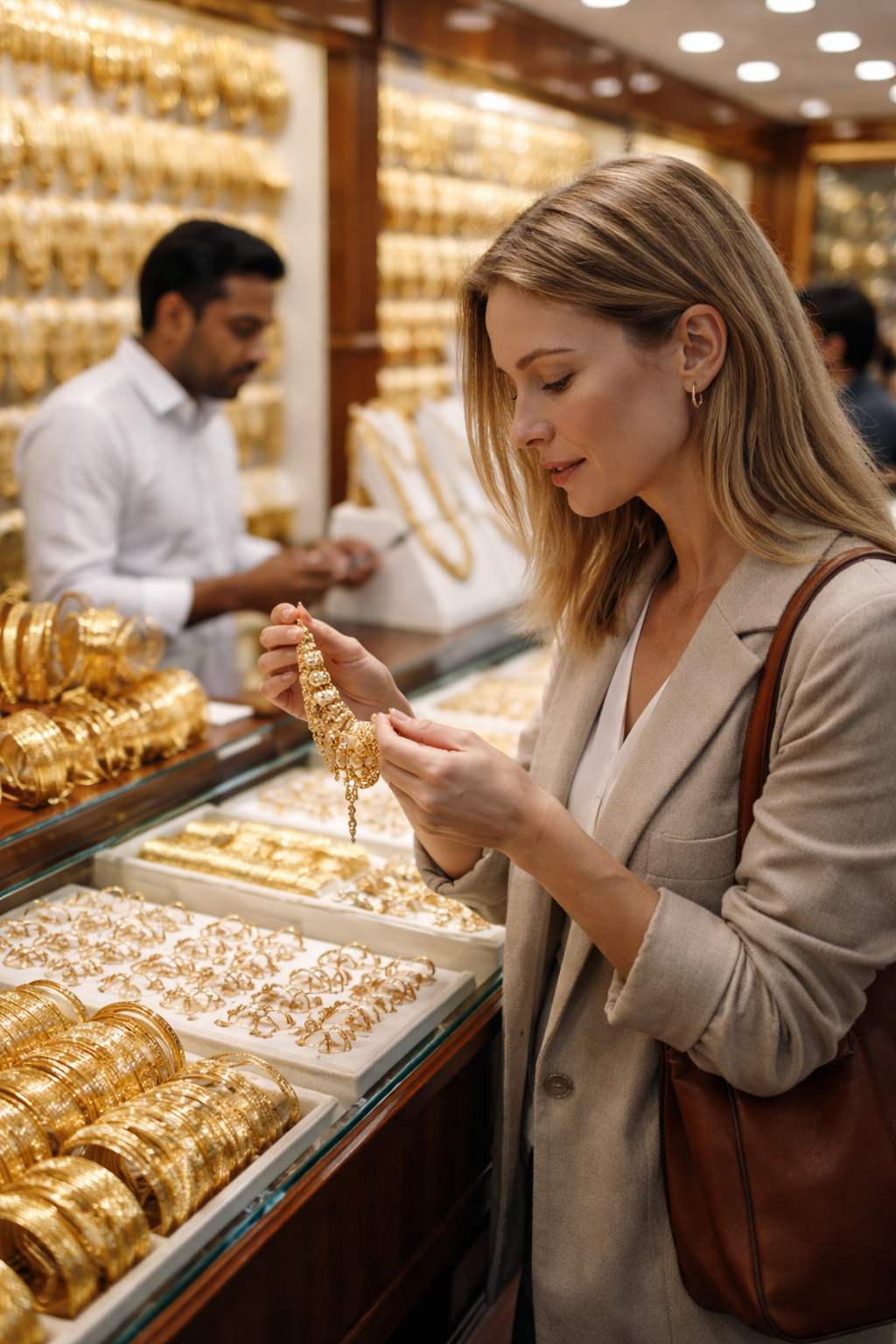
Record-high prices dampened gold demand in India during a major buying festival on Sunday, as muted jewellery purchases overshadowed a slight rise in investment interest.
Jewellers reported that gold demand, measured by volume, dropped by approximately 30% this Akshaya Tritiya, according to The Economic Times.
This decline was attributed to high gold prices, which were nearly 60% higher than the previous year and deterred customers from making large purchases.
At the time of writing, domestic gold prices had partially recovered and stabilised, although remained more than 10% below the January peak.
Domestic price dynamics
The rebound has been supported by the persistent geopolitical risk premium, a softer US dollar and a pickup in inflows into global ETFs so far in April.
On a year-to-date basis, gold prices remained elevated at INR 153,100 per 10 grams.
Domestic prices were nearly 63% higher during Akshata Tritiya festival compared to the same period last year.
Akshaya Tritiya, a major gold-buying festival second only to Dhanteras, was celebrated by Indians on Sunday.
It is considered an auspicious time for purchasing precious metals.
Consumers maintained their budgets, leading them to choose lighter jewellery, smaller coins, and exchange transactions.
Specifically, millennials favored solitaires, with most purchases falling between INR 75,000 and INR 250,000.
“The sharp rally in prices curbed jewellery demand. In volume terms, buying was lower as consumers held back, though in value terms spending was higher due to elevated prices,” Amit Modak, chief executive of PN Gadgil and Sons, a Pune-based jeweller was quoted as saying in a Reuters report.
Global gold prices on COMEX reached a record high of $5,594.82 per ounce on January 29, but are currently trading at approximately $4,805 per ounce.
Discounts narrows and supply
The discount of domestic gold prices relative to international prices has recently seen fluctuations, Kavita Chacko, research head, India at the World Gold Council said.
After remaining at a sustained discount since mid-February, this differential widened in March, moving from an average of $15 per ounce to $46 an ounce, Chacko said.
However, over the first two weeks of April, the discount significantly narrowed, averaging around $8 per ounce.
“The narrowing is attributed to tighter supply conditions following curbs on imports of platinum alloys (containing more than 1% gold by weight), along with broader restrictions on gold, silver, and platinum jewellery imports,” Chacko added.
Furthermore, supply was constrained by reported operational hurdles, notably anecdotal delays experienced by nominated banks in the customs clearance of their bullion shipments.
According to Surendra Mehta, national secretary at the India Bullion and Jewellers Association, demand across most of the country was below typical levels, with the exception of a few southern Indian states.
According to data compiled by the World Gold Council, India saw a 24% decline in jewellery demand in 2025 compared to the previous year.
Conversely, investment demand for gold rose 17%, reaching its highest level since 2013.
While sales of traditional, heavy jewellery declined, consumer interest shifted toward coins and lightweight items, which are generally more liquid and affordable.
Jewellers tried to boost demand by offering promotional deals and reductions on making charges.
Structurally, buying patterns are still evolving. World Gold Council data indicated a notable shift in India.
Gold as a financial asset
Last year saw a sharp decline in jewellery demand alongside a rise in investment demand to multi-year highs.
This suggested that gold is increasingly being viewed as a financial asset rather than solely a product for consumption.
Consumer purchasing habits have shifted, with market participants observing a more even distribution of purchases throughout the year.
Demand is now timed by consumers to coincide with price corrections rather than being concentrated primarily during traditional festivals.

Indian digital gold purchases made through the Unified Payments Interface saw continued strength in February.
Although below the record set in January, total purchases reached INR 30.3 billion, equating to an estimated 1.9 tonnes, according to World Gold Council data.
This volume is 53% higher than the average monthly volume of 1.2 tonnes recorded over the previous 13 months.
“Although digital gold purchases are currently unregulated, this channel continues to attract retail investors, likely driven by the ease of transactions and low minimum investment requirements,” Chacko added.
The value of these transactions has increased nearly fourfold over the past year, highlighting the growing need for regulatory oversight.
Meanwhile, silver demand continued its upward trend, with increased growth in coins, artefacts, and jewellery, making it a complementary purchase to gold.
https://invezz.com/news/2026/04/20/indias-gold-buying-shifts-as-record-prices-hit-festival-demand/
