






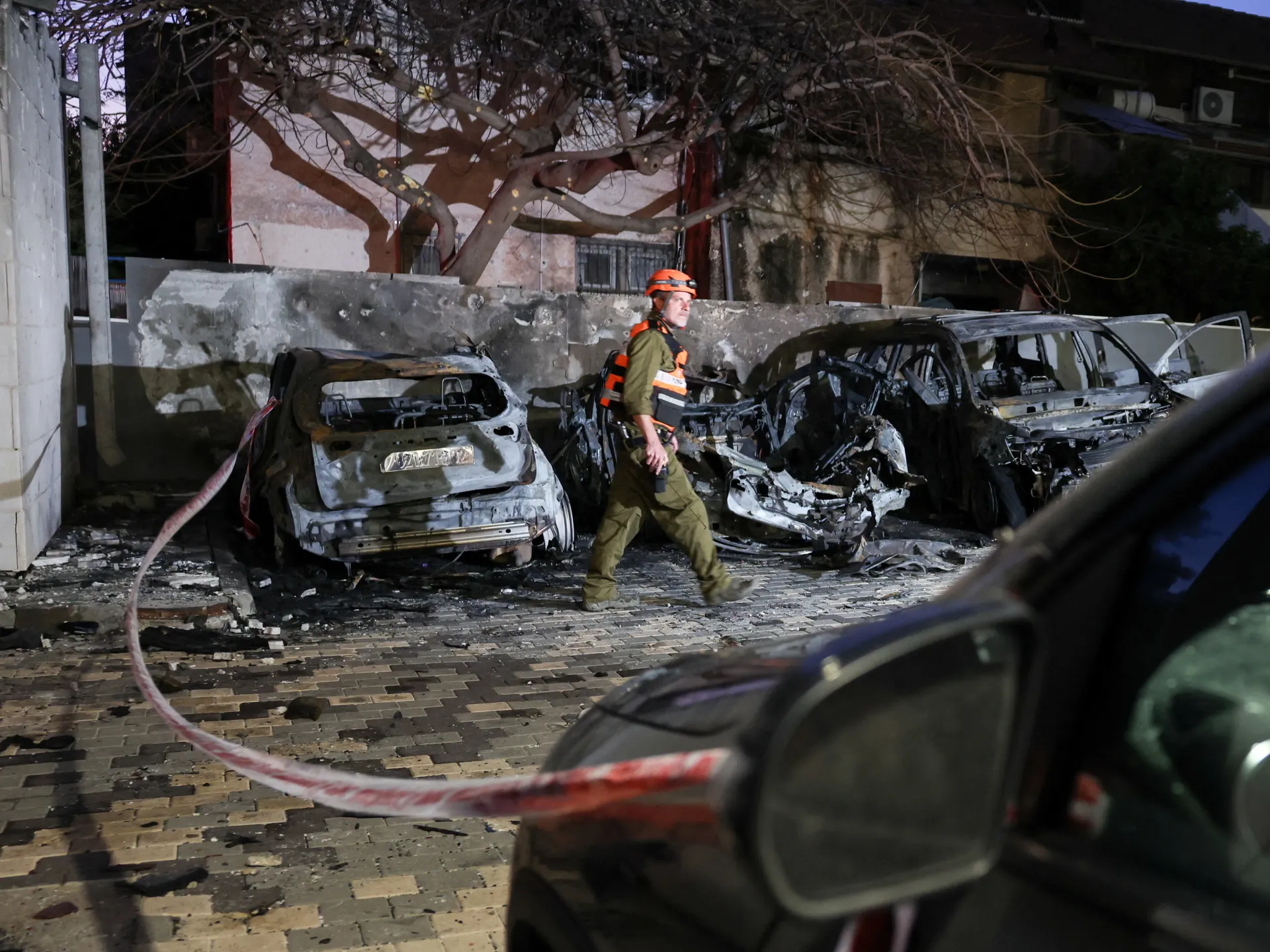
Two and a half years of launching brutal attacks on its neighbours and the besieged enclave of Gaza have transformed Israel’s politics, economy and society, analysts say.
Now, as Israel engages in what many within the country have been repeatedly told is an “existential battle” with regional nemesis Iran, what the future might hold for Israel remains to be seen. The conflict’s ultimate end will likely be determined by lawmakers in Washington rather than planners in Israel.
Recommended Stories
list of 4 itemsend of list
Even before its war on Iran, Israel’s genocidal war on Gaza had taken its toll on the country’s standing and financing. According to the Bank of Israel’s own numbers, the nation’s wars on Gaza, the Houthis, Lebanon and Iran since October 2023 have already cost it 352 billion shekels ($112bn), equating roughly to an average cost of 300 million shekels ($96m) per day.
At the International Court of Justice, Israel faces what jurists have already ruled are credible accusations of genocide, while both its prime minister and former minister of defence are the subject of arrest warrants for war crimes issued by the International Criminal Court in November 2024. Now, economically, the country is bracing for what could be the catastrophic financial consequences of its war on Iran.
And it seems no definite end is in sight.
Long road ahead
Israel’s stated war aims of degrading Iran’s military capabilities and creating the conditions whereby its public might rise up against the government seem somewhat distant.
After four weeks of constant bombardment, there are no strong signs of public disquiet in Iran or challenges to the government.
Despite United States officials’ public claims to have essentially defanged Iran militarily, Reuters reported on March 27 that only one-third of Tehran’s missile stock had been destroyed, citing five sources within US intelligence.
In the meantime, Israel’s public faces irregular but frequent air raid warnings, signalling yet another retreat to the shelters and shattering any semblance of normality each time.
There is a paradox at play. At home, emergency measures which have seen many schools closed while parents are expected to continue working have increased strain on families. But analysts within Israel say these same families still regard the war they are experiencing as always having been inevitable.
“There’s a graveness that’s fallen over people, a sort of a pall,” political consultant and pollster Dahlia Scheindlin told Al Jazeera from a location near Tel Aviv. She described something close to a grim public determination among Jewish Israelis to press on with the war for the time being, however.
People are exhausted, but for now, 78 percent of Jewish Israelis told the Israel Democracy Institute in late March that they supported continuing the war.
Significantly, however, a majority also thought that planners in the US and Israel had underestimated Tehran’s abilities.
How long they will continue to support the conflict, therefore, Scheindlin can’t say. “It’s not like the 12-day war [between Israel and Iran in June 2025] because this has gone on for so much longer. And it’s not like rocket fire from Hamas in the past.
“Iran fires ballistic missiles, meaning that everyone needs to shelter each time. It’s also gone on for much longer, and how long it will continue, we don’t know,” she said.
“To be honest, I don’t know how we’ll emerge from this. No one does. We’re still in the middle of it all.”


Politics on the edge
The backdrop to all this is a politics which few would recognise from that which ratified the Oslo Accords in the 1990s. Or that which in the 1980s expelled the ultranationalist Meir Kahane, the proponent of extremist beliefs that hardline National Security Minister Itamar Ben-Gvir and many of his Jewish Power party’s current members implicitly support.
Indeed, figures such as Ben-Gvir and ultra-Orthodox Finance Minister Bezalel Smotrich – a settler whose movement believes it is biblically entitled to the land of the West Bank – now play central roles in government with both cross-party and public support.
Then there were the celebrations that greeted the passage of Ben-Gvir’s death penalty law, designed specifically to target Palestinians.
Topping it off this week was the passing of a record $271bn budget – voted on by lawmakers from a fortified bunker – which diverted millions of shekels to the country’s ultra-Orthodox and hardline settler groups in what analysts and opposition groups say was a bid to shore up support for Netanyahu’s government in the face of continued military action.
“Anyone who votes against the budget is voting against Israel’s security, against tax relief for working people in Israel, and against taxation of the banks,” Smotrich, whose supporters among the extreme right and settler groups stand to benefit the most, said ahead of the vote on Monday.
“Of course it’s got more extreme,” Aida Touma-Sliman of the left-wing Hadash party said. “The whole world has looked on and found excuses for them while they committed genocide [in Gaza]. Of course, they think what they’re doing now is acceptable. The whole world has said it is.”

![A fire and badly damaged vehicle are seen after an Iranian missile struck a residential area of northern Israel on March 13, 2026. [fireisrael7777 via Telegram]](https://www.aljazeera.com/wp-content/uploads/2026/03/iranian_missile_strike_northern_israel_13_mar_2026-1773366765.jpg?w=770&resize=770%2C433&quality=80)
Coming storms
However, how long Israel’s increasingly extreme brand of right-wing politics will remain acceptable to a public shortly to bear the financial brunt of its endless regional wars remains to be seen.
Despite their general backing (or at least lack of meaningful opposition) through much of its genocidal campaign in Gaza, the United Nations, European Union and various other Western countries have all condemned the passage of the death penalty law specifically targeting Palestinians this week.
Though so far largely cushioned from those repercussions, Israel itself is by no means immune to the long-term effects of the war, analysts warn. The conflict with Iran has already imposed significant costs through increased defence spending, lost productivity as a result of the mobilisation of reservists and reduced consumer activity, an analysis published by French newspaper Le Monde in late March suggested.
While tax reductions have, for now, largely protected Israeli consumers from the expected hike in fuel prices caused by Iran’s closure of the Strait of Hormuz, analysts such as the political economist Shir Hever warn that, as Israel is an importer of fuel, this offers only temporary relief.
“Every previous conflict Israel has entered into has been on the back of an agreed budget, with clear aims and solid financial baselines from which to measure those aims,” Hever said, “However, what we’re seeing develop is the sort of economy you might see in a totalitarian state, where military expenses are undertaken arbitrarily, with no consideration for how that might fit with the wider economy.”
Ultimately, how and when the war will end is likely to be less Israel’s decision than that of an increasingly erratic US president.
And, when asked by US broadcaster Newsmax how far he thought Israel had gone in achieving its aims this week, the best Netanyahu could muster was to say “halfway”.
https://www.aljazeera.com/news/2026/4/3/i-dont-know-how-well-emerge-from-this-how-much-more-can-israelis-take?traffic_source=rss


