






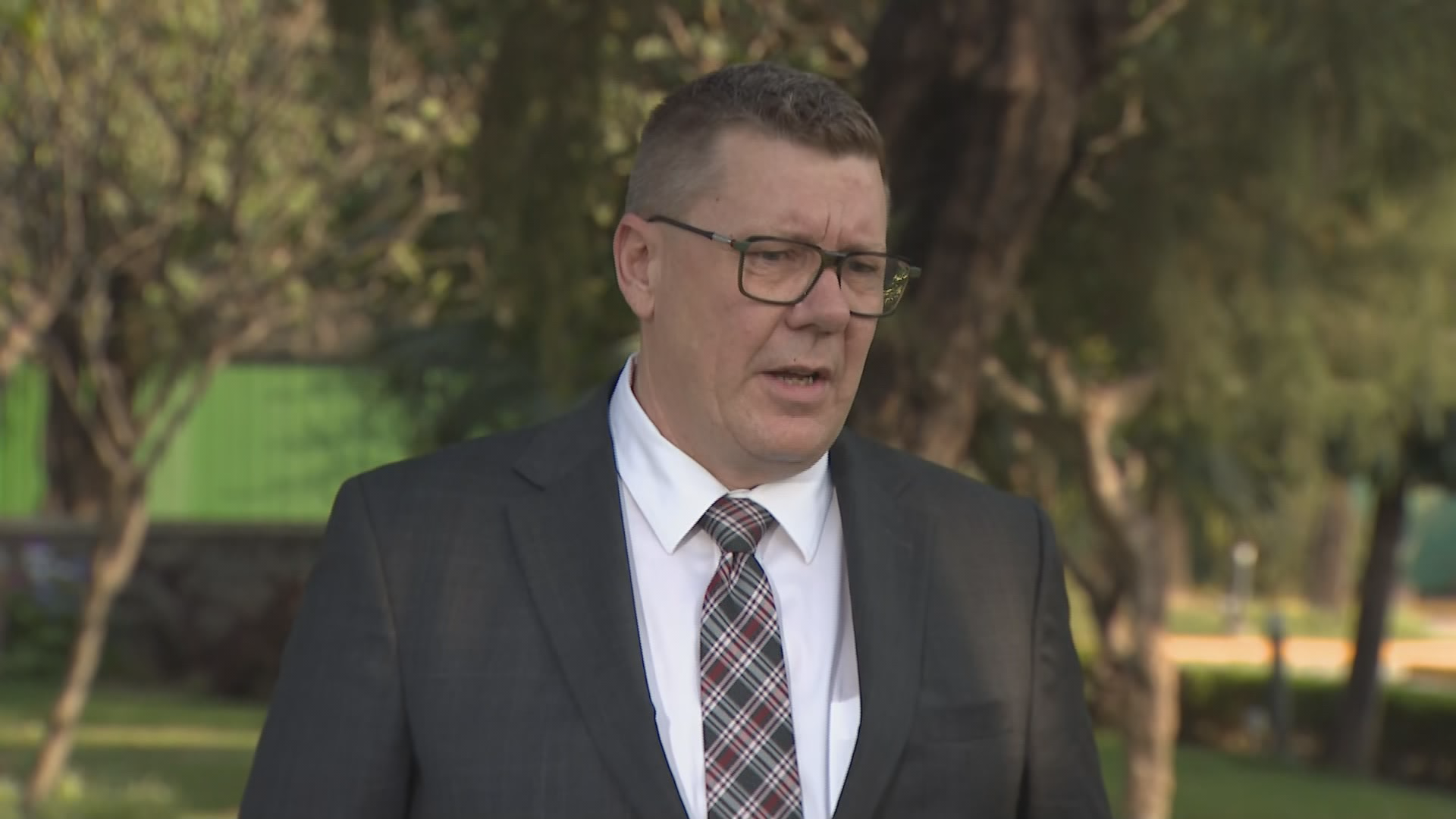
As the ink dries on the latest uranium agreement between India and Canada, Saskatchewan Premier Scott Moe is praising the energy partnership, saying it is good for the province’s economy.


“It’s going to be good for the electricity outbuild here in India as well as good for the economy and good for Northern Saskatchewan and Canada,” Moe told reporters in New Delhi Monday.
The $2.6-billion deal means Saskatoon-based Cameco is to supply just under 22 million pounds of uranium to India for nuclear energy generation over nine years.
“Saskatchewan will certainly benefit from the agreement signed today, but all Canadians benefit as well. I think that’s important for us to remember,” Moe said.
This is the second agreement between Cameco and India’s government, following the first five-year contract, which ended in 2020. The new deal is from 2027 to 2035.
In a news release, Cameco says its uranium will be used for India’s 24 nuclear reactors support the country’s plans to build dozens more.
“That isn’t possible without a stable supply of uranium fuel,” Cameco CEO Tim Gitzel said in the news release.
“We are thankful for the continued advocacy of the Saskatchewan and Canadian governments to foster international trade opportunities that allow us to meet the needs of global customers and bring the benefits home.”
Warren Kaeding, Saskatchewan’s trade and development minister called the announcement of the agreement marked “a very great day here.”


Get daily National news
Get the day’s top news, political, economic, and current affairs headlines, delivered to your inbox once a day.
He continued saying the deal provides Cameco with a “very solid plan” on its exports for the next decade, adding it helps the company with its capital planning, employment and investment in the northern part of the province.
Kaeding also said Saskatchewan will see more royalty revenues from the deal, which will help the province’s bottom line. “It literally opens the door for more agreements that are going to happen as we can likely anticipate are going to happen in the next few years.”
Saskatchewan is included in several other agreements and memoranda of understanding (MOUs) announced on Monday.
Canada and India intend to announce the establishment of a joint “pulse protein centre of excellence” to advance cooperation in value-added agriculture and food innovation. The federal government says that, through a declaration of intent, the two countries will establish a joint task force to develop and operate the centre.
In a statement, Pulse Canada says this centre will help build capacity in the industry through research and innovation.
“For Pulse Canada and its members, this approach underscores the value of partnership-led engagement, bringing together industry, academia, and government to focus on the role pulses can play in the future of food,” Pulse Canada president Greg Cherewyk said in a news release.
Several MOUs were also signed between Indian and Saskatchewan schools. The University of Saskatchewan is signing two agreements for agricultural research with NIFTEM-Kundli and the International Crops Research Institute for the Semi-Arid Tropics.
Saskatchewan Polytechnic is signing three agreements. One is for emerging technologies with Atira University, while the other two are for pathway programs with Axia International and Cambridge International School.
“This mission presents an important opportunity to strengthen Saskatchewan Polytechnic’s global connections and deepen our partnerships with institutions in India,”a spokesperson for for the school said.
Despite the uranium deal and other commitments, no progress was made on removing India’s tariffs on Canadian yellow peas and lentils.
India currently has a 10 per cent tariff on Canadian lentils. The country also placed a 30 per cent tariff on Canadian yellow peas in November to protect its local producers.
Before his trip, Moe said he hoped the tariffs would be removed and that lentil tariffs may actually increase.
Kaeding said the province is doing “everything within our ability” to have those tariffs removed. “But we have to remember that ultimately it’s the federal government that has to be able to sign that trade agreement with India to have those tariffs reduced or eliminated.”
Moe remains in New Delhi until the end of the week, where he plans to attend the Raisina Dialogue, which runs until March 7.
With files from The Canadian Press.
© 2026 Global News, a division of Corus Entertainment Inc.
‘Good for the economy’: Premier Moe praises Canada-India uranium trade deal


