






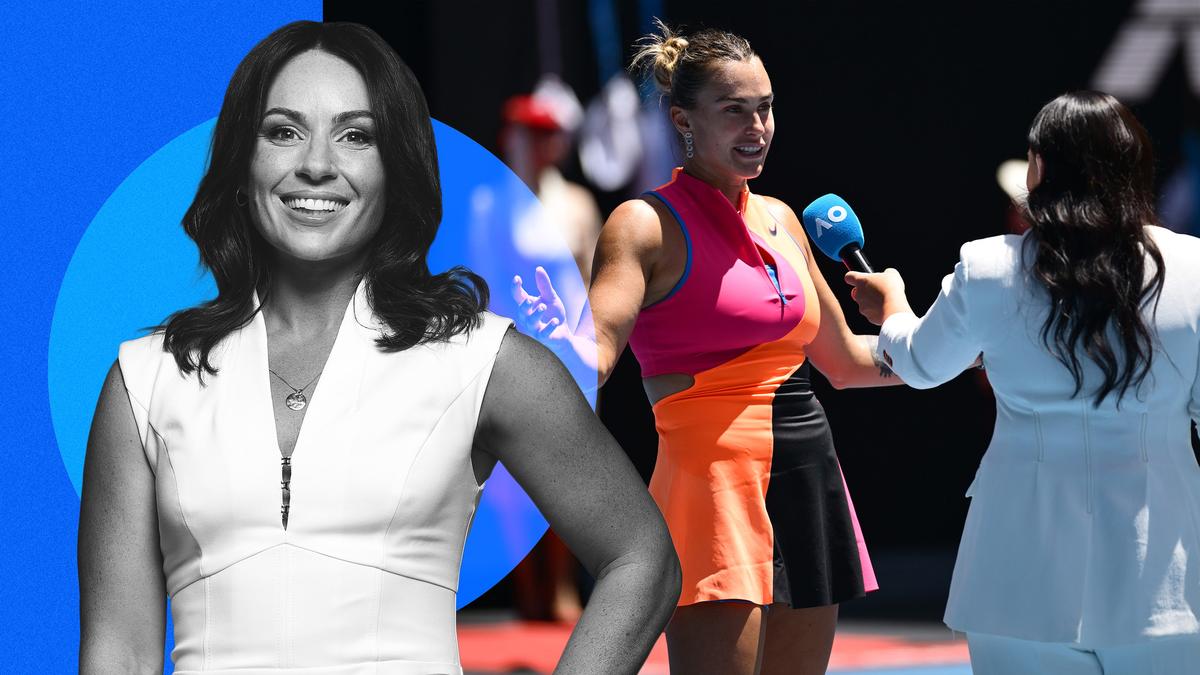
Politics and sport have always overlapped, and honestly, I don’t think that’s a bad thing.
Athletes don’t exist in a vacuum and sport has an enormous platform. But lately, especially in tennis, the way political conversations are being dragged into post-match interviews feels less like meaningful discussion and more about setting traps to catch players out.
We’ve seen American players asked at the Australian Open whether they’re “happy” playing under the US flag given what’s going on in their country right now. That’s not a genuine question, it’s a loaded one. Any answer becomes a headline. Agree, disagree, hesitate, deflect, it doesn’t matter. The quote will be pulled, shortened, and framed however someone wants it framed.
What makes it worse is who these questions are aimed at. A lot of these players are young — some are still teenagers. They’re being asked these things in the middle of tournaments, right after matches, with a microphone in their face and zero time to think. They’re not politicians. They’re not experts. And they’re mostly completely on their own, and tired (sometimes very late at night) after playing a tennis match, when answering.
I’m not against politics in sport at all. If anything, I think there should be more of it, but done properly. Sporting bodies and teams are in a much better position to make bold political statements because they do it collectively.
There’s safety in numbers, a shared responsibility, and usually a clear message behind it. When organisations speak out together, they actually have the power to create real, actionable change.
Where it goes wrong is when that responsibility gets dumped on individual players through “gotcha” questions. Those questions don’t encourage nuance or education. They either push players into bland PR responses or force them into an uncomfortable, and sometimes genuinely risky, position. One misstep sentence can follow a player for years.
There are athletes who choose to take that on, and when they do, it can be incredibly powerful. Ukrainian tennis player Oleksandra Oliynykova is a great example. She’s informed, intentional, and clearly understands what she’s speaking about and why. She’s choosing to open herself up to complex and uncomfortable conversations, and that choice makes all the difference.
But that’s very different from asking an individual player, standing by themselves, with no support, to comment on something they may not fully understand or feel safe speaking about. Asking 18-year-old Mirra Andreeva whether she’d consider changing countries and playing under a different flag instead of Russia is a perfect example. It’s dangerous, loaded, and only really has one “acceptable” answer. If the outcome is predetermined, then what’s the point of asking?
Geopolitics are complicated. They don’t fit neatly into a post-match soundbite. Taylor Fritz summed that up perfectly when he said, “I’m not sure what we’re specifically talking about but there is a lot going on in the US and I don’t know, I feel like whatever I say here is going to get put in a headline and get taken out of context so I’d really rather not do something that’s going to cause a big distraction for me in the middle of the tournament”
No matter what side a player falls on, someone is going to be unhappy, and a headline is going to be written. That’s unavoidable. But players should at least get a choice in whether they step into that space at all. Politics absolutely belongs in sport. It just doesn’t belong in the form of ambush questions that leave young players exposed and alone.
https://thewest.com.au/sport/tennis/georgie-parker-asking-tennis-players-about-politics-to-catch-them-out-at-the-australian-open-needs-to-stop-c-21426881


