





On this “Face the Nation with Margaret Brennan” broadcast, moderated by Margaret Brennan:
- Nobel Peace Prize winner María Corina Machado
- Sen. Mark Warner, Democrat of Virginia
- White House National Economic Council Director Kevin Hassett
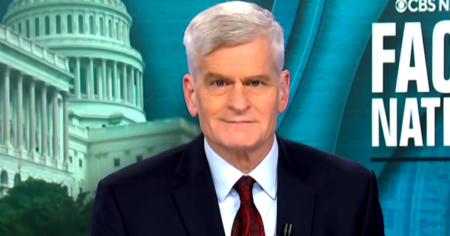
- Sen. Bill Cassidy, Republican of Louisiana
Click here to browse full transcripts from 2025 of “Face the Nation with Margaret Brennan.”
MARGARET BRENNAN: I’m Margaret Brennan in Washington.
And this week on Face the Nation: breaking overnight, mass shootings at Brown University and now at a Hanukkah celebration in Australia.
Plus, our exclusive interview with Venezuelan opposition leader and Nobel Peace Prize winner Maria Corina Machado.
(Begin VT)
(SINGING)
(End VT)
MARGARET BRENNAN: Yesterday, the commander in chief paid tribute to our nation’s finest in that time-honored American tradition, the Army-Navy football game.
(Begin VT)
(CHEERING)
DONALD TRUMP (President of the United States): We all set?
ANNOUNCER: It is tails.
(End VT)
MARGARET BRENNAN: Army won the coin toss, but Navy won the game on what was a sobering Saturday. Earlier, President Trump said the U.S. would respond to an ISIS attack in Syria that killed two American soldiers and a civilian interpreter.
(Begin VT)
QUESTION: Will the U.S. retaliate against ISIS?
PRESIDENT DONALD TRUMP: Yes, we will.
(End VT)
MARGARET BRENNAN: As the foreign policy challenges continue for Mr. Trump, so do Americans’ concerns about high prices, particularly painful this year as the holiday shopping season peaks.
At least 20 million Americans also face skyrocketing health care premiums under Obamacare in the new year. We will talk with White House chief economic adviser Kevin Hassett, Louisiana Republican Senator Bill Cassidy, and Virginia Democratic Senator Mark Warner.
Plus, in a conversation you will see only on CBS, Venezuelan opposition leader Maria Corina Machado tells us why she’s so committed to democracy in her country, despite the risks she faces.
It’s all just ahead on Face the Nation.
Welcome to Face the Nation.
On this first day of Hanukkah, a horrific scene is unfolding nearly 10,000 miles away in the suburbs of Sydney, Australia, where gunmen attacked a Jewish holiday gathering at the city’s Bondi Beach, a popular tourist spot.
(Begin VT)
(GUNFIRE)
(End VT)
MARGARET BRENNAN: At least 11 people have been killed and another 29 injured in an attack the Australian prime minister has called an act of evil, antisemitism and terrorism.
Video footage appears to show two gunmen on a bridge, one of them firing his weapon. Another clip shows what appears to be a bystander tackling and disarming one of the gunmen. Police confirm there were at least two suspects. One is dead, the other hospitalized following the attack, and they are looking into the possibility of additional suspects.
Here in the U.S., Saturday marked what’s at least the 39th school shooting on a college campus this year.
CBS News correspondent Tom Hanson reports from Providence, Rhode Island, from the Brown University campus, where the attack occurred.
(Begin VT)
TOM HANSON (voice-over): After a night on lockdown at Brown University…
BRETT SMILEY (D-Mayor of Providence, Rhode Island): We have detained a person of interest involved in yesterday’s shooting.
TOM HANSON: … this morning, a brief exhale for a campus still on edge.
MAYOR BRETT SMILEY: Seven individuals in stable condition, one in critical, but stable condition, and one has been discharged.
EMERGENCY DISPATCH: It is a confirmed shooting.
TOM HANSON: The first calls came in just after 4:00 p.m. Saturday.
EMERGENCY DISPATCH: I’m being advised 167 Brook in the building, in the stairway, there’s a person shot.
TOM HANSON: The university president says the shooting took place in the middle of a final exam review session at the university’s engineering and physics building.
MAN: And there was a huge response immediately. You can just look out the window, there’s tons of cop cars, tons of fire trucks. It was a lot.
TOM HANSON: As some students evacuated, Brown’s campus, normally open and walkable, became a place to hide, the sense of security at this Ivy League institution now broken.
CHRISTINA PAXSON (President, Brown University): We have a lot of recovery ahead of us. So my main goal in the coming days and weeks and months, it will take a long time, is to bring people back together and help them feel safe and secure on campus.
(End VT)
TOM HANSON: And there is still no word yet on a motive, but, according to one law enforcement source, the person of interest is 24 and did not attend Brown University.
Now, meanwhile, all remaining final exams have been postponed as investigators work with prosecutors to collect more evidence and conduct more interviews – Margaret.
MARGARET BRENNAN: That’s Tom Hanson reporting from Providence, Rhode Island.
We turn to our exclusive conversation with Venezuelan opposition leader Maria Corina Machado, who spoke to us Friday from Oslo, where she just received the Nobel Peace Prize. To get there, she traveled secretly by land, sea and air, as she faces arrest by the Maduro regime.
We wanted to hear about that journey, but she refused to talk about it, citing security concerns for those who helped her, although she has previously said she received support from the U.S. government.
(Begin VT)
MARIA CORINA MACHADO (Venezuela Opposition Leader): I am not going to give more information regarding my trip to Norway.
But what am I going to say, how important it is for the Venezuelan people. This is a recognition to a nation that has fought tirelessly, courageously against a criminal narco-terrorist structure. And – and I came to receive that prize, that award, and I’m going to bring it back home to the Venezuelan people as soon as possible.
MARGARET BRENNAN: You say you’re going back home. I know you sent your own children out of Venezuelan territory in order to protect them, your sons, your daughter.
Are they concerned that you plan to return to Venezuela? When are you going?
MARIA CORINA MACHADO: Well, of course they are concerned, as any other Venezuelan child that has their parents or relatives back in our country, because the regime, as I said, has persecuted, tortured, killed, disappeared thousands of Venezuelans.
And, recently, it has turned even more violent, because, you know, when – when a criminal regime is falling apart and they know their days are numbered, they turn even more aggressive, even more violent.
MARGARET BRENNAN: Can you help us understand what is going on? Because we are seeing here in the U.S. an increase in the pressure campaign, more sanctions on Venezuelan individuals and vessels. We saw an armed seizure of a vessel carrying oil out of Venezuela.
Selling oil on the black market is really important money for the Maduro regime. Do you endorse this idea of more seizures and possibly even a blockade?
MARIA CORINA MACHADO: Look, I absolutely support President Trump’s strategy.
And we, the Venezuelan people, are very grateful to him and to his administration, because I believe he is a champion of freedom in this hemisphere. And that’s why – and I say this from Oslo right now – I have dedicated this award to him, because I think that he finally has put Venezuela in where it should be, in terms of a priority for the United States’ national security.
And we do support these actions because, Margaret, we are facing not a conventional dictatorship. This is a very complex criminal structure that has turned Venezuela into a safe haven of international crime and terrorist activities, starting with Russia, Iran, Cuba, Hezbollah, Hamas, the Colombian guerrilla, the drug cartels operating freely and directed in partnership with Maduro and his regime.
And, as every criminal structure is – suffers is when the inflows from their criminal activities are cut. And these, in the case of Maduro regime, comes from the oil black market, to drug trafficking, gold smuggling, arms smuggling, even human smuggling and trafficking.
MARGARET BRENNAN: It sounds like you support more sanctions and possibly more seizures of oil. But isn’t there a risk that cutting off money will further hurt the already impoverished people of Venezuela? Isn’t that a risk?
MARIA CORINA MACHADO: Of course, what we’re doing is for the well-being of the Venezuelan people. What we want to do is to save lives.
But Maduro was the one who declared a war on the Venezuelan people, a war we didn’t want, a war we are suffering with hundreds of thousands of killings and forced executions in the last years. And, right now, I want to be very clear with the international community.
The resources Maduro gets are not going to schools or hospitals. In Venezuela, a teacher earns $1 a day. Pensions are less than $1 a month. Our children go twice a week to school. The sources, the cash the regime gets from these illegal activities goes to buy arms, to pay gang members, to spy and infiltrate, and to even further increase their illegal narcotics activities and so on.
So these resources are not going for to – towards the people. They’re going for corruption and crime.
MARGARET BRENNAN: So it sounds like you want even more seizures and a blockade. Is that correct?
MARIA CORINA MACHADO: We want every legal action through law enforcement approach, not only from the United States, also from other Caribbean, Latin American and European countries, that further block the illegal activities of the regime.
Why? Because we need to increase the cost of staying in power by force. Once you arrive to that point in which the cost of staying in power is higher than the cost of leaving power, the regime will fall apart. And it’s the moment where we, you know, advance into a negotiated transition, which is what in the beginning we offered Maduro when we won the presidential election by a landslide last year.
But he not only refused that option, but he, as you know, unleashed the worst, most brutal repression wave we’ve seen in our history.
MARGARET BRENNAN: And eight million Venezuelans have fled…
MARIA CORINA MACHADO: That’s correct.
MARGARET BRENNAN: … since he came to power, during that time.
But, in terms of the diplomacy, President Trump spoke with Maduro himself last month. We haven’t seen any evidence, though, that diplomacy, a negotiated exit like you mentioned, is happening. Are you seeing diplomatic success?
MARIA CORINA MACHADO: Well, in the last years, Venezuela has seen 17 dialogue initiatives, not once, not twice, 17.
Every single time, the opposition or our allies or the United States have complied with every single thing we offered. The regime of the country has violated every single thing they offered on their own part. What did they get? They got time. They got legitimacy. They got money.
And that’s precisely what they think they can get again – once again. But, certainly, things have changed very much in the last months. Venezuela is a total different country. I mean, Maduro is weaker than ever. The armed forces, police are certainly divided and fractured, and our country is united, cohesive.
And we finally have the administration, in this case, President Trump, with a clear strategy that truly represents a credible threat for the regime. So if we had – ever had a chance to finally move ahead into – towards democracy in our country, it’s today.
MARGARET BRENNAN: What evidence do you have that the military is weaker than ever? Was your escape proof of that?
MARIA CORINA MACHADO: We’ve seen more and more members of the military finding ways to connect with us, to send messages to – to – to show that they are feeling the same of what the rest of the country is feeling.
When – when they – this military go back home, they find their children, their mother, their partners saying that they are hungry, that they are persecuted, that their families have been divided. They are scared. Yes, they are scared, because repression and persecution in the military is even tougher than on civilians.
MARGARET BRENNAN: So, President Trump said that land strikes to stop drug trafficking specifically will start soon. He has been saying that for weeks. Do you know what he is talking about? And has he promised you anything?
MARIA CORINA MACHADO: No, I don’t know. And well, if I knew, I wouldn’t say it, of course. But it’s not the case.
We are not involved and we will not get involved into another nation’s policy for their own national security.
MARGARET BRENNAN: But would you welcome U.S. military action?
MARIA CORINA MACHADO: I will welcome more and more pressure so that Maduro understands that he has to go, that his time is over.
And I will insist something that I have said several times before. This is not conventional regime change. This cannot be compared to other cases, like countries in the Middle East. We had an election. Regime change was already mandated by over 70 percent of the population. And what we need is support to enforce that decision.
MARGARET BRENNAN: Well, how do you square military action with receiving a Peace Prize? Are we at the point it’s necessary?
MARIA CORINA MACHADO: Well, what we’re fighting for is precisely freedom in order to have democracy, and democracy in order to have peace.
And in order to maintain freedom and to achieve freedom, you do need strength. The contrary would be the peace of the dead, in which you have a country under absolute oppression and simply giving in. And that’s not the case.
It’s absolutely absurd that you see a regime, a criminal regime like Maduro, that gets support from Russia or from Iran, and then ask the Venezuelan people not to ask support from democratic countries and democratic leaders.
MARGARET BRENNAN: Yes.
MARIA CORINA MACHADO: That’s absolute absurd. We do not have arms. We have our will. We have the power of organization and the power of love, which, at the end, I have to say that peace is ultimately an act of love.
(End VT)
MARGARET BRENNAN: The Maduro regime maintains it won the last election and considers Machado a fugitive. The regime also refers to U.S. actions as illegal and brutal interventionism.
In our next half-hour, we will speak with Machado about what’s ahead in a potential post-Maduro era in Venezuela.
And we will be back in one minute, so stay with us.
(ANNOUNCEMENTS)
MARGARET BRENNAN: And we’re now joined by the top Democrat on the Senate Intelligence Committee, Mark Warner of Virginia.
Senator, were you persuaded there by Maria Corina Machado’s argument that military action, pressure is virtuous and necessary?
SENATOR MARK WARNER (D-Virginia): Well, first of all, let me – at the top of the show, we have got this tragic shooting at Brown University and then this obviously political strike against the Jewish community in Australia, both horrible, and particularly on the first day of Hanukkah, which is the celebration of light over darkness.
MARGARET BRENNAN: Yes.
SENATOR MARK WARNER: And, boy, we could use a little more light these days.
Ms. Machado is a hero. She deserves to win the Nobel Prize. And one of the mistakes the Biden administration made last year, when the opposition candidates won overwhelmingly, was not put more pressure on Maduro then to leave. But the action now that Trump has chosen Maduro, who’s a bad guy, and saying – and I’m not sure what his policy is, but at the very same time is pardoning, for example, a Honduran former president who was convicted in America of drug running.
MARGARET BRENNAN: Right.
SENATOR MARK WARNER: The president, who has not been willing to stand up strong against Putin, who’s probably the most brutal authoritarian leader in the world, as we go on and off with Ukraine.
I think it’s – yes, it’d be great to get rid of Maduro. But in terms of the question…
MARGARET BRENNAN: Yes.
SENATOR MARK WARNER: … Donald Trump has not come to the American people and said, here are our goals in Venezuela. We have got troops potentially in harm’s way. We have got boat actions, for example, where we’re blowing up boats where we can obviously interdict, as we saw with the oil tanker.
I think the president needs to make the case if he’s going to try to put boots on the ground in Venezuela.
MARGARET BRENNAN: Well, at this point, all they have, as I understand it, asked for and justified to Congress were these strikes on the alleged drug boats, nothing with sovereign territory yet.
But that gets to your argument about, what is the end goal? Unlike other Democrats, when it comes to the drug boats, you have said you’re not ready to call them war crimes, particularly what happened on the September 2 double tap strike. You have questioned Admiral Bradley.
I know you want the video released to the public. What do you think that’s going to show to the public? What will that change?
SENATOR MARK WARNER: Well, I think the video is chilling, disturbing, whatever term you want to use.
MARGARET BRENNAN: Why?
SENATOR MARK WARNER: Because the idea of these two survivors hanging on to remnants of a boat, and then America taking a series of additional strikes. The Congress needs to see it, at the very minimum. I think the American public needs to see it.
MARGARET BRENNAN: You have seen it?
SENATOR MARK WARNER: I have seen it. It is – it is…
MARGARET BRENNAN: Only a limited number have.
SENATOR MARK WARNER: It is extraordinarily chilling.
MARGARET BRENNAN: Yes.
SENATOR MARK WARNER: What I’m saying is, once you make the accusation of war crime, you can’t take that back.
MARGARET BRENNAN: Right.
SENATOR MARK WARNER: And so what I have said…
MARGARET BRENNAN: But many of your Democrat colleagues have.
SENATOR MARK WARNER: And I know that.
That’s why I have said to the chairman of the Joint Chiefs, I want to see the written execution order. I want to see the legal opinion that was about this specific strike. I want to know whether the overarching policy memorandum, which was not finished until September 5, three days after the strike, was it changed?
MARGARET BRENNAN: You – I saw you said that that’s not typical, is it? Don’t you normally come up with the legal justification before you take the action, rather than three days after it?
(CROSSTALK)
SENATOR MARK WARNER: Well, this is where I have a question.
The justification was made in late July. They didn’t write it down until September 5.
MARGARET BRENNAN: Why?
SENATOR MARK WARNER: Can – I don’t have the answer.
I also want to see the after-action report. I want to give the military every opportunity to make their case, because once you – again, once you make that claim, what it would do to how we view our military, morale, how we’re viewed in the world, it’s so important.
But this president has not – and, frankly, Pete Hegseth even worse. Here’s the guy who goes out and brags about the strikes, until there’s controversy, and then he kind of runs for the hills.
MARGARET BRENNAN: Well, the president said again this week – and I will just read it to you – that land strikes on Venezuela are being considered.
“Land strikes on horrible people that are bringing in drugs and killing our people. It doesn’t necessarily have to be in Venezuela. It’s people that are bringing in drugs to our country as targets.”
Have you seen any legal justification to hit these people now designated as terrorists on sovereign territory, whether it’s Mexico or Colombia or Venezuela?
(CROSSTALK)
SENATOR MARK WARNER: The vast majority of the drug – particularly – this is all cocaine. This is not fentanyl. The vast…
MARGARET BRENNAN: In terms of the drug boats that they hit.
SENATOR MARK WARNER: The vast majority is actually in the Eastern Pacific, yet most of the strikes have been in the Caribbean.
MARGARET BRENNAN: Right.
SENATOR MARK WARNER: And does this mean that suddenly you’re going to be open warfare with all of American military against any and all drug dealers?
Again, the drug dealers are awful. We need to do all we can to stop them. But the president, when he puts American forces potentially in harm’s way, needs to come and explain to the American people what the goal is here.
MARGARET BRENNAN: OK.
SENATOR MARK WARNER: Particularly when he’s then, at the same breath, pardoning the former president of Honduras, who is a convicted drug dealer.
MARGARET BRENNAN: In terms of designated terrorists, ISIS is a designated terrorist group. We just saw the first combat deaths, essentially, of the Trump administration yesterday, three Americans killed, three injured in Syria in this apparent ambush.
The head of the National Counterterrorism Center said it was an insider attack. Are you supportive of keeping the nearly 1,000 U.S. troops in Syria? Do you have concerns that the Syrian government isn’t able to keep these infiltrators out?
SENATOR MARK WARNER: Well, first of all, condolences to the three Americans’ families, armed forces members, one an interpreter.
I think our troops have played an important role. We are working closely with, for example, the Kurds. We have literally tens of thousands of ISIS family members in certain prisons in that area. But the president…
MARGARET BRENNAN: So, you want that to continue?
SENATOR MARK WARNER: But the president – I think pulling out without a plan would be a mistake, but the president, again, has sent mixed signals.
I mean, months ago, he said he’s thinking about taking all those American soldiers out without articulating a strategy. I mean, the president, if he wants to make the case to the American people of when our soldiers are in harm’s way, and particularly when we’re talking about the Caribbean, and now potential Venezuela, this has not been an overnight – this buildup of forces been months.
He owes it to all of us to come in and explain what his goal is.
MARGARET BRENNAN: Domestically, we have Senator Cassidy on the program. We taped with him earlier.
He says he’s looking for fellow Democrats to join him in a health care deal by March to make these health savings accounts. And he said he will offer to extend the existing subsidies for health care premiums.
SENATOR MARK WARNER: Well, first of all…
MARGARET BRENNAN: Would you be on board with that?
SENATOR MARK WARNER: … we have got a crisis that hits as of Monday, tomorrow.
MARGARET BRENNAN: Right.
SENATOR MARK WARNER: Because that’s when people have to sign up.
MARGARET BRENNAN: He says, retroactively, you can do it.
SENATOR MARK WARNER: Well, listen, it’s a mess.
Once you have signed up or you have dropped out of the system, the idea that you’re retroactively going to fix it, fix it now, so people don’t go into Christmas thinking they’re going to not know if they will be able to afford health care. And the notion…
MARGARET BRENNAN: But nothing is happening.
SENATOR MARK WARNER: But the notion that what – and Bill Cassidy is a good guy. I have worked with him in a lot of different efforts.
But the idea that a one-time $1,500 payment into your pocket is going to suddenly make up – I had a person on – the other day, her current insurance is $544 a month.
MARGARET BRENNAN: Yes.
SENATOR MARK WARNER: It’ll go up to over $1,500 a month.
A one-time $1,500 payment is not going to meet her needs…
MARGARET BRENNAN: Yes.
SENATOR MARK WARNER: … and particularly if that would mean that things like preexisting condition protections would disappear.
MARGARET BRENNAN: That sounds like you’re not on board in these remaining days of 2025.
Senator, I have to…
SENATOR MARK WARNER: Fix the crisis right now. Extend the subsidies, and then let’s debate how we fix it.
MARGARET BRENNAN: Yes, we have to – we have to leave it there.
Thank you, Senator.
We will be right back.
(ANNOUNCEMENTS)
MARGARET BRENNAN: We will be right back with a lot more Face the Nation.
Stay with us.
(ANNOUNCEMENTS)
MARGARET BRENNAN: Welcome back to “FACE THE NATION.” We’re joined now by the director of the National Economic Council, Kevin Hassett.
Good to have you back.
KEVIN HASSETT (National Economic Council Director): It’s great to be back.
MARGARET BRENNAN: So, people are holiday shopping. They’re aware of prices. The president said this week prices are coming down tremendously. The latest data, though, from the Consumer Price Index is up three percent year over year, Personal Consumption Index is up 2.8 percent year over year. What data is he looking at? What’s your benchmark?
KEVIN HASSETT: Right. Well, one the things that, if you saw his presentation in Pennsylvania, as he put up a bunch of charts, which he loves to do, where he went through the individual items that have – we’ve already sort of made a bunch of progress on.
And so, for example, under Joe Biden, prescription drugs were up nine percent. So far this year they’re down 0.6 percent. Gasoline is way down. It was like the highest ever under Biden.
MARGARET BRENNAN: Eggs. He was talking about eggs. Yes.
KEVIN HASSETT: Yes, he was talking about eggs.
And so, I think the – the way to think about inflation, of course, is that there are like micro effects, like the time that we had the avian flu affecting drug prices.
MARGARET BRENNAN: Right.
KEVIN HASSETT: And then macro effects, which is runaway spending, big deficits and an accommodated Fed policy. And I think that –
MARGARET BRENNAN: And now tariffs adding to some price increases according to the Fed chair.
KEVIN HASSETT: Well, I – you know, I think that the tariff evidence is mixed. But the point is that we’ve got deficit going way, way down. So, right now, it’s looking like the deficit for this year will be $600 billion lower than it was last year. That really helps lower inflation. We’ve got the trade deficit cut in half from last year. And so all these things are things that should continue to move us towards the Fed target of two percent.
MARGARET BRENNAN: Companies aren’t necessarily going to bring items down, though, in terms of pricing, right? I mean the president told “The Wall Street Journal,” he didn’t know when all of this money, quote, “is going to kick in.” I think he was talking to business investment and tariffs, “and help voters. All I can do is my job.”
When do you anticipate voters will feel this positive impact?
KEVIN HASSETT: Right. Well, it’s definitely the case that – and you guys have been covering it a lot, that consumer sentiment right now is lower than anyone would like.
MARGARET BRENNAN: Right.
KEVIN HASSETT: But, you know, we find that that very often happens during a government shutdown, where everybody’s really upset.
MARGARET BRENNAN: Well, the last administration called that the vibe session, right?
KEVIN HASSETT: No, but –
MARGARET BRENNAN: The data’s good, but people feel bad.
KEVIN HASSETT: But what happened – yes, but what’s going to happen is –
MARGARET BRENNAN: Same thing, you’re saying?
KEVIN HASSETT: No, what’s going to happen – I’m not saying that. What I’m saying is that people are going to see the high growth. Growth is four percent. Income growth is up about $1,200 this year. People look in their wallets and see they’re doing better, which is why we had the biggest Black Friday ever. And so on.
And so, I think that the sentiment –
MARGARET BRENNAN: But that’s more higher incomes.
KEVIN HASSETT: The sentiment will catch up with the reality. Under Joe Biden the fact is that real purchasing power dropped by about 3,000. So far this year it’s up by about $1,200 per family. And the money that we’re talking about is like real money. So, for groceries, it went from $400 a month to $525 a month under Biden. So, that’s like an extra more than thousand dollars a year you have to spend on groceries.
MARGARET BRENNAN: Uh-huh.
KEVIN HASSETT: It’s down this year for us, the grocery package. But it’s still got a lot of room to grow – or to go.
MARGARET BRENNAN: A lot more to go.
KEVIN HASSETT: Yes.
MARGARET BRENNAN: And the president reduced some tariffs on some of those grocery items with an eye towards that acknowledgement.
KEVIN HASSETT: On the food stuff. Yes, if we don’t make it here, then pretty much we don’t tariff it.
MARGARET BRENNAN: Let me ask you – you mentioned gas.
KEVIN HASSETT: Uh-huh.
MARGARET BRENNAN: Oil prices globally are relatively low.
KEVIN HASSETT: Uh-huh.
MARGARET BRENNAN: We saw this Coast Guard interdiction with military forces boarding and seizing this vessel off the coast of Venezuela.
KEVIN HASSETT: Correct.
MARGARET BRENNAN: Do you feel you have the leeway there, pricing-wise, to conduct more seizures, or even a blockade of oil from Venezuela?
KEVIN HASSETT: Well –
MARGARET BRENNAN: Without it hurting?
KEVIN HASSETT: Yes, well, I’m not a foreign policy guy.
MARGARET BRENNAN: Right.
KEVIN HASSETT: So, like what we do with Venezuela, whether we blockade is up to the president and Marco Rubio.
But I can say that –
MARGARET BRENNAN: But you’ve got the leeway, right? Pricing (ph).
KEVIN HASSETT: That what’s been going on is there’s been kind of a black market for oil amongst sort of this sanctioned countries. And what we’re doing is we’re shutting that black market down. Whether that affects prices outside of the sanctioned countries is kind of an open question. Probably not.
MARGARET BRENNAN: You don’t think it will?
KEVIN HASSETT: No, because – because there’s – they’re already kind of on the ropes, these countries. They’re only getting oil when they get, like, sort of black fleets to sneak in and give them the oil.
MARGARET BRENNAN: Yes.
KEVIN HASSETT: And that’s what we’re trying to slow down.
MARGARET BRENNAN: It’s – OK.
I want to ask you about the Fed decision. The Federal Open Market Committee said job gains have slowed this year.
We also this survey from The Business Roundtable. I’m sure you saw it. They asked CEOs what they expect to happen. And they anticipate employment will decrease in 2026 rather than increase.
Are you concerned about a hiring slowdown?
KEVIN HASSETT: The same Fed said that they were more bullish on growth for next year, right? And so, I think that we’re at a certain case –
MARGARET BRENNAN: But on the jobs picture?
KEVIN HASSETT: But on the jobs picture, you know, we’re going to get the data next week. And so, maybe next Sunday I’ll come back and we’ll talk about it because we’ve got two months of data coming out on Tuesday and we’ll get a clearer picture because right now we just have some very difficult to pin down surveys, like the gold standard for this will be really the household survey, which we don’t even get for October.
MARGARET BRENNAN: But these were CEOs. They’re the people who would be doing the hiring, right? And they’re saying, we’re not doing it.
KEVIN HASSETT: But they don’t have the broad perspective that we’ll get when he get the big data released next week.
MARGARET BRENNAN: And you trust that big data?
KEVIN HASSETT: I trust the household survey especially. And, sadly, we won’t have one for October. But we’re going to get one for November and that’s going to be really important for thinking about where the job market is.
MARGARET BRENNAN: Employment is one of the things that the Fed watches closely. And we heard again from the president that you were on this short list to be potentially the next Fed chair.
KEVIN HASSETT: Yes.
MARGARET BRENNAN: Although he was conducting interviews this week. He said you and Hoover’s Kevin Warsh are at the top of the list.
On Friday the president was asked how big of a role he wants to personally play in future Fed interest rate decisions.
Take a listen.
(BEGIN VC)
DONALD TRUMP, PRESIDENT OF THE UNITED STATES: I think I certainly should have a role in talking to whoever the head of the Fed is, or the Fed. I don’t really – you know, in the old days, that used to happen. Nowadays, it’s sort of – they think it shouldn’t happen. But I’ve done great. I’ve made a lot of money. I’m very successful. I think my voice should be heard.
(END VC)
MARGARET BRENNAN: As Fed chair, how frequently would you consult with the president when he says he wants his voice herd?
KEVIN HASSETT: Well, I’m right now the top economic adviser for the president and I talk about almost everything with him almost every day. I’ve certainly talked about monetary policy. I think he has very strong and well-founded views about what we ought to do. But in the end, the job of the Fed is to be independent and the – to work with the group of people that are on the Board of Governors at the FOMC, to drive a group consensus on where interest rates should be. And to do so, you know, basically with the guidance of the Fed chair. But in the end, it’s a committee that votes. And I’d be happy to talk to the president every day, you know, until both of us are dead because it’s so much fun to talk. And he’s –
MARGARET BRENNAN: Even if you were Fed chair?
KEVIN HASSETT: Even if I were Fed chair. If I wasn’t Fed chair, I – you know what, I would hope that Kevin Warsh would be talking to the president as well if he – if he were Fed chair.
MARGARET BRENNAN: And voice should be heard is going to be –
KEVIN HASSETT: I – you know, every Fed chair talks to lots and lots of market experts.
MARGARET BRENNAN: Equal to the other members of the – voting members or –
KEVIN HASSETT: Excuse me?
MARGARET BRENNAN: Would the president’s voice have equal weighting to the voting members?
KEVIN HASSETT: No. No. The – he would have no weight. It’s just his opinion matters if it’s good. You know, if it’s based on data. And then if you go to the committee and you say, well, the president made this argument and that’s a really sound argument, I think, what do you think? If they reject it, then they’ll vote in a different way.
MARGARET BRENNAN: Understood.
Well, we’ll be watching to see what happens.
Kevin Hassett.
KEVIN HASSETT: Great to be here.
MARGARET BRENNAN: Thanks, as always.
We’ll be right back.
(ANNOUNCEMENTS)
MARGARET BRENNAN: We go now to Louisiana Republican Senator Bill Cassidy. He joins us this morning from Baton Rouge.
Good morning to you, Senator.
SENATOR BILL CASSIDY (R-LA): Good morning, Margaret.
MARGARET BRENNAN: So, your health care bill gives Americans up to $1,500 in tax-free accounts to spend on health care rather than extend these expiring ACA subsidies. On Thursday, your proposal failed 51-48, as did the Democratic proposal. So that means it looks like those receiving ACA premium subsidies will see their costs go up 114 percent. Bottom line here, did Republicans simply wait too long to come up with a health care alternative?
SENATOR BILL CASSIDY: Well, first, Margaret, let’s just kind of recap the question. We’ve got to do something for affordability for the people in the exchanges. And I will say that the only thing that Democrats would accept was something that would decrease the premiums. But if a family has a $6,000 out of pocket before they get into the strength of the insurance plan, then frankly the policy is catastrophic. It brings profit to the insurance company, but not benefit to the patient.
So, I would argue that it actually is – there has to be a meeting of the minds between Democrats and Republicans. Let’s acknowledge, you’ve got to put cash in the patient’s pocket to pay the out of pocket. I would be willing to do a short-term extension of the premium tax credits for those people with higher premiums if they will concede that we’ve got to do something for the $6,000 out of pocket. I think there’s a deal to be had here. We need to push for that deal.
MARGARET BRENNAN: So, you want to make sure that the average deductible is less than $6,000 is what I just heard you say there, and you’re open to an
SENATOR BILL CASSIDY: Absolutely. The net deductible, if you will –
MARGARET BRENNAN: OK.
SENATOR BILL CASSIDY: That $1,500 is per person. Give me a couple – you know, for people over 50, give me a couple in their 50s with two children, 18 and 19. They would get $5,000 in an account, in their purse, pocketbook, you name it, in their pocket to pay the out of pocket for the insurance. Now, the insurance plan for that couple would be a $6,000 deductible. So, you end up decreasing the net deductible by doing this. That makes the policy actually functional for them. If the child has a sprained ankle and you bring to the urgent care, you can pay the bill, not kind of come with – – come at a – come forward out of your own pocket.
By the way, I’m told that about 40 percent of Americans have less than $1,000 in their savings account. That kind of puts into relief why you need to have something in their pocket to pay the out of pocket.
MARGARET BRENNAN: Yes.
So, I know the president has said that he likes the concept of your plan, but why didn’t the White House put its shoulder behind this before Thursday? Why didn’t they whip votes for you? Four of your Republican colleagues crossed the aisle and voted with Democrats on their proposal.
SENATOR BILL CASSIDY: All four of those voted for our proposal, too. And I think that shows you that there is – there is interest in finding something which addresses both the critical problem of the out-of-pocket expense, but also the higher premiums.
MARGARET BRENNAN: But is the White House behind you on this? Like, are they helping you if you’re trying another –
SENATOR BILL CASSIDY: Well, it certainly seemed like it. Their –
MARGARET BRENNAN: You want this up for another vote?
SENATOR BILL CASSIDY: Their initial plan had elements of what I am speaking about, helping people with that deductible. So, simply put, yes, the White House is there. But if you notice, our problem was not on the Republican side, our problem was on the Democratic side. So, what I’m saying is, is let’s just meet together.
As a physician, I can tell you, that deductible, the patient comes, she’s stressed. She can’t get the procedure, the x-ray, the whatever, because of her $6,000 deductible. Let’s just meet. Let’s address her concerns. And then this Republican would be willing to do something on a short-term extension of the premium tax credits if that’s what it takes to get the deal to help those folks with the more expensive premium, but also helping everybody with their deductible.
MARGARET BRENNAN: Do you need more White House help on this? And, sir, you’re running out of time here. Do you really think you can get this done before January 1st?
SENATOR BILL CASSIDY: Our problem is not with Republicans. Our problem has been with Democrats. But, of course, they may say that about us. So, what I am kind of searching for is a deal in which both have their concerns addressed. If you do that and you put this in place, you really have until the end of, like, March to get it done because with these kind of accounts that people have money in, they just save the receipts, they submit them and they get reimburse. It happens – it’s what we do in my family. We have a flexible spending account.
MARGARET BRENNAN: Yes.
SENATOR BILL CASSIDY: And so, we can get this done. And I think we can meet the concerns, both about the out of pocket, but also about the premium.
MARGARET BRENNAN: I also want to ask you about what’s happening with the FDA right now. CBS has confirmed that there are no ongoing safety studies into the abortion drug Mifepristone. This was despite the Trump administration saying they were going to conduct one, and anti-abortion groups want this review to take place.
I saw a letter the FDA commissioner sent to you last week claiming they are reviewing the evidence. Do you believe him? And if not, what are you doing about it?
SENATOR BILL CASSIDY: I had a conversation with the commissioner this past week. It seems as if it’s taken a long time to get that study up and going, which suggests to me that it’s not a priority. For the pro-life community, this should be a priority. And if we’re going to make America healthy again, this seems like, my gosh, should be top priority.
So, there is – I am disappointed, as well as others are disappointed, by the way this is being slow-walked. I think – I think it just needs to happen. We need to have the evidence out there.
If you want to reassure the American people about something which is really top of mind, this is where they should be going.
MARGARET BRENNAN: So, the American College of Obstetricians and Gynecologists said that Mifepristone is safe and effective and that there are side effects in less than 1 percent of patients. I – with that data point in place, why isn’t the White House pressing the FDA commissioner to make this happen? There’s some suggestion in reporting that it is for political concerns due to impact on the upcoming midterm races. Is this politically motivated, the slow-walking you say is happening?
SENATOR BILL CASSIDY: You’re asking me to look into the kind of motivations of folks with whom I’ve not had a personal conversation. I can’t do that.
MARGARET BRENNAN: Well, did the FDA commissioners say that?
SENATOR BILL CASSIDY: The FDA commissioners said that they’re trying to get the study together. But they’ve been in office long enough that it could be. And so, I think that it’s right to be impatient. It’s right to demand more.
I don’t know if the decision starts with the FDA commissioner. You just suggested it starts in the White House. That might be the case. Point being, get it done.
MARGARET BRENNAN: And you have confidence in the FDA commissioner?
SENATOR BILL CASSIDY: I think the FDA commissioner is working very hard. And I think that, in many cases, he’s receiving directives from on high. I don’t know that for sure, but I suspect that’s the case.
MARGARET BRENNAN: OK. Dr. Cassidy, Senator Cassidy, we thank you for your time.
We’ll be back in a moment.
(ANNOUNCEMENTS)
MARGARET BRENNAN: Here’s more of our exclusive interview with Venezuelan opposition leader, Maria Corina Machado.
(BEGIN VT)
MARGARET BRENNAN: The regime itself has done a number of things. They have revoked TV licenses for journalists to broadcast truthfully. He has jailed journalists. The United Nations says the national guard targeted political opponents, committed sexual violence, tortured people and committed other crimes against humanity.
So, from where you sit, is Maduro stepping down enough, or do you need the entire regime dismantled, in which case that sounds like a country in collapse.
MARIA CORINA MACHADO (Venezuelan Opposition Leader): That’s a very good question because certainly Maduro is the head of the structure, but it’s like any other mafia system. You have families or groups that operate and sometimes even compete among each other.
There are different degrees in the crimes they have committed. Certainly those that have committed crimes against humanity, that have been reported by the fact finding missions (ph) of the United Nations should face justice. Local justice and international justice.
There are other members of the regime or the armed forces that have committed lesser crimes. And certainly we will search for justice, not revenge.
But this, I’m going to insist, what we’re living right now is chaos. Maduro represents chaos. We’re going to put order.
MARGARET BRENNAN: Understood. But respectfully, you also have acknowledged that the drug cartels are exploiting your country. That Russia is exploiting your country, Iran, Cuba, China.
Just yesterday, Vladimir Putin spoke with Maduro and said their strategic partnership is growing. Are you concerned here that Russia is going to shore up support for the military and intelligence?
MARIA CORINA MACHADO: Well, I’m absolutely convinced that Putin wants the world to think that, and especially wants President Trump to think that. But I would ask you a question. Do you think Putin has resources to spare at this time or does he have something that’s more urgent for him to invest those resources? I mean helping a regime that is going to fall apart anyway, regardless of what he does, I don’t think it’s a priority for him.
Nonetheless, I do not underestimate what the (INAUDIBLE) actors of Tarismo (ph) might be planning to do once we are in that transition to democracy. And that will require very efficient actions to isolate and neutralize those threats.
And, you know, we work very hard to understand what’s the true nature of our armed forces right now, identifying those military which we believe could be supportive of a transition to democracy and new government –
MARGARET BRENNAN: Have they pledged that to you?
MARIA CORINA MACHADO: Some of them, yes. And we believe that over 80 percent of our armed forces will join in support the democratic movement once the transition is in place.
MARGARET BRENNAN: So, tell me about that transition. What kind of support do you need to keep the country together, to prevent another refugee crisis? And do you have that pledge from the American government now?
MARIA CORINA MACHADO: We will need a lot of support, advice, information, technology, not only from the United States, also from multilateral organizations, some of which we’re already working together. Not only in security issues, but power supply, food supply, how do we bring – you know, put order in our financial accounts. How do we restructure our debt. How we open markets for international investment and give security to international investment in oil and gas and infrastructure, critical minerals. I mean, Venezuela is unique in terms of the amount of the natural endowments we have.
And, you know, we’re located three hours by plane from Florida. So, it’s hard to think, you know, in this shortening of the supply chains that is in the (INAUDIBLE) shoring process taking place, a better ally in the region than Venezuela.
At the same time, you know, turning Venezuela from the criminal hub of the Americas into a security shield for the United States and for the rest of the region is a top priority for all.
So, you know, we have the plans ready. We have the teams ready. We know what we have to do, the first 100 hours, and the next 100 days. And most importantly, and I want to insist on this, we have the people.
MARGARET BRENNAN: Would that include U.S. peacekeeping troops or other troops on the ground?
MARIA CORINA MACHADO: I’m – I cannot answer that question right now. I don’t think that’s the case. There are other countries that have offered support as well in order to strengthen democratic institutions once the government elect is in place. But the – we will have to address that once we have the, you know, the government elect in place and put in order, bringing order back to our country.
And one thing that you mentioned for – about the, you know, the refugee crisis, it’s going to be exactly the country. The day Maduro goes, you will see tens of thousands, hundreds of thousands of Venezuelan migrants coming back home from the United States and all over the world. I mean our diaspora is desperate to go back to Venezuela. So even from that perspective, it is a win-win situation to have democracy in Venezuela.
MARGARET BRENNAN: Do you think it is safe for those Venezuelans in America to go back there now? Some temporary protected status was just revoked bit the president for more than half a million Venezuelans here. Is it safe for them?
MARIA CORINA MACHADO: Absolutely not. It will be safe once Maduro is gone and every single citizen will be, you know, living freedom and respect towards the law. We will bring back rule of law. We will liberate our political prisoners. And everybody will be free to speak out what they feel, what they think, what they want for the future of their – for their own future and their families.
MARGARET BRENNAN: Maria Corina Machado, we thank you for your time today. And we will be watching.
MARIA CORINA MACHADO: I thank you and again (ph) for this great opportunity. And God bless Venezuela. Venezuela will be free.
(END VT)
MARGARET BRENNAN: Our full conversation is available on our YouTube and podcast channels and cbsnews.com.
We’ll be right back.
(ANNOUNCEMENTS)
MARGARET BRENNAN: If you missed the CBS town hall with Erika Kirk, widow of conservative activist Charlie Kirk, last night, you can see the rebroadcast tonight at 8:00 p.m. on our CBS News 24/7 streaming network.
That’s it for us today. Thank you all for watching. Until next week. For “FACE THE NATION,” I’m Margaret Brennan.
(ANNOUNCEMENTS)
https://www.cbsnews.com/news/face-the-nation-full-transcript-12-14-2025/