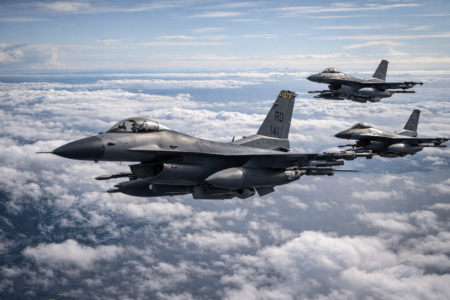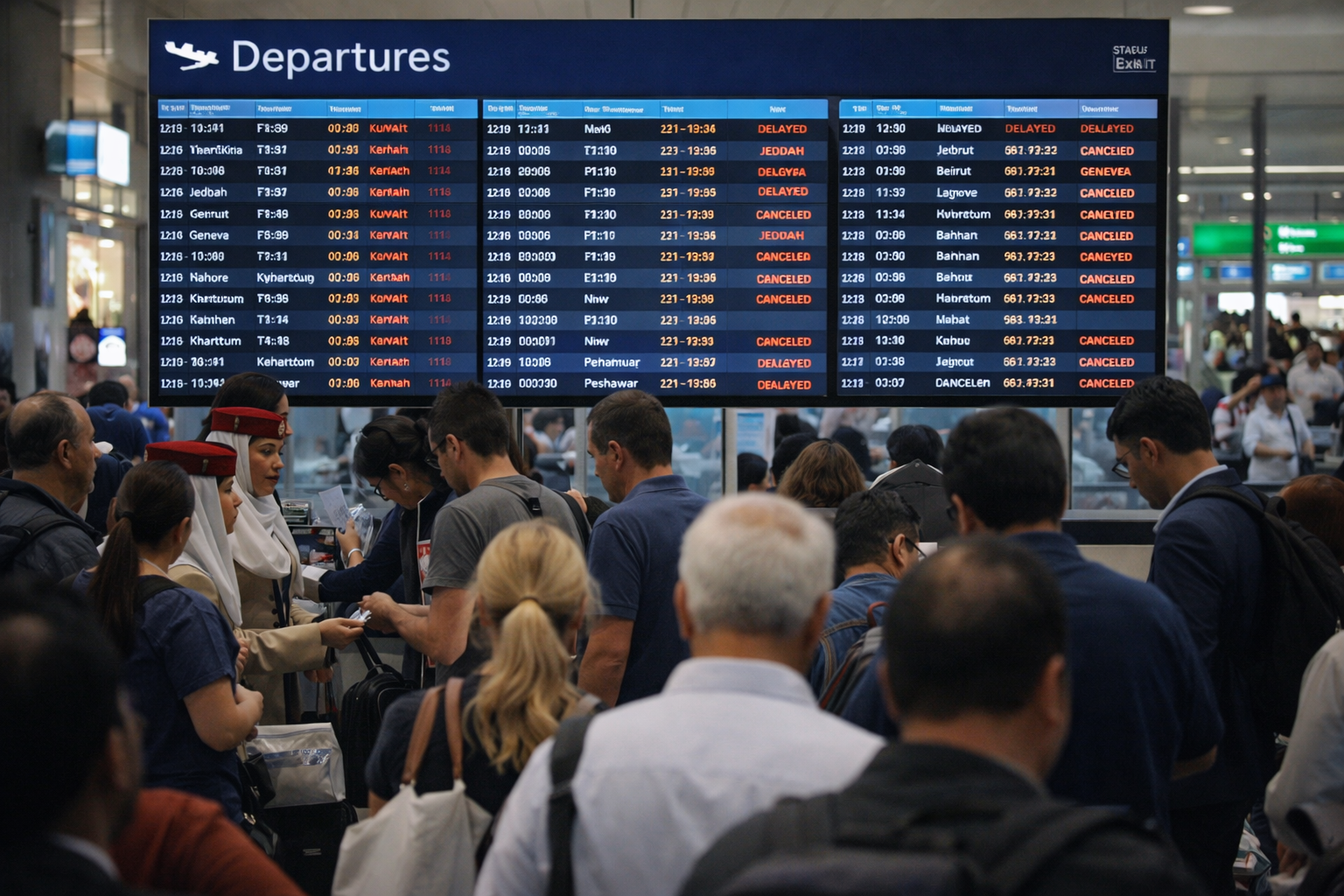
Emirates and Etihad are beginning a cautious, partial return to flying after days of cancellations and rerouting across Gulf hubs, but travelers should expect schedules to remain fragile and subject to rapid change.
The disruption has been driven by a chain reaction of airspace closures across the Middle East following US and Israeli strikes on Iran and the ensuing regional escalation.
Gulf airspace shockwaves
Air traffic across large parts of the region was constrained by airspace restrictions over countries including Iran, Iraq, Kuwait, Bahrain and Qatar, according to FlightRadar24 data.
That forced airlines to suspend, cancel, or divert flights, and the impact spread quickly because Dubai, Abu Dhabi and Doha function as global “megahubs” for long-haul connecting traffic.
The scale has been large.
More than 1,800 flights were cancelled by major Middle Eastern airlines over the first weekend of disruption, with 966 cancellations out of 4,218 scheduled arrivals on Saturday and 716 cancellations out of 4,329 scheduled arrivals on Sunday.
Cirium’s analysis said that the three big hub carriers (Emirates, Qatar Airways and Etihad) connect the Americas, Europe, Africa and Asia through their Gulf hubs and can carry around 90,000 transiting passengers per day, meaning knock-on effects reach far beyond the region.
What’s resuming, and what isn’t
Etihad told Reuters it has resumed some limited flight operations, but stressed that “all planned commercial flights to and from Abu Dhabi remain suspended.”
The airline said certain repositioning, cargo and repatriation flights may operate in coordination with UAE authorities, contingent on strict safety clearances.
Etihad’s website showed some flights departing Abu Dhabi to cities including London, Paris, Moscow and Amsterdam, with additional flights listed to destinations including Jeddah and Kochi.
Emirates, meanwhile, has been more explicit that normal operations are not yet back.
On its travel-updates page, the airline said it has temporarily suspended all operations to and from Dubai until 1500 UAE time on Tuesday, March 3, due to “multiple regional airspace closures,” and warned the situation “remains dynamic and is assessed continuously.”
What should travelers do now?
Do not rely on yesterday’s schedule.
Emirates is telling customers to check the latest operational updates on emirates.com and monitor email notifications before traveling to the airport.
For passengers booked to travel before or on March 5, Emirates has said they can rebook on an alternate flight up to 20 days from the original travel date or request a refund.
For Etihad passengers, the key message is that any flying underway may be special-purpose rather than a full return to the timetable, and commercial services may remain paused until conditions permit.
For everyone transiting the Gulf, the broader point is the same: a partial operational recovery reflects how economically vital these hubs are, but the airspace risk that caused the grounding has not disappeared.
https://invezz.com/news/2026/03/02/emirates-and-etihad-restart-limited-flights-what-travelers-should-know/