






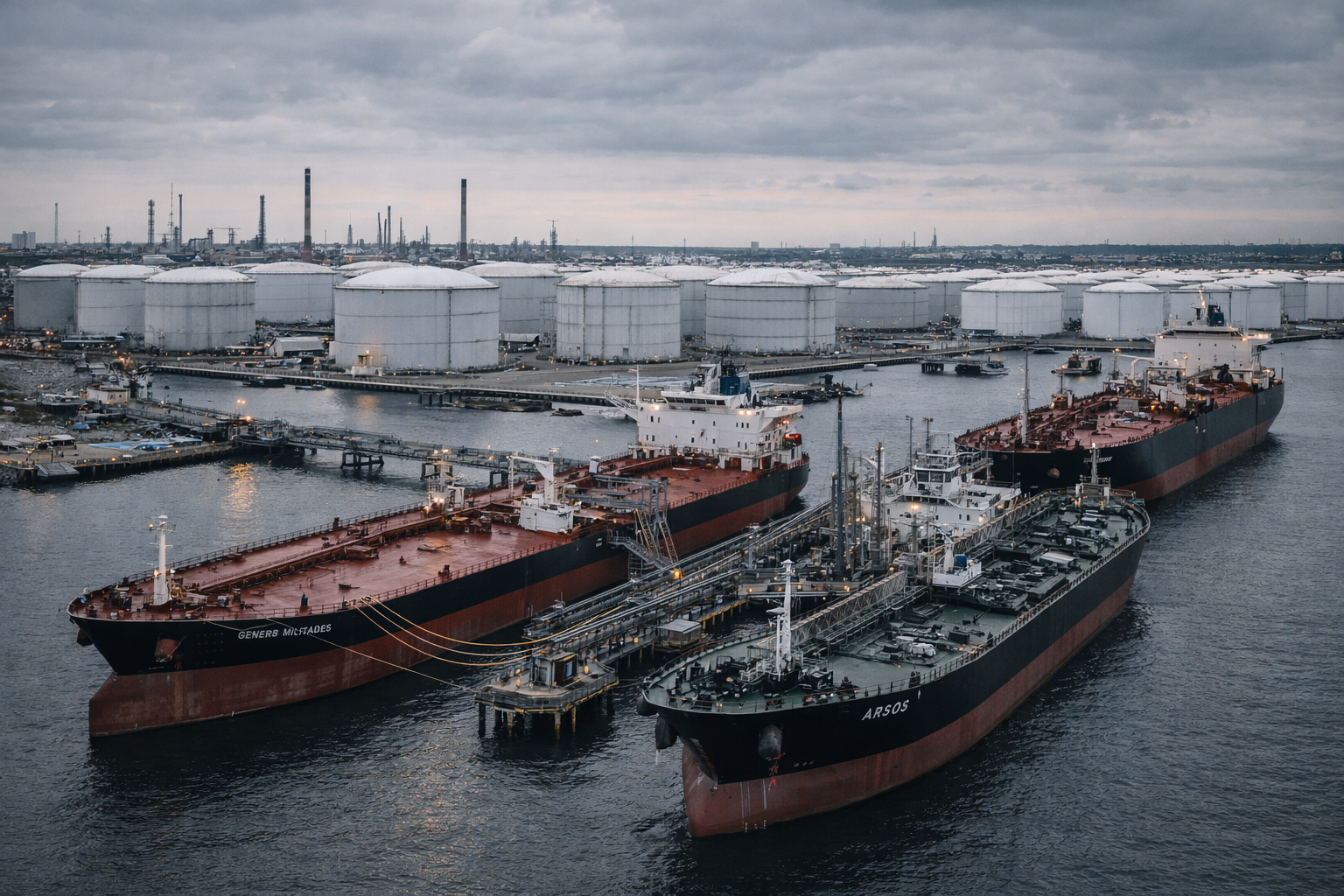
Brent crude oil prices plummeted more than 10% to slip below $90 per barrel on Friday on increasing hopes that the US and Iran would strike a peace deal.
Brent crude fell below $90 per barrel for the first time since March 11 as the US and Iran prepared for more talks during the weekend, and as Israel and Lebanon agreed to a 10-day ceasefire.
The sentiments also improved after Iranian Foreign Minister Seyed Abbas Araghchi said the Strait of Hormuz would remain open to all commercial vessels during the ceasefire period. He added that transit would follow a coordinated route previously announced by Iran’s Ports and Maritime Organisation.
The front-month Brent contract was last at $88.89 a barrel, down 10.7%, while the price of West Texas Intermediate was 11.1% lower at $84.21 a barrel.
Both Brent and WTI prices were headed for steep weekly losses.
Geopolitical drivers and price reaction
According to UBS analyst Giovanni Staunovo, the comments made by Iran’s foreign minister suggested a potential de-escalation, provided the ceasefire holds. Staunovo added that the next key indicator will be whether there is a significant increase in the number of tankers traversing the Strait.
Additionally, to resolve a central obstacle in negotiations to end the war, US President Donald Trump stated that Tehran had proposed to refrain from acquiring nuclear weapons for over 20 years.
“We’re going to see what happens. But I think we’re very close to making a deal with Iran,” Trump told reporters outside the White House on Thursday.
The current price of Brent crude is $20 lower than it was at the close of March. This decline is fueled by optimism surrounding a potential agreement between Iran and the US, and the reopening of the Strait of Hormuz to traffic.
The Strait of Hormuz is responsible for 20% of the world’s oil and liquefied natural gas trade. According to estimates by the International Energy Agency, global oil export disruptions now total around 13 million barrels per day.
Market fundamentals and lingering supply risk
“However, uncertainty remains high: We cannot rule out the possibility that tensions will rise significantly again, causing oil prices to climb once more,” Barbara Lambrecht, commodity analyst at Commerzbank AG, said.
Price movements over the next few days are therefore likely to continue to depend heavily on developments in the Middle East conflict.
The weekly US inventory report offered concrete evidence regarding the fundamental state of the oil market. To date, US inventory trends have generally not caused concern.
A safeguard is undoubtedly provided by the release of reserves. Despite this, US crude oil imports sharply declined last week.
“While sharp fluctuations in import figures are not uncommon, if crude oil imports were again very low in the past week, this is likely to heighten market participants’ awareness of the issue of supply shortages and thus support prices,” Lambrecht added.
The IEA also noted that in March there was a substantial drawdown in inventories—specifically, 205 million barrels or 6.6 million barrels per day—in nations outside the Gulf region.
This decline is estimated to be approximately equivalent to the supply deficit recorded last month, according to Commerzbank.
Current OPEC production is expected to fall short of the IEA’s estimated demand for OPEC oil by approximately 5 million barrels per day, signaling a looming supply deficit for the current quarter.
“The situation on the oil market thus remains extremely precarious as long as the Strait of Hormuz remains closed,” Commerzbank’s analysts said.
https://invezz.com/news/2026/04/17/brent-crude-slumps-below-90-on-peace-deal-hopes-market-remains-precarious/


