








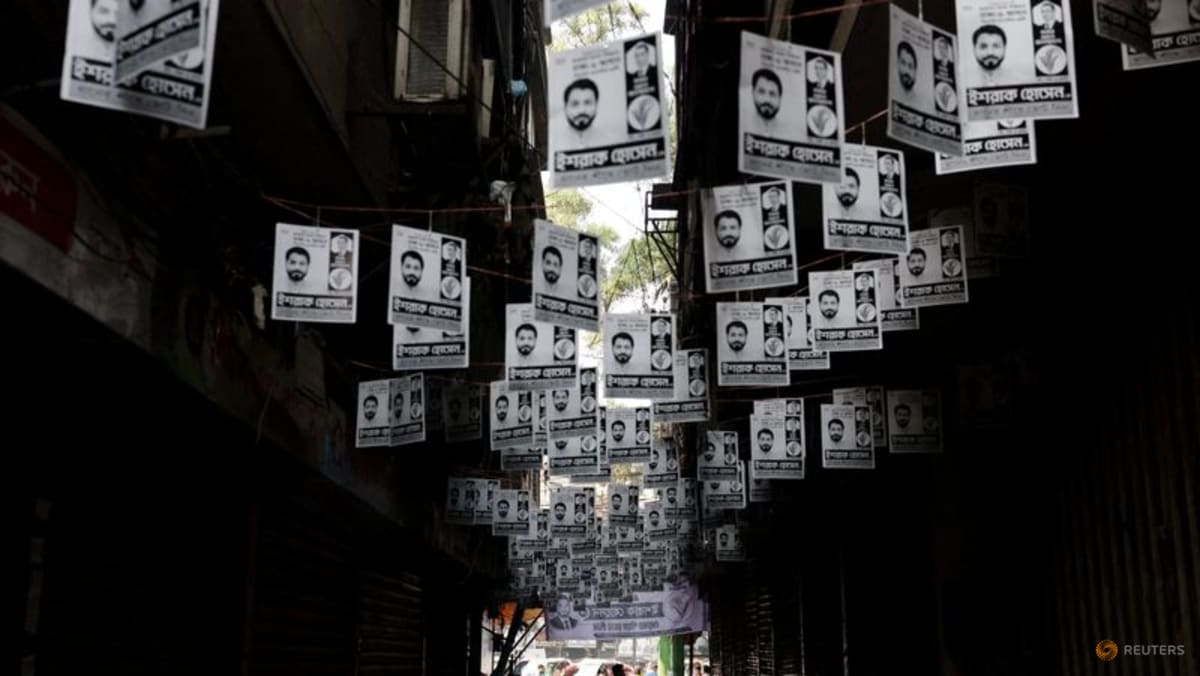
DHAKA: Bangladesh heads to the polls on Thursday (Feb 12), marking a return to democracy after the 2024 ouster of long‑time premier Sheikh Hasina in a Gen Z‑driven uprising, in an election seen as pivotal for the country’s stability.
Analysts say a decisive result is crucial for steady governance in the nation of 175 million, as the deadly anti-Hasina protests triggered months of unrest and disrupted key industries, including the garments sector, the world’s second-largest exporter.
It is the world’s first election after a revolution led by under-30s, or Gen Z, to be followed by Nepal next month.
The contest pits two coalitions led by former allies, the Bangladesh Nationalist Party (BNP) and the Islamist Jamaat‑e‑Islami, with opinion polls giving an edge to the BNP.
Hasina’s Awami League is banned, and she remains in self‑imposed exile in long-term ally India, opening the window for China to expand its influence in Bangladesh as Dhaka’s ties with New Delhi deteriorate.
Unlike previous elections marred by opposition boycotts and intimidation, more than 2,000 candidates, including many independents, are vying for 300 seats in the Jatiya Sangsad, or House of the Nation.
Voting in one constituency has been postponed due to the death of a candidate. At least 50 parties are contesting in total, a national record.
“This election is not just another routine vote,” Nobel laureate Muhammad Yunus, head of an interim government installed after Hasina’s ouster, said earlier this week.
“The public awakening we witnessed against long‑standing anger, inequality, deprivation and injustice finds its constitutional expression in this election.”
In parallel, there will be a referendum on a set of constitutional reforms, including establishing a neutral interim government for election periods, restructuring parliament into a bicameral legislature, increasing women’s representation, strengthening judicial independence and imposing a two-term limit on the prime minister.
Despite the crowded field and expectations of a close race, the campaign period remained largely peaceful, barring a few incidents.
“The crucial test for Bangladesh now will be to ensure the election is conducted fairly and impartially, and for all parties to then accept the result,” said Thomas Kean, a senior consultant with the International Crisis Group. “If that happens, it will be the strongest evidence yet that Bangladesh has indeed embarked on a period of democratic renewal.”
On election day, more than 100,000 soldiers from the army, navy and air force will assist nearly 200,000 police in maintaining law and order.
https://www.channelnewsasia.com/asia/bangladesh-votes-in-landmark-election-after-gen-z-revolution-5924676


