








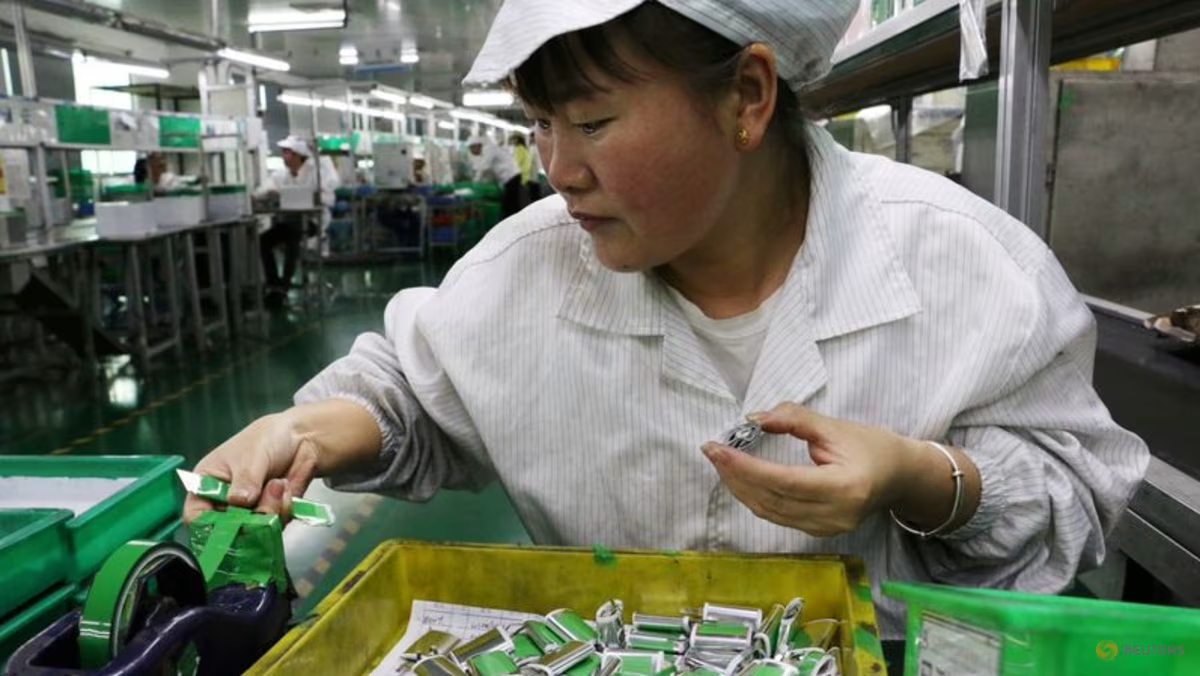
Lithium conversion is an energy-intensive chemical process that produces waste and residues, making environmental compliance, permitting and waste treatment an increasingly important part of costs and timelines.
“Only when upstream mine supply is stable can the industry chain develop normally,” the Chinese lithium producer said – adding that costs and process maturity across different stages affect both prices and supply quality.
David Zhang, General Secretary of the International Intelligent Vehicle Engineering Association in Hong Kong, told CNA that the global expansion of lithium refining and battery production capacity – particularly as capacities expand beyond China – is driving a rebalancing of the industry, with volatility and capacity adjustments an expected part of that process.
“There will definitely be overcapacity and price volatility,” Zhang said.
WHAT LIES AHEAD
Analysts said lithium is unlikely to be displaced any time soon, as most alternative battery designs still rely on it as their core ingredient.
“I would say that lithium is very likely to remain central to EV batteries for the next five to ten years because even mainstream alternatives are still largely within the lithium-ion family,” said Popuri.
Rather than disappearing, constraints are more likely to shift within the lithium ecosystem itself, he added.
“What can change is where the bottleneck sits,” he said. “The constraint may move between carbonate versus hydroxide pathways, or towards other midstream inputs and manufacturing yield, rather than lithium ‘going away’.”
Lee said lithium demand is also broadening beyond EVs. “Lithium is now making its way into every product imaginable,” he said.
But higher prices could eventually accelerate alternatives, he added.
“The next scalable technology is definitely sodium, given their similarities with lithium battery production processes,” Lee said.
https://www.channelnewsasia.com/east-asia/china-lithium-battery-ev-manufacturing-global-stronghold-5903941


