






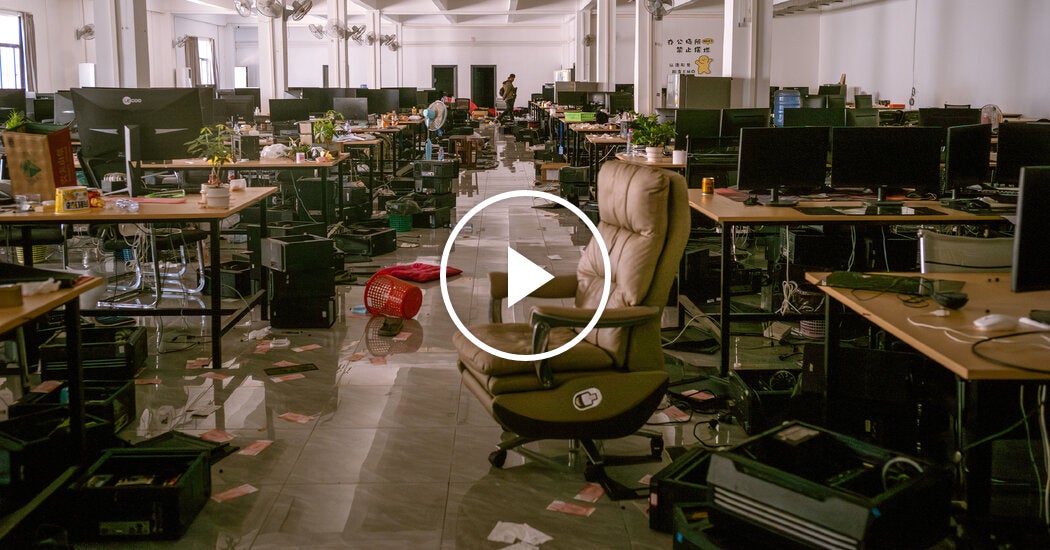
Holy moly. Look at these phones. The floor is just littered with SIM cards. We’re in Myanmar. Only weeks after rebel fighters took control of a cyberscam center near the border with Thailand. For years, Chinese criminals have used ordinary office spaces like this in the middle of the jungle to target Americans in elaborate online fraud. OK, here we are, the nerve center of this multibillion-dollar industry that is scamming people all across the world. More than 3,000 people from dozens of countries were once employed here, joining an industry that has proliferated during Myanmar’s civil war. There’s just row after row of monitors. Looks just like a normal office park. This is all evidence of scamming. Many of the workers fled, leaving behind documents and records detailing the scams. This looks like a receipt. There were also piles of electronic equipment, the main tools of their trade. Here are AT&T SIM cards. So you can just pretend that you’re calling from the United States. The scammers would act like potential love interests and send messages to their targets on social media. They would target lonely hearts in the United States and pretend to be beautiful, young Asian women who were interested in just making a connection with somebody. As their relationships with their victims grew closer, the scammers would then move the conversation to a video call. This is a video call room, and you can see that they’ve got a fake background and they’ve got fake flowers, some books. This looks like a book, but it’s actually just a box. When victims would send in large amounts of money, the scammers would celebrate. When you make $5,000 bucks, you hit the gong, and then when you make $50,000 bucks, you hit this very large drum. And in between is the god of wealth. [explosion] Jesus Christ, it’s close. Our visit was punctuated by the thud of mortar rounds that forced us to seek cover. “Hurry, hurry.” But many of the Chinese workers still living in the complex seemed unfazed about being in the middle of a war zone. We tried to speak to some of them during our visit to the compound. These are the scammers who are not willing to leave. Some said they were lured by fake job offers and forced to work in the scam industry. If they go home to China, they said, they’ll likely be arrested. So for now, their best hope is to find another job here in war-torn Myanmar.
https://www.nytimes.com/video/world/asia/100000010582900/myanmar-scam-complex-fraud.html


