






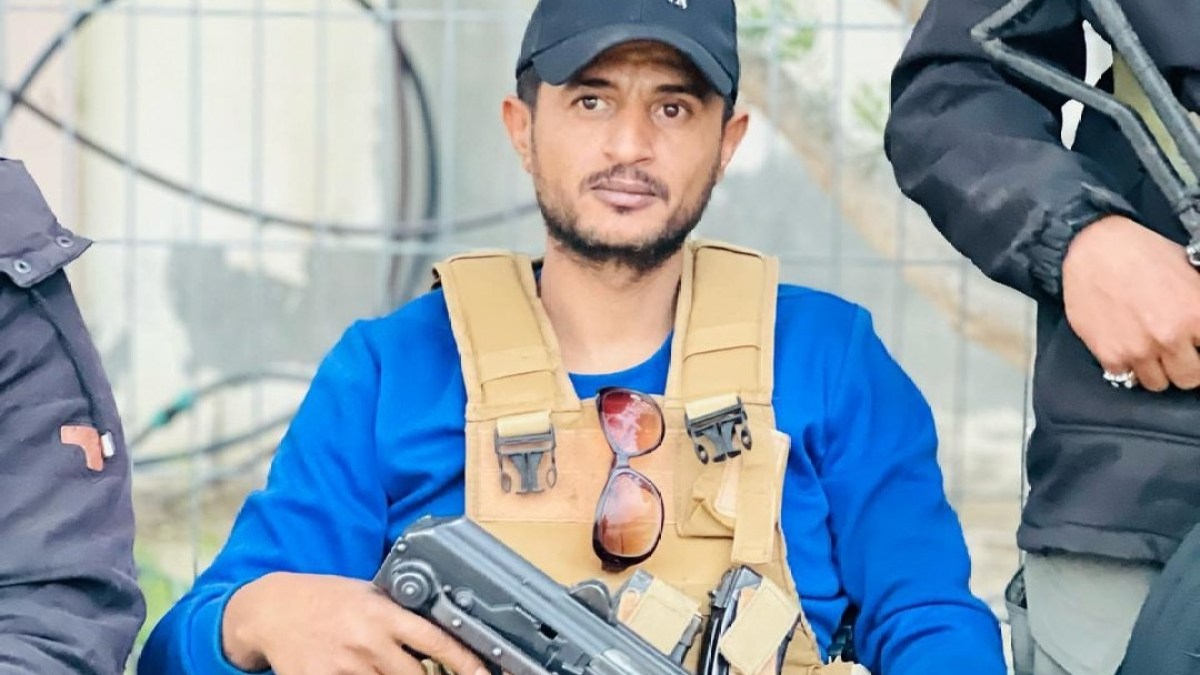
The killing of Gaza militia leader Yasser Abu Shabab, confirmed by his Popular Forces group and by Israeli media, is the final chapter of a man who tried to present himself – with Israeli support – as an alternative to Hamas, but who was widely derided by Palestinians as a collaborator.
In his early 30s and from southern Gaza’s Bedouin Tarabin tribe, Abu Shabab was largely unknown in the Palestinian enclave until his emergence at the head of a militia last year. Initially called the “Anti-Terror Service”, by May this year it had popularised itself as the “Popular Forces”, a well-armed group of at least 100 fighters operating in Israeli-controlled areas of Gaza.
Recommended Stories
list of 3 itemsend of list
The group operated somewhere between a criminal gang and an Israeli proxy force, but presented itself as a nationalist Palestinian group dedicated to fighting Hamas.
That branding served a purpose for Israel, even if its end goal for the group was never clear, particularly once it became evident that the Popular Forces lacked any form of mass popular appeal.
That was because, for many Palestinians, Abu Shabab was a criminal – he had been imprisoned by Palestinian authorities in Gaza for a number of years on drug-related charges prior to escaping from jail in the early part of the war on Gaza.
His subsequent alliance with Israel, as it committed a genocide in Gaza killing more than 70,120 people, was immediately disqualifying for most Palestinians – including his own tribe, who said in a statement that his killing served as “the end of a dark chapter that does not represent the history of the tribe”.
Ideological ambiguity
Pinning down Abu Shabab’s ideology is difficult, with many observers saying that he was driven by power rather than any particular political stance.
The initial branding of his group in the language of “anti-terrorism” is somewhat ironic considering reports of his links to ISIL (ISIS), although they are mostly related to cooperation in smuggling from Egypt’s Sinai Peninsula into Gaza, rather than any shared ideology.
There has also always been a disparity between Abu Shabab’s background and his social media presence, with English-language posts and even an opinion piece published by the Wall Street Journal.
In that article, Abu Shabab claimed that his Popular Forces controlled large parts of eastern Rafah, in the south of Gaza, and were “ready to build a new future”.
“Our primary goal is to separate Palestinians who have nothing to do with Hamas from the fire of war,” the article attributed to him said.
But while Abu Shabab attempted to downplay his links to Israel, Prime Minister Benjamin Netanyahu admitted in June that his government was using armed clans – which media reports made clear were Abu Shabab’s forces – to fight Hamas.
The idea of using such forces was, according to Netanyahu, the result of advice from security officials, even after past failed attempts at working with local groups such as the South Lebanon Army in Israel’s northern neighbour.
Looting
The Popular Forces has sought to portray itself as a group helping to distribute much-needed aid to Palestinians in Gaza, particularly at sites run by the US- and Israeli-backed GHF.
Abu Shabab told CNN that he led “a group of citizens from this community who have volunteered to protect humanitarian aid from looting and corruption”, and his group shares pictures of its forces distributing aid.
But Abu Shabab and the Popular Forces have since been accused of looting from aid convoys, with an internal United Nations memo seen by the Washington Post calling him “the main and most influential stakeholder behind systematic and massive looting”, and security sources in Gaza confirming to Al Jazeera Arabic that the Israeli-backed group had participated in looting.
Those accusations, as Gaza suffered from a famine brought on by Israeli restrictions on aid access and its destruction of Palestinian infrastructure, added to the perception that Abu Shabab was simply an Israeli proxy.
It is perhaps therefore not surprising that few Palestinians in Gaza – even those opposed to Hamas – have shed tears over Abu Shabab’s killing.
The circumstances of that killing continue to be murky – much like Abu Shabab’s origins and his role during the war.
But ultimately, as it became clear that he did not have the support or power to be a genuine alternative to Hamas, his fate seemed increasingly sealed.
https://www.aljazeera.com/features/2025/12/4/who-was-yasser-abu-shabab-israel-backed-militia-leader-killed-in-gaza?traffic_source=rss