


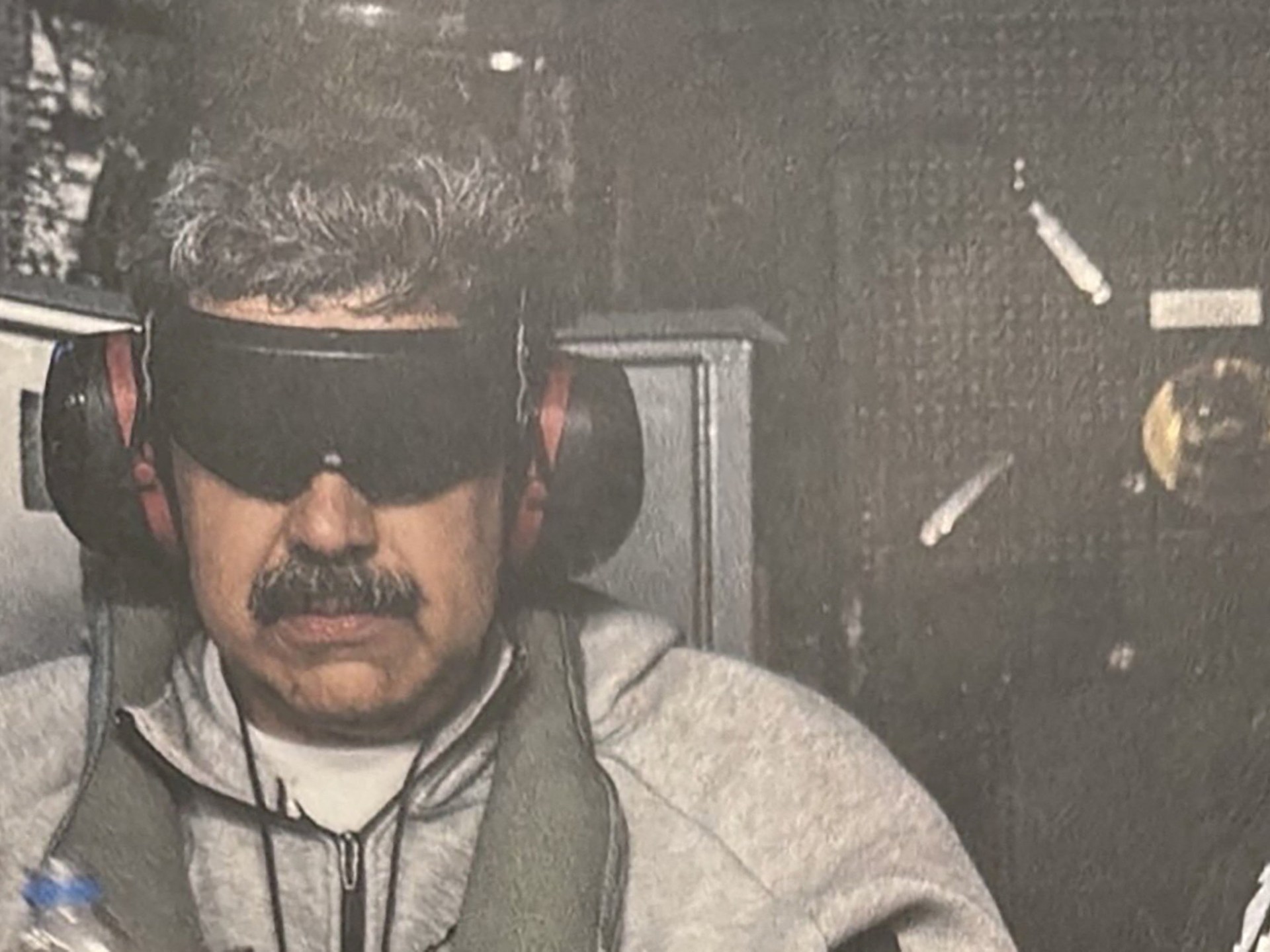
Nicolas Maduro, 63, kept an iron grip on power for over a decade in Venezuela.
It ended abruptly on Saturday, January 3, when United States forces abducted him and his wife, First Lady Cilia Flores, removing them from the country.
The two are ostensibly to be tried in a US court on drug- and weapons-related charges.
Who is Maduro? How did he come to lead Venezuela? And how did he end up abducted by the US? Here’s what we know.
Maduro’s early life
Maduro was born in a working-class family on November 23, 1962, in the El Valle neighbourhood of Caracas.
His parents are Nicolas Maduro Garcia, a trade union leader, and Teresa de Jesus Moros, who also had three daughters together: Maria Teresa, Josefina, and Anita Maduro.
Maduro was raised under the significant influence of his father’s politics.
Maduro once shared that his grandparents were of Sephardic Jewish descent, and converted to Catholicism upon arriving in Venezuela.
Growing up, Maduro was a fan of Western rock music and often quoted artists including John Lennon.
He attended a public high school, the Liceo Jose Avalos, in El Valle, where he was involved in student politics and reportedly served as the student union president; however, there are no records that show he graduated.
Rise to power
Maduro’s political rise began in organised labour.
He is believed to have joined the Socialist League of Venezuela, a Marxist-Leninist party, in the early 1980s.
At the age of 24, in 1986, Maduro was sent as a representative of the Socialist League to Cuba for a year of political training at the Escuela Nacional de Cuadros Julio Antonio Mella, run by the Union of Young Communists (UJC).
Upon his return, he started working as a bus driver in Caracas city’s metro system, and then founded and led the SITRAMECA, or Sindicato de Trabajadores y Trabajadoras del Metro de Caracas, in 1991.
Maduro became active in the transport workers’ union during the late 1980s and early 1990s, and founded one of the company’s first informal labour syndicates, gradually entering the power centres through union politics.
A 2006 cable from the US Embassy in Caracas, made public by WikiLeaks, noted that Maduro was on the national committee of the Socialist League and he “reportedly turned down a baseball contract from a U.S. Major League Baseball scout.”
He was moved by the leadership of Hugo Chavez, a Venezuelan lieutenant colonel who led the armed Bolivarian movement rebelling against the so-called “Puntofijismo” system, Venezuela’s two-party democracy system, and the sitting President Carlos Andres Perez, citing corruption.
In the early 1990s, Maduro joined MBR-200, the civilian wing of the movement, and later continued to campaign for Chavez’s release after he was jailed for the failed 1992 coup.
Maduro met his future wife, Cilia Flores, when she headed the legal team that won freedom for Chavez in 1994.
After Chavez was pardoned and released, Maduro joined the Movement of the Fifth Republic, a socialist political party, in 1997 to run in the 1998 elections. Maduro was elected to the National Constituent Assembly while Chavez won the presidency.
Maduro was close to Chavez during the drafting of a new constitution in 1999, and after six years in office, he was designated the minister of foreign affairs. In October 2012, Maduro became vice president of Venezuela amid the rapidly deteriorating health of Chavez.
Consolidation of power in Caracas
In December 2012, as the charismatic Chavez fell ill and was flying to Cuba for cancer treatment, he anointed Maduro, then the vice president, as his political successor in a televised address.
In elections after Chavez’s death, Maduro won by a slim margin in April 2013.
He began his presidency by expelling US diplomats, calling them “historical enemies” and accusing them of poisoning Chavez. He labelled the domestic opposition “fascists” working to “divide the country”.
The first lady went on to hold multiple high-ranking positions, including attorney general and chief of parliament.
Maduro inherited firm control over key institutions that Chavez had already reshaped, including the military leadership, the Supreme Court, and state media.
But the former union leader did not have his mentor’s charisma, and had to deal with a collapsing economy and an opposition, including Maria Corina Machado, who later won the 2025 Nobel Peace Prize, that called for protests across the country. Maduro cracked down on them, killing at least 43 protestors.
Facing increasing opposition pressure and plummeting popularity, Maduro established a pro-government constituent assembly in 2017 to neutralise the legislature, now controlled by the opposition. Another round of protests and further crackdown followed, with Venezuelan forces killing more than 100 people.
All the while, the economy tanked, with Venezuela’s nearly 30 million population facing shortages of essentials, and oil production dropping to margins.
In the next election in 2018, Maduro was declared the winner unopposed, but 45 countries, including the US, did not recognise him, and he jailed some opposition leaders and forced others into exile.
In 2024, Maduro was again chosen the winner in the presidential election, widely seen as non-transparent, with the election council failing to show the tally sheets. More mass protests followed, met with a harsh crackdown.

Why did Trump decide he needed to remove Maduro?
After US President Trump returned to office for a second term in January last year, he upped the ante against the Venezuelan leader.
The Trump administration imposed a 25 percent tariff on Caracas, doubled the bounty on Maduro, and imposed sanctions on his family members.
Since September, US forces have conducted strikes on vessels off the Venezuelan coast, which the White House alleges were involved in “narco-terrorism”.
Saturday came the tipping point, when Maduro and his wife were abducted by US special forces and taken to the US to face trial on charges brought against them in the US.

https://www.aljazeera.com/news/2026/1/4/who-is-is-nicolas-maduro?traffic_source=rss
