







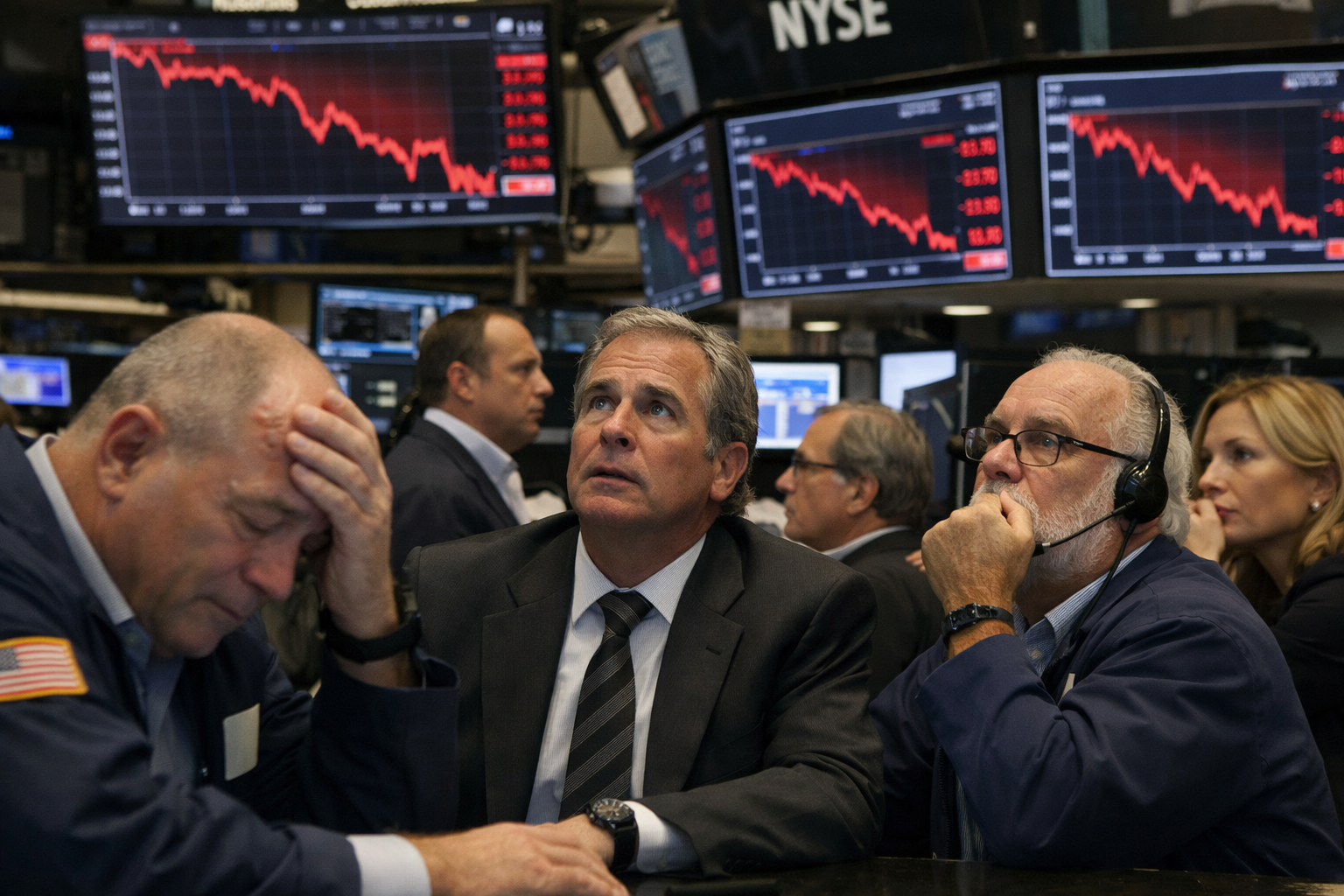
As the conflict in the Middle East continues to roil global markets, investors are searching for signs of a turnaround.
However, today on CNBC, Altaf Kassam – EMEA Head of Investment Strategy and Research at State Street Global Advisors – provided a sobering reality check.
While historical precedents suggest that markets often rally before a conflict officially concludes, Kassam warned that the current geopolitical and economic landscape – defined by a direct military confrontation with Iran – may not follow the traditional “snap-back” script.
Instead, a persistent “risk premium” is expected to hang over US stocks long after the guns fall silent.
The ‘fear tax’ on US stocks to stick around
Kassam said financial markets are inherently forward-looking – often pricing in the conclusion of a war well before the final ceasefire.
“In previous conflicts, what we’ve seen is that markets discount the end of the war well before any military conflict has ended,” he noted, adding this phenomenon could repeat if investors see a clear diplomatic path forward.
Kassam specifically highlighted the role of the White House, saying, “it seems clear that President Trump is preparing some off-ramp, and when he says the war is over, the markets might start to have some relief rally.”
However, he cautioned that while a celebratory headline rally is possible, it should not be confused with a return to the low-volatility environment seen in previous years.
Kassam doesn’t see a V-shaped recovery ahead
One of the most striking aspects of Kassam’s analysis is the belief that the “risk premium” currently embedded in US stock prices will not simply evaporate once hostilities cease.
Unlike the “V-shaped” recoveries typical of the last decade, State Street anticipates a much stickier environment for risk in 2026.
“What we believe is that the risk premium that has started to be baked in will stay there,” Kassam explained, adding that “markets won’t snap back as quickly as they fell, and we won’t see a clean mean reversion.”
What this means is: the structural damage to global energy supply chains and the heightened threat of asymmetric retaliation have fundamentally shifted the floor for valuations, leaving investors to grapple with higher costs of capital and lower price-to-earnings multiples for the foreseeable future
The looming shadow of stagflation
The most notable threat to the long-term health of the stock market, according to Kassam, is the potential for a “regime change” in the global economy toward stagflation.
As oil prices hover near $100 per barrel and the Strait of Hormuz remains a flashpoint, the twin pressures of stagnant growth and rising prices create a toxic cocktail for “risky assets.”
Kassam warned that “the worst-case scenario… is stagflation, low growth and increasing inflation.” If the global economy enters this regime, the era of easy gains through passive index investing may be over.
“It’ll be a much tougher market to trade,” he concluded, signalling that active management and a focus on defensive sectors like energy-intensive alternatives or aerospace may be the only way to navigate this complex new reality.
https://invezz.com/news/2026/03/14/altaf-kassam-us-stocks-may-not-snap-back-after-the-iran-war/


