


Denmark and Mexico, also threatened by US President Donald Trump, warn that the US violated international law.
Members of the United Nations Security Council (UNSC), including key US allies, have warned that the abduction of Venezuelan President Nicolas Maduro and his wife by US special forces could be a precedent-setting event for international law.
The 15-member bloc met for an emergency meeting on Monday in New York City, where the Venezuelan pair were also due to face drug trafficking charges in a US federal court.
Recommended Stories
list of 4 itemsend of list
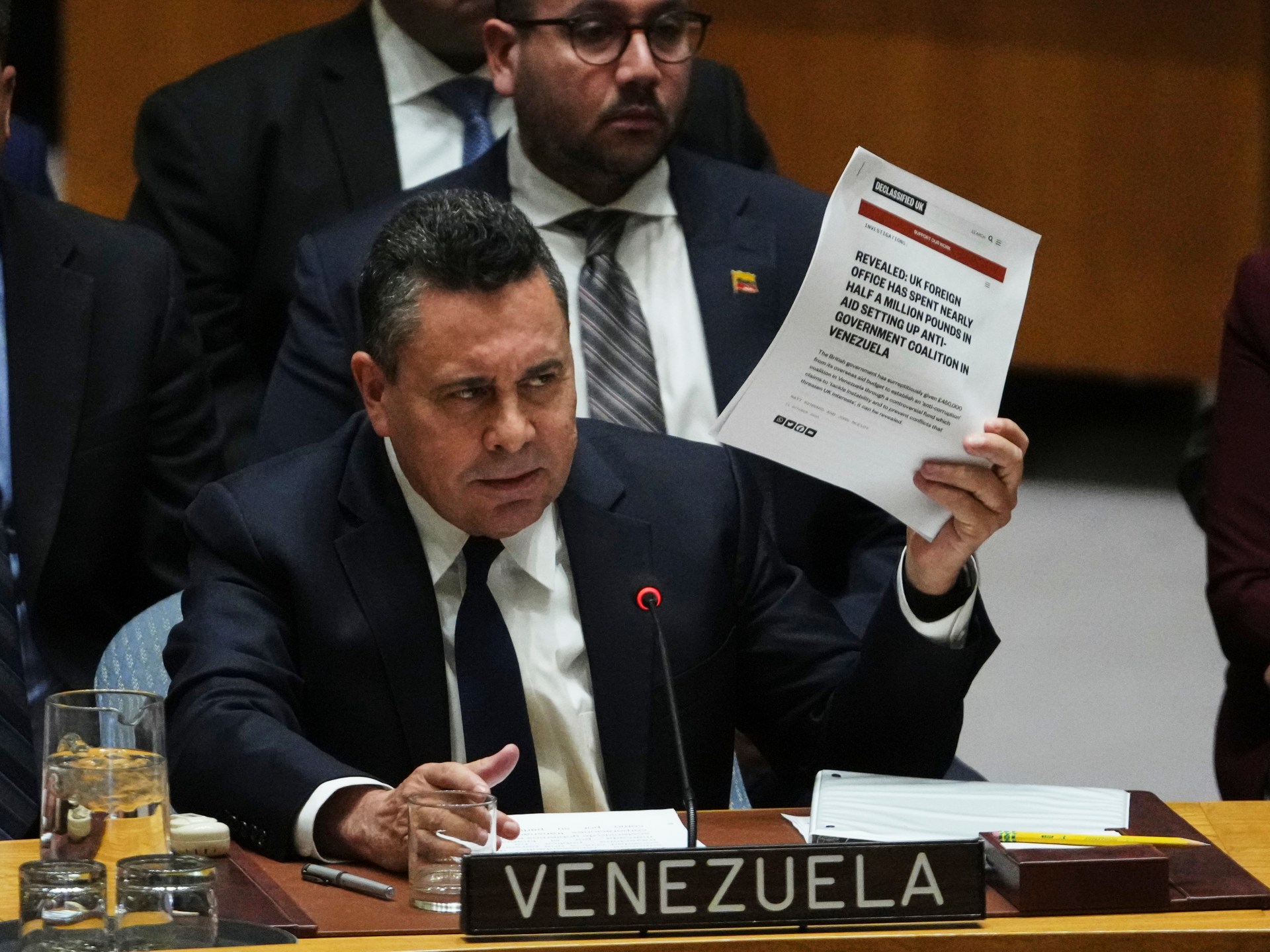
Venezuela’s ambassador to the UN, Samuel Moncada, condemned the US operation as “an illegitimate armed attack lacking any legal justification”, in remarks echoed by Cuba, Colombia and permanent UNSC members Russia and China.
“[The US] imposes the application of its laws outside its own territory and far from its coasts, where it has no jurisdiction, using assaults and the appropriation of assets,” Cuba’s ambassador, Ernesto Soberon Guzman, said, adding that such measures negatively affected Cuba.
Russia’s ambassador, Vassily Nebenzia, said the US cannot “proclaim itself as some kind of a supreme judge, which alone bears the right to invade any country, to label culprits, to hand down and to enforce punishments irrespective of notions of international law, sovereignty and non-intervention”.
Notable critics at the emergency session included traditional US allies, Mexico and Denmark, both of whom Trump has separately threatened with military action over the past year.
Mexico’s ambassador, Hector Vasconcelos, said that the council had an “obligation to act decisively and without double standards” towards the US, and it was for “sovereign peoples to decide their destinies,” according to a UN readout.
His remarks come just days after Trump told reporters that “something will have to be done about Mexico” and its drug cartels, following Maduro’s abduction.
Denmark, a longstanding US security ally, said that “no state should seek to influence political outcomes in Venezuela through the use of threat of force or through other means inconsistent with international law.”
“The inviolability of borders is not up for negotiation,” Denmark’s ambassador, Christina Markus Lassen, told the council in an oblique reference to Trump’s threat that the US would annex Greenland, a self-governed Danish territory.
France, another permanent member of the UNSC, also criticised the US, marking a shift in tone from French President Emmanuel Macron’s initial remarks that Venezuelans “can only rejoice” following Maduro’s abduction.
“The military operation that has led to the capture of Maduro runs counter to the principle of peaceful dispute resolution and runs counter to the principle of non-use of force,” said the French deputy ambassador, Jay Dharmadhikari.
Representatives from Latvia and the United Kingdom, another permanent UNSC member, focused on the conditions in Venezuela created by Maduro’s government.
Latvia’s ambassador, Sanita Pavļuta-Deslandes, said that Maduro’s conditions in Venezuela posed “a grave threat to the security of the region and the world”, citing mass repression, corruption, organised crime and drug trafficking.
The UK ambassador, James Kariuki, said that “Maduro’s claim to power was fraudulent”.
The US ambassador, Mike Waltz, characterised the abduction of Maduro and his wife as a “surgical law enforcement operation facilitated by the US military against two indicted fugitives of American justice”.
The White House defended its wave of air strikes on Venezuela, and in the waters near it, and Maduro’s abduction as necessary to protect US national security, amid unproven claims that Maduro backed “narcoterrorist” drug cartels.
https://www.aljazeera.com/news/2026/1/6/us-critics-and-allies-condemn-maduros-abduction-at-un-security-council?traffic_source=rss
