






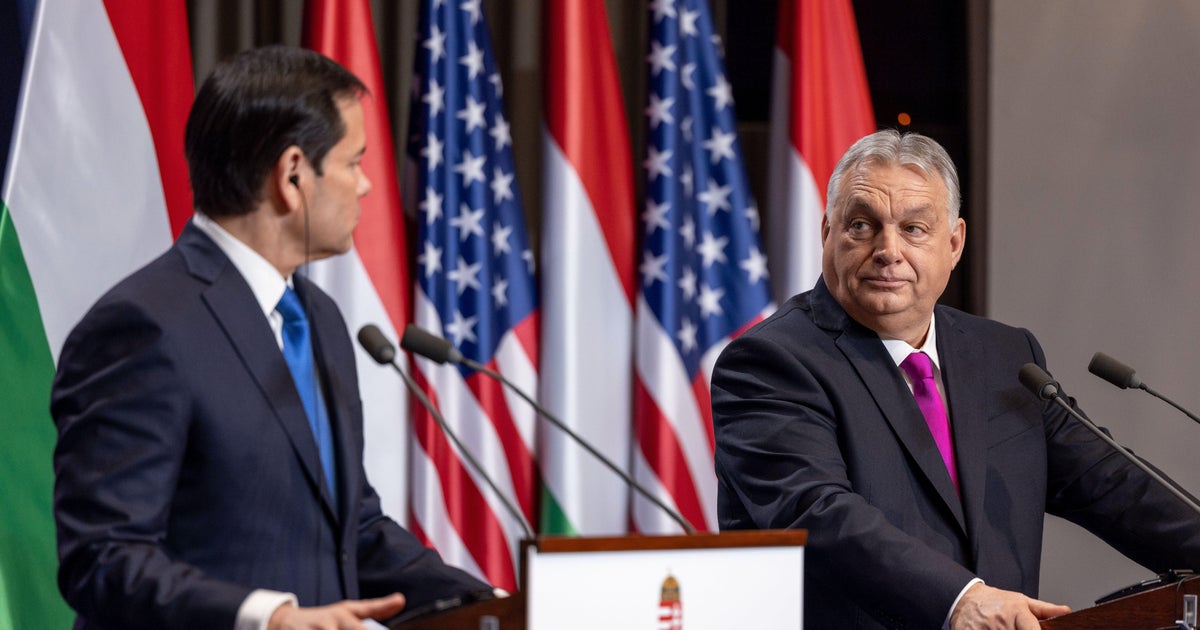
The United States and Hungary signed a civilian nuclear cooperation agreement on Monday, as the Trump administration deepened bilateral ties with a controversial ally at a politically sensitive moment for Budapest.
U.S. Secretary of State Marco Rubio was in Budapest for meetings with Hungarian Prime Minister Viktor Orbán and senior members of his government, during which Rubio and Orbán signed the pact.
The deal comes two months before Hungary’s next parliamentary elections, which may determine whether Orbán can maintain his two-decade grip on power.
What is in the U.S.-Hungary nuclear deal
The U.S. and Hungary signed a Memorandum of Understanding on Nuclear Energy in November 2025, launching negotiations on cooperation across civil nuclear industry, including on small modular reactors (SMRs) and spent fuel storage.
Hungary relies heavily on nuclear energy and, up until now, its nuclear sector has been closely linked to Russia, with which Orbán’s government has maintained close ties despite President Vladimir Putin’s four-year war against neighboring Ukraine.
Hungary has long relied heavily on Russian technology and fuel to power its nuclear plants.
The new deal will “deliver decades of cooperation in nuclear energy” between Washington and Budapest, and it underscored the U.S. commitment “to making Hungary a hub for regional small modular reactor (SMR) development, and encouraged Hungary to select U.S. SMR technology,” the U.S. State Department said in a statement, calling it part of wider efforts to advance “our mutual security interests in the region.”
Under the agreement, Hungary will purchase nuclear fuel from American suppliers for the first time, and U.S. firm Holtec International will help Hungary manage its spent nuclear fuel.
Trump “deeply committed to” Orban’s success
Viktor Orban, a self-described populist and leader of the far-right Fedesz party, is a long-time ally of President Trump, who’s previously called him “a great man and a very special person.”
For Orbán, the agreement with the U.S. carries both political and strategic significance. It enables Hungary to show it is diversifying its nuclear supply chain, giving it new options apart from Russia. The close cooperation with Washington also offers him a diplomatic win as the country prepares for parliamentary elections on April 12.
Janos Kummer/Getty 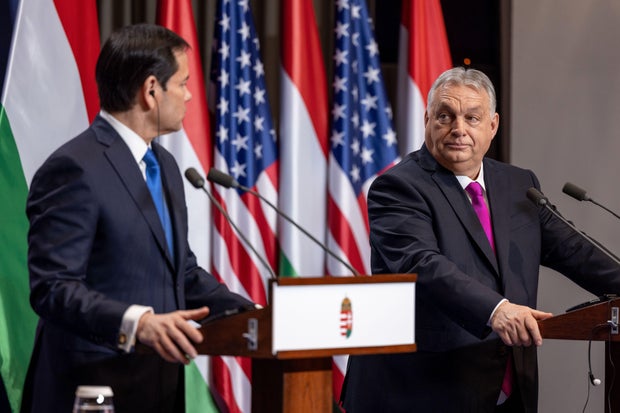

After the agreement was signed on Monday, Rubio credited Mr. Trump and Orbán’s strong personal relationship, and he told the Hungarian leader he could “say to you with confidence that President Trump is deeply committed to your success.”
Orbán also praised the relationship, declaring that “a new golden age has set upon us concerning the relationship between the United States and Hungary.”
He reiterated Hungary’s standing offer to host a peace summit between Ukraine and Russia as part of Mr. Trump’s efforts to broker a peace deal to end the four-year war in Ukraine. Both Orbán and Mr. Trump said in mid-October that the American leader would meet in Budapest with Russia’s Putin to discuss the war, but the White House said five days later that there were no plans for such a meeting.
For the U.S., the civil nuclear agreement is a way to push two key goals of the Trump administration: countering Russian and Chinese influence in Central Europe’s energy sector, and expanding markets for American nuclear technology.
Hungary has a longstanding civil nuclear partnership with Russia. Moscow operates four Russian-made VVER-440 reactors at the Paks nuclear power plant in central Hungary, which generate nearly half of Hungary’s electricity.
In 2025, the Trump administration lifted sanctions on the project to enable Hungary to upgrade the Paks nuclear plant.
Orbán is a divisive figure in Europe
The deal deepens U.S.-Hungary ties despite ongoing tension between the Orbán government and America’s traditional allies in Western Europe — mistrust that has been deepened by Hungary’s tolerant stance on Russia during the war on Ukraine.
The Trump administration framed the agreement as part of the broader strategy to reinforce U.S. leadership in energy technology and to re-engage allies in Europe.
Orbán was the first and only European Union leader to publicly endorse Mr. Trump’s first successful bid for the U.S. presidency in 2016, and the two have maintained close ties since then.
Orbán, who according to Human Rights Watch has used his party’s supermajority in the Hungarian parliament to undermine the independence of the country’s judiciary, crack down on independent media, demonize migrants and discriminate against LGBTQ people, was effusive in praising Mr. Trump’s return to the Oval Office a year ago.
“The Trump tsunami swept through the entire world,” Orbán said last year. “It gave back hope to the world. We are no longer suffocating in the woke sea.”
In 2022, the EU said Hungary, under Orbán’s leadership, could no longer be considered a “full democracy,” calling it a “hybrid regime of electoral autocracy.”
https://www.cbsnews.com/news/us-hungary-nuclear-cooperation-trump-deepens-ties-viktor-orban/


