







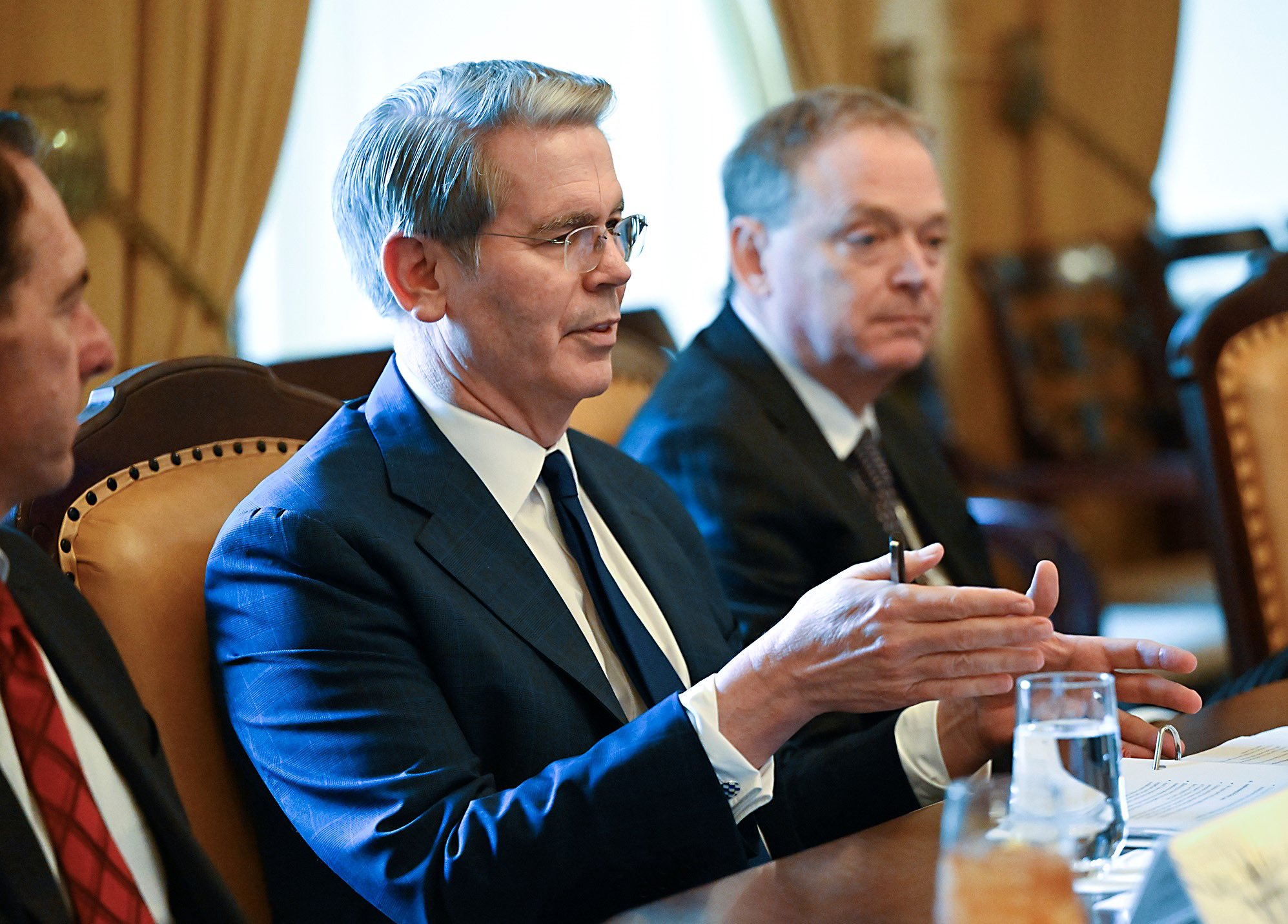
US Treasury Secretary Scott Bessent on Tuesday criticised China’s conduct during the ongoing Middle East conflict.
He accused Beijing of acting as an “unreliable global partner” by stockpiling oil supplies and restricting exports of certain goods.
Speaking to reporters, Bessent said he had raised these concerns directly with Chinese officials, while also emphasising that communication between Washington and Beijing remains intact.
He declined to comment on whether the tensions could affect US President Donald Trump’s planned visit to Beijing in mid-May but noted the strength of ties between Trump and Chinese President Xi Jinping.
“I think the message for the visit is stability. We’ve had great stability in the relationship since last summer; that emanates from the top down,” Bessent said. “I think that communication is the key.”
Accusations of repeated supply hoarding
Bessent drew parallels between China’s current actions and its behaviour during previous global crises, including the COVID-19 pandemic and tensions over rare earth exports.
“China has been an unreliable global partner three times in the past five years; once during COVID, when they hoarded healthcare products, second on rare earth,” Bessent said.
He added that China is now accumulating oil reserves rather than helping alleviate global supply shortages caused by the war involving Iran.
The conflict has disrupted flows through the Strait of Hormuz, a critical chokepoint that carries roughly 20% of the world’s oil supply.
China already holds a strategic petroleum reserve comparable in size to the combined reserves of members of the International Energy Agency, yet continues to purchase additional crude.
“They continued buying, and they’ve been hoarding, and they have cut off exports of many products,” he said.
Global institutions warn against energy hoarding
Bessent’s remarks come as global financial and energy institutions caution against policies that could exacerbate supply disruptions.
The International Monetary Fund, World Bank, and International Energy Agency on Monday urged countries to avoid hoarding energy supplies or imposing export controls.
The international bodies warned that such actions could deepen what they described as the largest shock to global energy markets.
While the organisations did not name specific countries, their comments align with concerns about supply constraints and rising geopolitical tensions.
War disruptions push oil higher
The escalation of the conflict has significantly tightened global oil markets.
Oil prices surged more than 50% following the outbreak of hostilities.
The US military has moved to block ships leaving Iranian ports, a step aimed at limiting Tehran’s ability to export crude.
In response, Iran has threatened retaliation against ports in neighbouring Gulf countries after diplomatic efforts to end the conflict collapsed during talks in Islamabad.
Bessent said the blockade would restrict China’s access to Iranian oil, noting that Beijing has been purchasing more than 90% of Iran’s exports, accounting for about 8% of its annual oil imports.
“So they’re not going to be able to get their oil. They can get oil. Not Iranian oil,” Bessent said.
The combination of supply disruptions, rising oil prices, and geopolitical tensions is adding complexity to global economic conditions, particularly as policymakers weigh the inflationary consequences of higher energy costs.
https://invezz.com/news/2026/04/14/treasurys-bessent-criticises-chinas-oil-stockpiling-amid-middle-east-conflict/


