







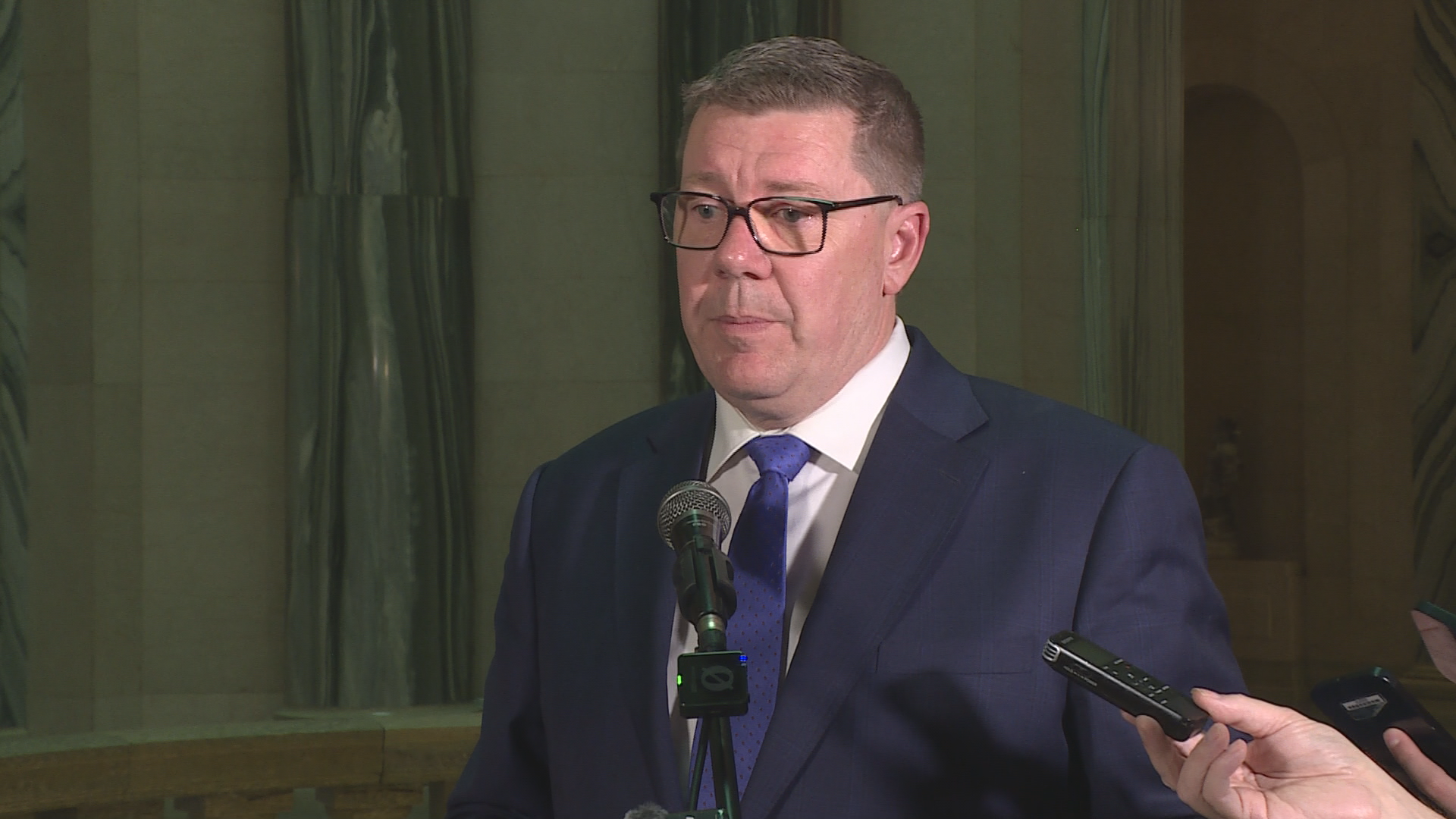
As Premier Scott Moe floats the idea of engaging in conversations with Saskatchewan residents about banning social media for children under 16, experts say it may not be the best solution to address mental health challenges among youth.


“It’s time for us to have a conversation about social media use in our youth, in our students,” Moe told reporters Monday.
The premier pointed to a recent Angus Reid poll that suggests three-quarters of Canadians are in support of a full ban for children 16 and younger.
Australia became the first country to implement the ban last year, prohibiting youth under 16 from creating accounts on TikTok, Facebook, Instagram, YouTube, Snapchat, and Threads.
Moe said he is not currently planning to introduce legislation, but wants to engage residents in a conversation about what such a ban would look like in his home province.
“What space should the government enter into, whether it’s representing their views within a potential federal government initiative in this space, or whether it is something that we should look at more at a provincial level,” Moe said.


Get daily National news
Get daily Canada news delivered to your inbox so you’ll never miss the day’s top stories.
The driver behind the decision would be to protect youth, Moe said.
“Let’s open up a conversation in this space with the families of Saskatchewan. Is social media having a positive or negative impact on your children and on our students in the schools?” he said.
Madhav Sarda, a child and adolescent psychiatrist and assistant professor at the University of Saskatchewan, said social media presents many concerns for young people that impact their mental health, including cyberbullying and addiction.
But it is unclear if an outright social media ban will solve these issues, Sarda said.
“To say that suddenly youth mental health is going to be dramatically better if we ban youth social media, I think that’s too far to say,” Sarda said.
For social media expert Jesse Miller, the parameters and enforceability of a potential ban are a concern.
“Australia didn’t actually put in any consequences for parents or individuals. They put the onus on the companies, which in itself is very good, but then we find bypasses,” he said, citing virtual private networks or tricking facial identification software as ways to avoid restrictions.
Banning social media also risks severing the social ties and ways young people connect with others, said Miller, especially for those living in rural areas.
“The more rural you are in an area, the more that maybe you are relying on aspects of social media to not only connect you to good information, entertainment, or friends and family.”
The poll also suggests that many who support a full ban believe parents should be primarily responsible for regulating teens’ social media use rather than governments.
But Sarda disagrees, saying the best approach may be from a public health perspective instead.
“We have public health policy laws around smoking, drinking, and things we deem are sort of not great for teens and young children’s brains,” he said.
“I do think social media probably should be within that same blanket policy. Either we allow it, or we don’t, and we should have this sort of global guidance, because I think if that helps send a message, it also makes it easier to make those decisions.”
It is unclear when the conversations around regulation and their scope will begin in the province.
© 2026 Global News, a division of Corus Entertainment Inc.
‘Too far to say’: Experts unsure social media ban best path for Saskatchewan youth


