






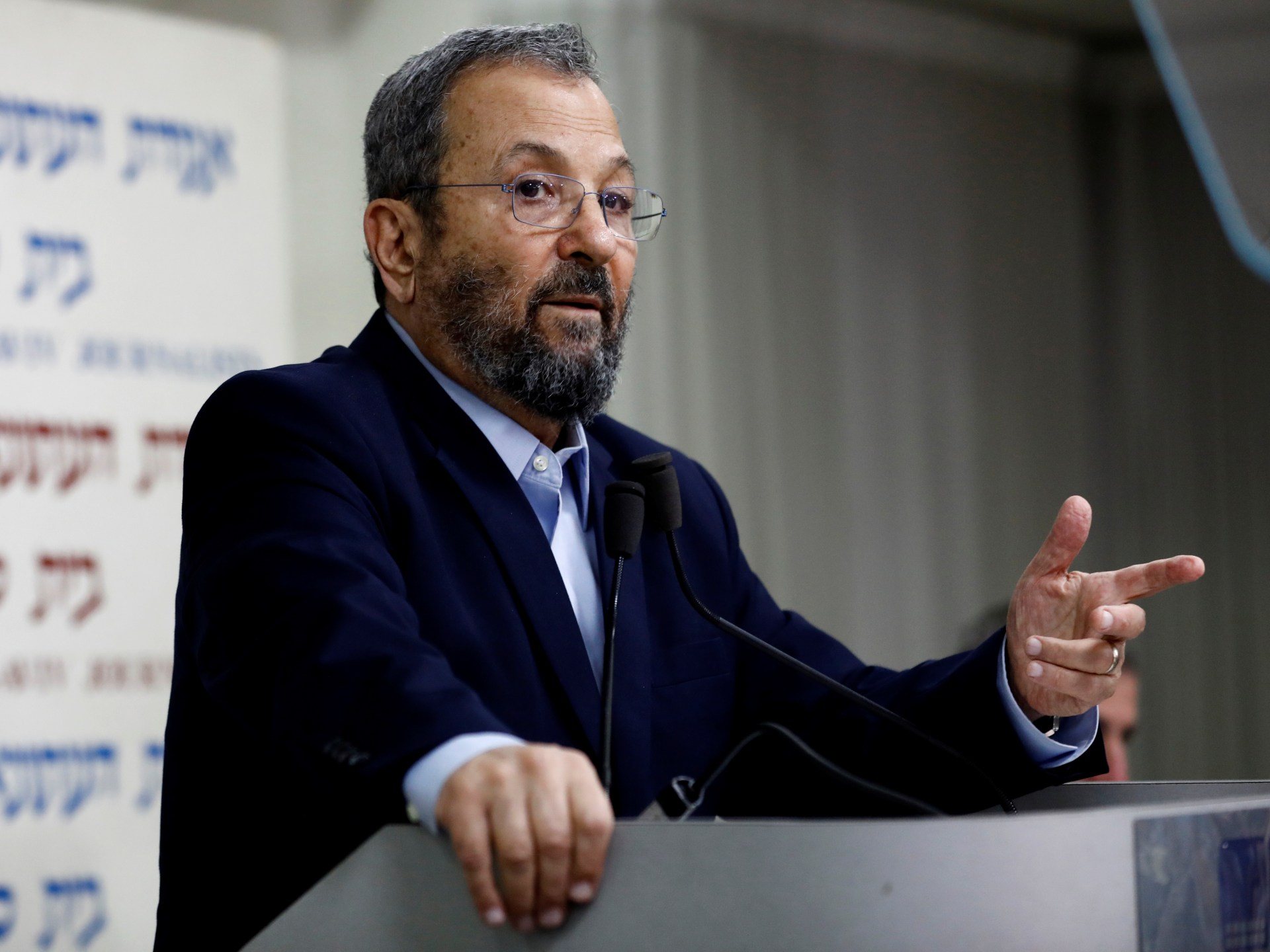
Convicted American sex offender Jeffrey Epstein and former Israeli Prime Minister Ehud Barak collaborated for more than a decade to profit from instability in Nigeria, marketing surveillance technology honed in the occupied Palestinian territory to gain access to the West African country’s lucrative oil and logistics sectors, according to an investigation by Drop Site News (DSN).
A trove of emails originally released by the United States Department of Justice, the DSN investigation found, outlines how the late financier and the Israeli politician leveraged the Boko Haram rebellion to pitch “field-proven” security solutions to Nigerian officials.
The correspondence indicates that these security deals were frequently utilised as a gateway for broader commercial interests, including infrastructure projects for DP World and investments in the energy sector.
The revelations come days after Sultan Ahmed bin Sulayem resigned as chairman of the Emirati logistics giant DP World on February 13 amid fallout from the disclosure of his close ties to Epstein.
According to the documents, Epstein and Barak viewed the escalating violence in West Africa not as a humanitarian crisis but as a business opportunity. In a 2014 email (PDF) regarding civil unrest in Syria, Libya, and Somalia, Epstein wrote to Barak, “isn’t this perfect for you”.
Barak replied, “You’re right in a way. But not simple to transform it into a cash flow.”
‘Field-proven’ on Palestinians
The files detail how Israeli intelligence firms marketed their technology to Nigeria using euphemisms such as “field-proven”, a reference to systems deployed by the Israeli military against Palestinians under occupation.
In 2015, Barak and a business partner invested $15m in FST Biometrics, a firm founded by the former head of Israeli military intelligence, Aharon Ze’evi Farkash. The company’s core technology, a biometric system known as Basel, was originally prototyped at the Beit Hanoon (Erez) crossing between Israel and the besieged Gaza Strip to control the movement of Palestinian workers.
While the Nigerian military battled Boko Haram, Barak facilitated the sale of similar biometric surveillance equipment to Babcock University, a Christian institution in Nigeria. The project was framed as a counterterrorism measure, with a press release at the time boasting that the technology would “filter away all unwanted persons”.
The emails suggest this initial foothold allowed Barak to institutionalise Israeli cyber-expertise within the Nigerian state. By 2020, the World Bank had tapped the Israel National Cyber Directorate and a startup cofounded by Barak to shape Nigeria’s national cyber-infrastructure.
Resources and logistics
The documents indicate that security cooperation was often a pretext for accessing Nigeria’s vast resource wealth. Epstein facilitated high-level talks for DP World, aiming to secure ownership of ports in Lagos and Badagry.
In the summer of 2018, Epstein brokered discussions between Jide Zeitlin, then-chair of Nigeria’s sovereign investment fund, and bin Sulayem. The documents show Epstein attempting to navigate US sanctions on figures involved in the mining sector to facilitate these deals.
“I hope your pal’s sojourn in Tel Aviv … was more effective than his efforts on the African continent,” Zeitlin wrote (PDF) to Epstein in September 2018, referring to the diplomatic normalisation Epstein and bin Sulayem were quietly cultivating between Israel and the United Arab Emirates years before the Abraham Accords.
‘Friends for Israel’
The correspondence highlights the immense access Epstein and Barak secured within the Nigerian government. In 2013, Barak attended a cybersecurity conference in Abuja, which organisers privately described as a cover to arrange meetings with then-President Goodluck Jonathan.
“The dinner is one other excellent way … to meet with good Friends of Israel and make new friends for Israel as well,” the event organiser wrote to Barak.
Following these meetings, Israeli defence contractor Elbit Systems proceeded with a controversial internet surveillance project in Nigeria, despite opposition from the country’s legislature.
The documents further reveal that Epstein coached Barak on how to parlay these security relationships into personal gain. When Barak shared financial details of a potential oil deal, Epstein responded (PDF) with harsh advice: “I told you on the phone before sending or asking anyone about it you should do your own homework.”
The ties between Epstein and Israel have come into sharp focus after the release of millions of documents.
The documents have revealed more details of Epstein’s interactions with members of the global elite, including Barak. But they also document his funding of Israeli groups, including Friends of the Israeli army, and the settler organisation the Jewish National Fund, as well as his ties to members of Israel’s overseas intelligence services, the Mossad.
Barak, who led Israel from 1999 to 2001, has expressed remorse over his lengthy relationship with Epstein. However, despite Epstein having been convicted of procuring a minor for prostitution in 2008 and spending about a year in prison during the course of their relationship, Barak, maintaining a close personal and business relationship, claimed he was unaware of the scope of Epstein’s crimes until a wider inquiry into him was opened in 2019.
https://www.aljazeera.com/features/2026/2/18/tested-on-palestinians-epstein-israels-barak-pushed-spy-tech-in-nigeria?traffic_source=rss


