


NEWYou can now listen to Fox News articles!
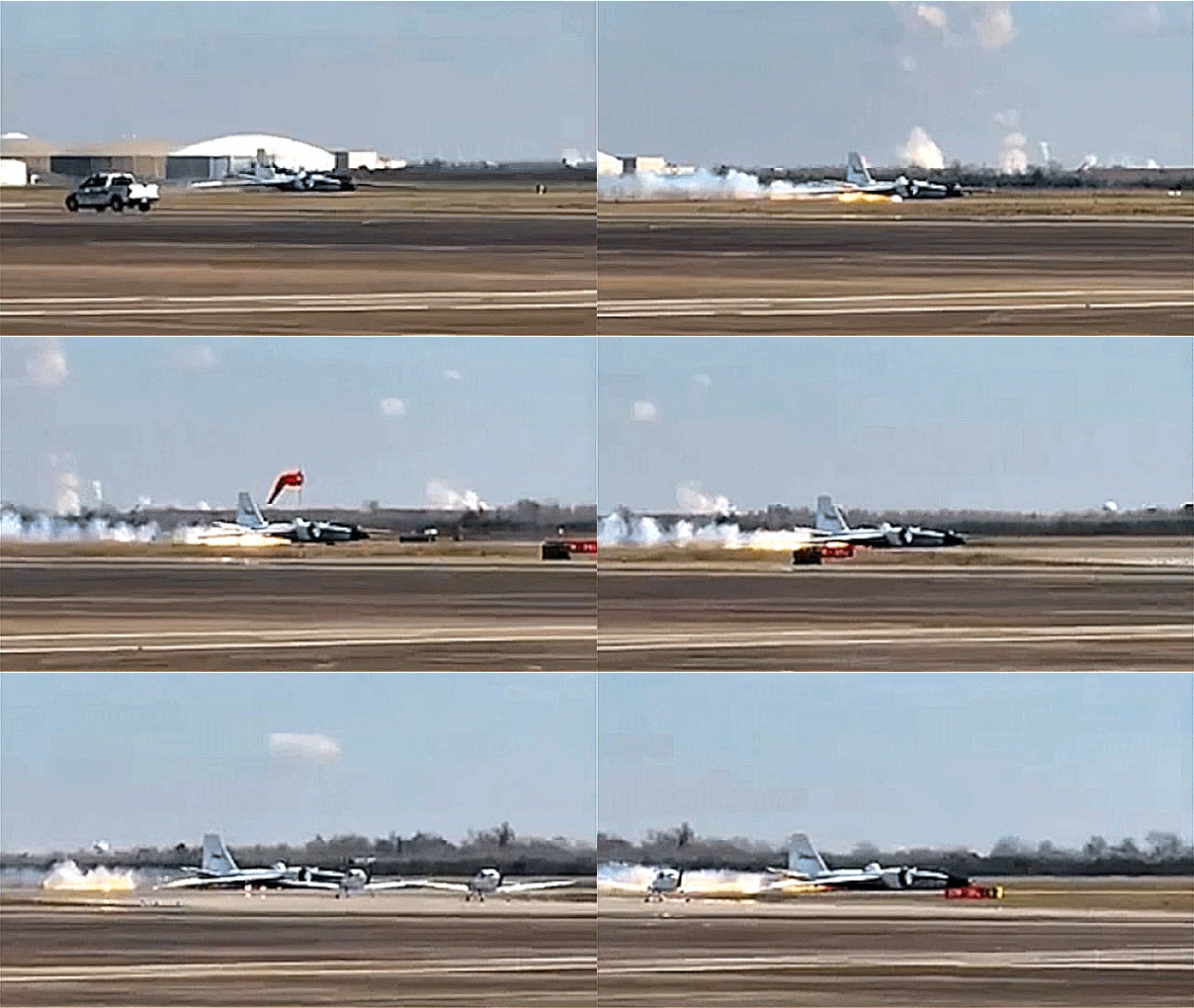
A NASA aircraft had to make a “gear-up landing” in Houston on Tuesday due to a mechanical problem, NASA spokesperson Bethany Stevens noted in a post on X.
“Today, a mechanical issue with one of NASA’s WB-57s resulted in a gear-up landing at Ellington Field. Response to the incident is ongoing, and all crew are safe at this time,” she said in the Tuesday afternoon post.
“As with any incident, a thorough investigation will be conducted by NASA into the cause. NASA will transparently update the public as we gather more information,” she added.
She issued a post on Wednesday noting that the crew members are doing well.
WELL-KNOWN TEXAS ATTORNEY’S WIFE AMONG VICTIMS OF DEADLY PRIVATE JET CRASH IN MAINE
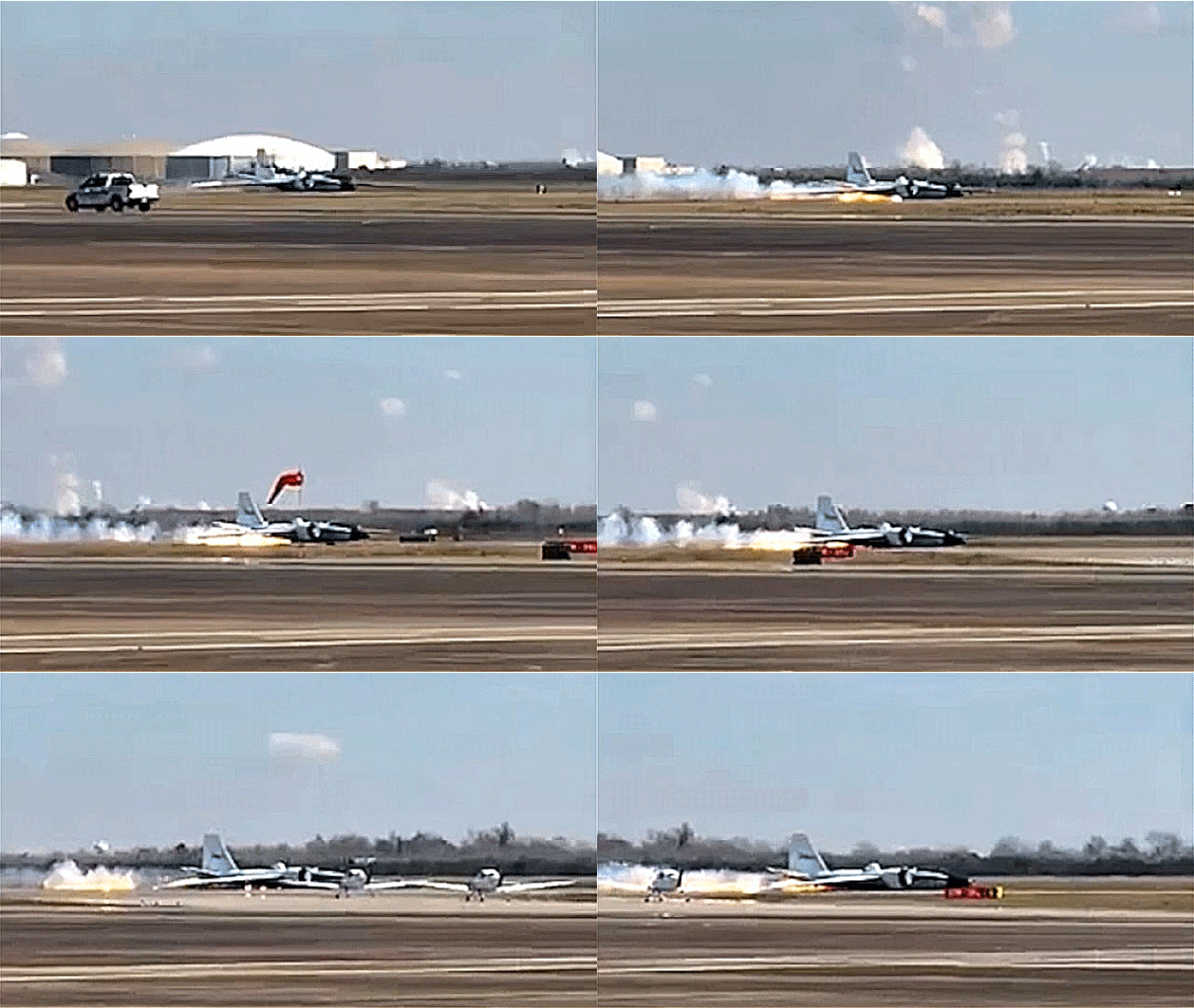
A NASA aircraft is shown making a “gear-up landing” at an airport in Houston following a mechanical issue on Tuesday, according to a NASA spokesperson. (Nevada Vazquez/@ IronHorseAviator via Storyful)
“Following standard medical evaluations at Ellington Field, both crew members aboard the WB-57 were cleared and are in good health. Both individuals are NASA employees. NASA operates three WB-57 aircraft; the one involved in today’s incident carries tail number NASA927. The aircraft departed Ellington Field for a routine training flight at approximately 10:19 a.m. CST and landed at approximately 11:19 a.m.,” Stevens noted in the post on Wednesday.
“NASA will lead a thorough investigation. Additional details will be provided once the investigation is complete. NASA anticipates no impact to Artemis II operations given the multiple aerial assets available to support, including the Gulfstream V, Gulfstream III, and a U.S. Navy C-20. These aircraft will provide imagery during key mission phases, including launch, entry, and splashdown,” her post noted.
Video footage of the episode captured smoke and what appeared to be bright fire and/or sparks flying as the plane slid across the runway.
The Federal Aviation Administration noted, “A Martin WB-57 landed with its gear up at Ellington Airport in Houston around 11:25 a.m. local time on Tuesday, Jan. 27. Two people were on board. The FAA will investigate.”
NASA ASTRONAUT WHO WAS STUCK IN SPACE RETIRES AFTER 27-YEAR CAREER
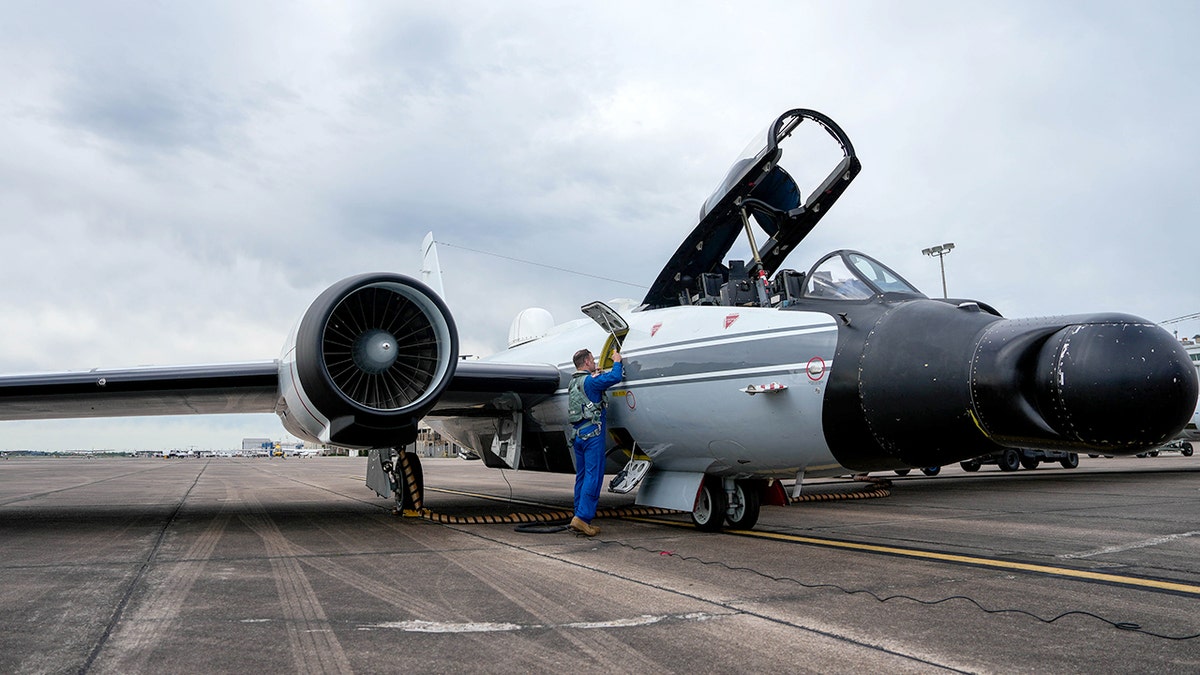
A pilot goes through a pre-flight safety inspection on a NASA WB-57 plane that will be flown during the April 8, 2024, total solar eclipse and has been modified to be able to conduct experiments that will study the solar corona, on Wednesday, March 27, 2024, in Houston. (Raquel Natalicchio/Houston Chronicle via Getty Images)
The WB-57 has been performing research missions for decades, according to the NASA Airborne Science Program website.
“The NASA Johnson Space Center (JSC) in Houston, Texas is the home of the NASA WB-57 High Altitude Research Program,” the site notes. “The WB-57 is a mid-wing, long-range aircraft capable of operation for extended periods of time from sea level to altitudes in excess of 63,000 feet.”
A NEW WAY OF COMMUTING IS CLOSER TO TAKING OFF IN THE US
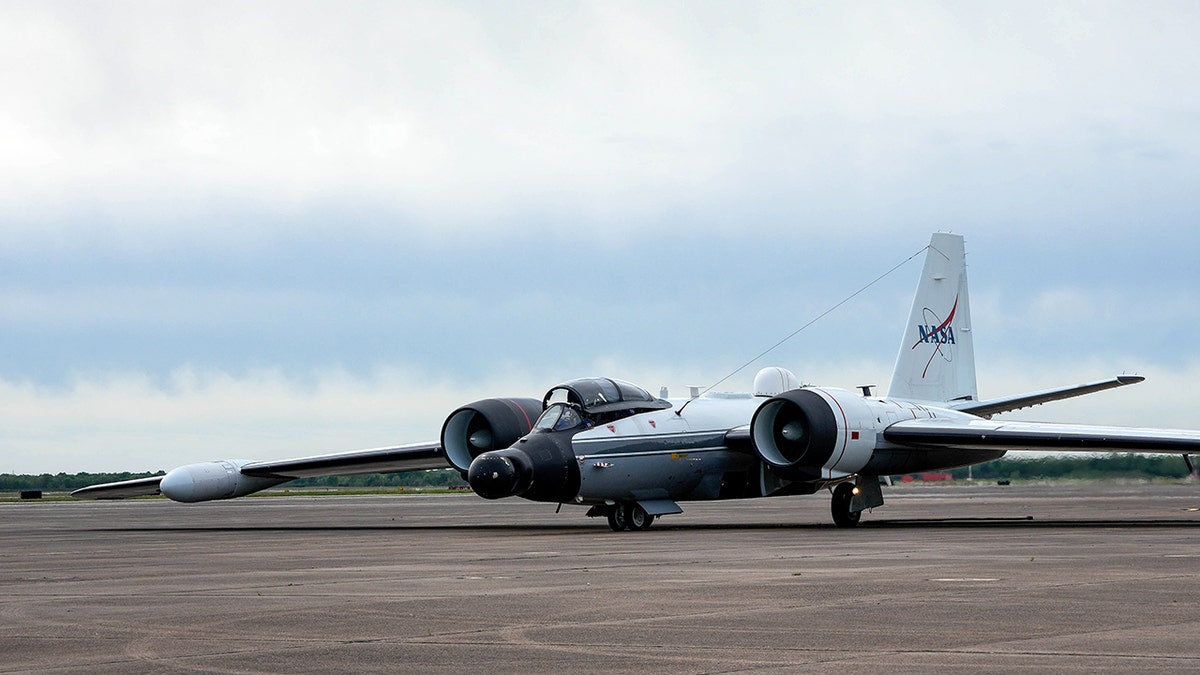
A NASA WB-57 plane that has been modified to conduct experiments that will study the solar corona during the April 8, 2024, total solar eclipse, prepares for a practice flight at Ellington Airport on Wednesday, March 27, 2024, in Houston. (Raquel Natalicchio/Houston Chronicle via Getty Images)
“The aircraft have been flying research missions since the early 1970’s, and continue to be an asset to the scientific community with professional, reliable, customer-oriented service designed to meet all scientific objectives,” the website states.
https://www.foxnews.com/us/nasa-research-plane-lands-belly-sending-sparks-flying-after-mechanical-issue
