







Author
Ahmed Balaha
Author


Share


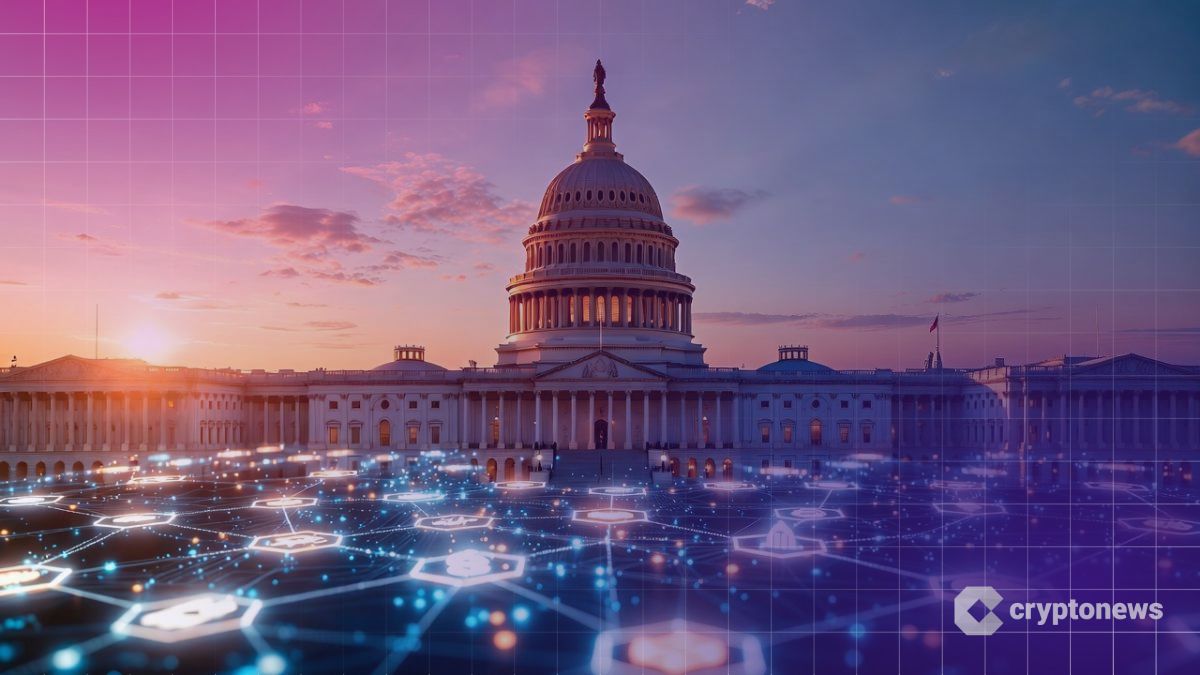
A bipartisan group of senators introduced the Public Integrity in Financial Prediction Markets Act of 2026 on Thursday, prohibiting government officials from using nonpublic information to trade prediction-market contracts and imposing fines equal to twice the profits earned. It is the second prediction market bill introduced this week alone. That cadence is not a coincidence. It is a coordinated legislative signal.
The bill covers the president, vice president, members of Congress, political appointees, and employees of executive and independent regulatory agencies. Any contract wager above $250 must be reported to a supervising ethics office within 30 days, with disclosure requirements that include price, position, platform name, and profit or loss.
Congress is drawing a line around prediction markets as a new vector for insider trading. Two bills in five days means this is no longer a fringe concern.
- Legislative Scope: The Public Integrity in Financial Prediction Markets Act covers the president, vice president, all members of Congress, political appointees, and federal agency employees — with mandatory reporting of any contract wager exceeding $250 within 30 days.
- Penalty Structure: Violations carry fines up to double the amount of profits earned, targeting financial incentives directly rather than imposing flat regulatory penalties.
- Market Implication: Platforms like Kalshi and Polymarket — which updated trading rules on March 23, 2026, to ban use of confidential information — now face potential CFTC scrutiny and mandatory compliance audits if either bill advances to markup.
Discover: The best crypto presales gaining institutional momentum right now
The Bill: What the Public Integrity Act Actually Prohibits
Senators Todd Young, Elissa Slotkin, John Curtis, and Adam Schiff introduced the bill in the second session of the 119th Congress. The legislation defines insider information as anything a “reasonable investor would consider important” in making a prediction market decision that is not publicly available — a standard deliberately broad enough to cover policy knowledge, regulatory decisions, and government actions before they are announced.
The reporting framework requires officials to disclose the number of contracts purchased, the price and timestamp of each transaction, the contract name, the position taken, the trading platform used, and any profit or loss. That level of granularity mirrors securities disclosure requirements, not casual wagering oversight.
Senator Slotkin framed the bill sharply: “No one should be profiting off the information and knowledge gained as a public servant, period.” She added the bill “has real teeth to ensure those who break these rules face real consequences.” The double-profit penalty structure is designed to eliminate any financial logic behind the violation.


This bill follows the PREDICT Act, introduced March 25, 2026, by Reps. Nikki Budzinski (D-IL) and Adrian Smith (R-NE), which imposes civil penalties of 10% of the transaction value plus full disgorgement of profits to the U.S. Treasury. The PREDICT Act extends trading bans to spouses, dependent children, and Executive Schedule positions — a broader personal scope than the Senate bill. Together, they cover nearly every category of federal official and their immediate households.
Rep. Adrian Smith summarized the bipartisan rationale: “Our commonsense, bipartisan bill will give Americans confidence that the decisions of their elected officials are guided by merit, not personal profit.” Both bills specifically target platforms, including Kalshi and Polymarket, which have emerged as the dominant U.S.-accessible prediction market venues.
The Curtis-Schiff Senate effort, introduced earlier this week, also introduced a companion measure targeting sports betting contracts on prediction platforms, a third legislative prong running parallel to the insider trading focus. That broader sweep suggests Congressional intent extends beyond political event markets into the full prediction market category.
Discover: The best crypto presales gaining institutional momentum right now
https://cryptonews.com/news/second-bill-prediction-market-insider-trading/