




Author
Ahmed Balaha
Author

Share


Riot Platforms sold 3,778 Bitcoin in Q1 2026, netting $289.5 million-a volume that dwarfs its 1,473 BTC production for the same period by 2.6x.
The company ended Q1 with 15,680 BTC on its books, down 18% from the 18,005 coins it held at the close of 2025. That gap between what Riot mined and what it sold is the number that demands explanation.
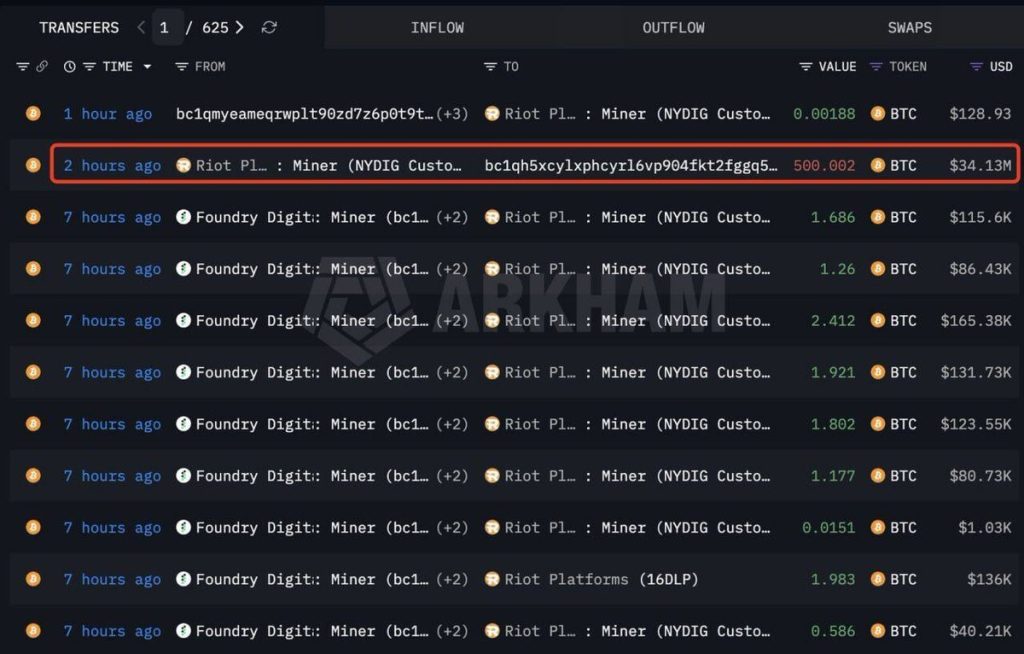
Blockchain intelligence platform Arkham flagged a separate 500 BTC outflow from a wallet attributed to Riot on Thursday, suggesting the selling didn’t stop when Q1 closed.
The company is also pushing deeper into high-performance computing colocation, shifting its business model beyond pure mining toward infrastructure hosting-a pivot that requires capital, which partially explains the aggressive liquidation pace.
Energy costs are the other half of the story. Kadan Stadelmann, blockchain developer and co-founder of AI company Compance, said miners are selling because rising energy costs-worsened by the escalating Middle East conflict since February-are compressing margins across the industry.
“This leads to a fall in hashrate and difficulty in Bitcoin mining. This makes it easier and more profitable to mine Bitcoins for those miners who remain online,” Stadelmann said, predicting further capitulation from less efficient operators.
- Sales volume: Riot sold 3,778 BTC in Q1 2026, generating $289.5 million against quarterly production of just 1,473 BTC.
- Treasury drawdown: BTC holdings fell 18% quarter-over-quarter, from 18,005 to 15,680 BTC.
- Power cost improvement: All-in power cost dropped 21% year-over-year to 3.0¢/kWh, even as selling accelerated.
- Hash rate expansion: Deployed hash rate grew 26% to 42.5 EH/s, signaling infrastructure reinvestment over accumulation.
- Power credits: Riot generated $21.0 million in power credits during Q1-more than double the prior year period.
- Industry-wide selling: MARA Holdings, Genius Group, and Nakamoto Holdings sold a combined 15,501 BTC in the last week alone.
Discover: The Best Crypto to Get Right Now
Selling Above Production Rate – Operational Pivot or Distress Signal?
Selling 2.6x your quarterly production isn’t treasury management in the traditional sense-it’s a structural drawdown.
That matters because it signals Riot isn’t just covering operating costs; it’s funding something larger, whether that’s hash rate expansion, colocation infrastructure buildout, or balance sheet repair ahead of continued Bitcoin price pressure.
The operational data cuts against a pure distress read, though. Riot improved its all-in power cost 21% year-over-year to 3.0¢/kWh and grew deployed hash rate 26% to 42.5 EH/s. It also generated $21.0 million in power credits during Q1-more than double the year-ago period-by leveraging renewable energy agreements and grid services.
That’s not the profile of a miner bleeding out; it’s a miner reallocating capital aggressively into infrastructure while conditions remain volatile.
Riot isn’t alone. MARA Holdings, Genius Group, and Nakamoto Holdings sold a combined 15,501 BTC in the past week.
Genius Group went further-liquidating its entire Bitcoin stash. The industry is clearly in a rotation away from passive accumulation toward active treasury management, a departure from the hodl-first playbook that defined miner strategy through the 2021 bull cycle. If Bitcoin prices don’t recover in Q2, watch for Riot’s treasury to test the 14,000 BTC level within two quarters at the current drawdown rate.
Discover: The Best Crypto Presales Live Right Now
Miner Selling and BTC Supply Pressure: How Much Does It Move the Market?
Bitcoin mining difficulty dropped from approximately 145 trillion to 133 trillion on March 20-a 7.7% decline-while network hash rate fell from 1,160 exahash to roughly 990 exahash as of Friday.
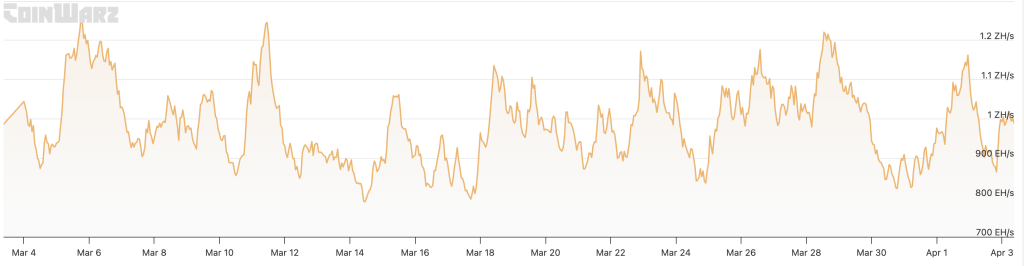
Weaker miners are going offline, exactly as Stadelmann predicted, which structurally benefits survivors like Riot with lower difficulty and higher per-block rewards.
The supply side picture is more complicated when viewed against demand. Bitcoin ETFs snapped a four-month outflow streak with $1.32 billion in March inflows, meaning institutional demand is partially absorbing the miner supply hitting the market.
Riot alone doesn’t move BTC price-but Riot plus MARA plus Genius Group plus Nakamoto in the same week represents a coordinated pressure event that on-chain miner outflow metrics will reflect clearly.
The invalidation condition here is simple: if BTC reclaims and holds above $90,000 in Q2, Riot’s treasury logic flips from defensive liquidation to premature selling at cycle lows. Until that happens, the selling looks rational given the broader market pressure on holders and the rising cost environment compounding miner margin squeeze globally.
Explore: The best pre-launch token sales with asymmetric upside potential
https://cryptonews.com/news/riot-sells-3778-btc-q1-miner-strategy-shifts/
