







CHINA’S ROLE IN GLOBAL DEVELOPMENT
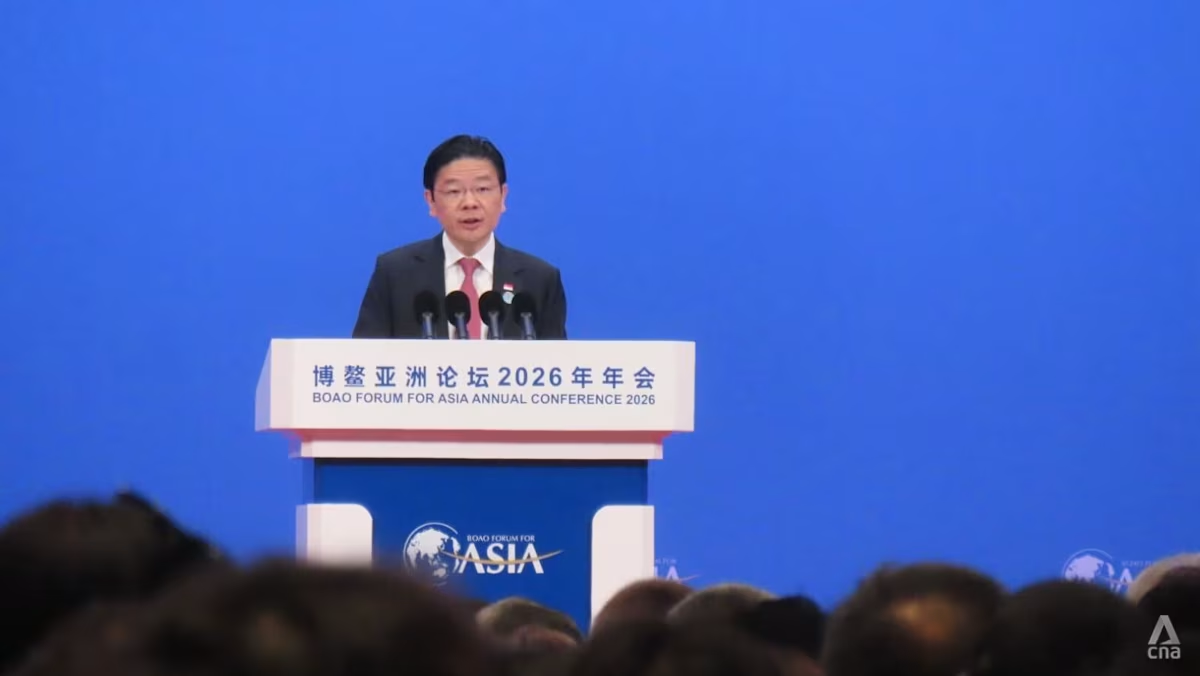
Mr Wong also highlighted the “critical role” China has as the world explores new forms of cooperation. The country has prioritised science, technology and innovation, and sits at the forefront of key emerging areas such as digital and green technologies.
“China is therefore well positioned not just to participate in the next wave of technological change, but to shape and lead it,” said Mr Wong.
China’s expanding influence in the creative and digital economies is also seen in the growing global interest in Chinese culture and innovation, including films, music and games, consumer brands and digital platforms, he added.
He said China has contributed to global development through platforms such as the Asian Infrastructure Investment Bank and the Belt and Road Initiative, and has taken steps to assume greater responsibilities in the international system. This includes voluntarily relinquishing certain World Trade Organization developing-country benefits, and standing ready to shoulder obligations commensurate with its level of development.
GLOBAL STABILITY UNDER STRAIN
Mr Wong also addressed the broader strains on the global order, saying the foundations that sustained decades of stability are now under severe pressure. He cited the wars in Ukraine and the Middle East as examples with real consequences for all countries – driving up food and energy prices, disrupting supply chains and raising the risk of a global economic slowdown.
“They are not distant events – they have real consequences for all of us, driving up food and energy prices, disrupting supply chains and raising the risks of a global economic slowdown,” he said.
He pointed to a “worrying breakdown” of the institutions and norms that once provided guardrails for state behaviour.
“They did not eliminate conflict, but they tempered it and brought a measure of predictability to international relations. Today, those guardrails are weakening,” he said.
International relations are increasingly shaped by geopolitical rivalry and zero-sum thinking, a shift which affects both small and middle-sized countries as well as large powers, said Mr Wong.
This is spilling over into the economic domain, making it harder to address shared global challenges such as climate change or ensuring the safe and responsible use of AI.
In response, Mr Wong called for “plurilateral arrangements”, where smaller groups of like-minded partners work together, rather than rely solely on traditional multilateral forums. This approach is already reflected in agreements like the Regional Comprehensive Economic Partnership, CPTPP and DEPA.
This does not mean abandoning multilateralism, he said, but complementing it, while continuing to strengthen and reform global institutions such as the WTO and the United Nations.
“In practice, we are likely to see a landscape of multiple, overlapping coalitions – different groupings of countries working together on specific challenges,” he said. “This may not be the ideal model for global cooperation. But in today’s circumstances, it is a practical way to sustain momentum.”
If designed well, such coalitions could reinforce one another and serve as building blocks for a more resilient global architecture over time, he added.
Mr Wong arrived in Hainan on Tuesday to begin a four-day trip to China. In Hainan, he will also meet National People’s Congress chairman Zhao Leji and Hainan Provincial Committee secretary Feng Fei, before heading to Hong Kong.
https://www.channelnewsasia.com/singapore/lawrence-wong-china-hainan-boao-forum-asia-trade-tensions-6016876


