








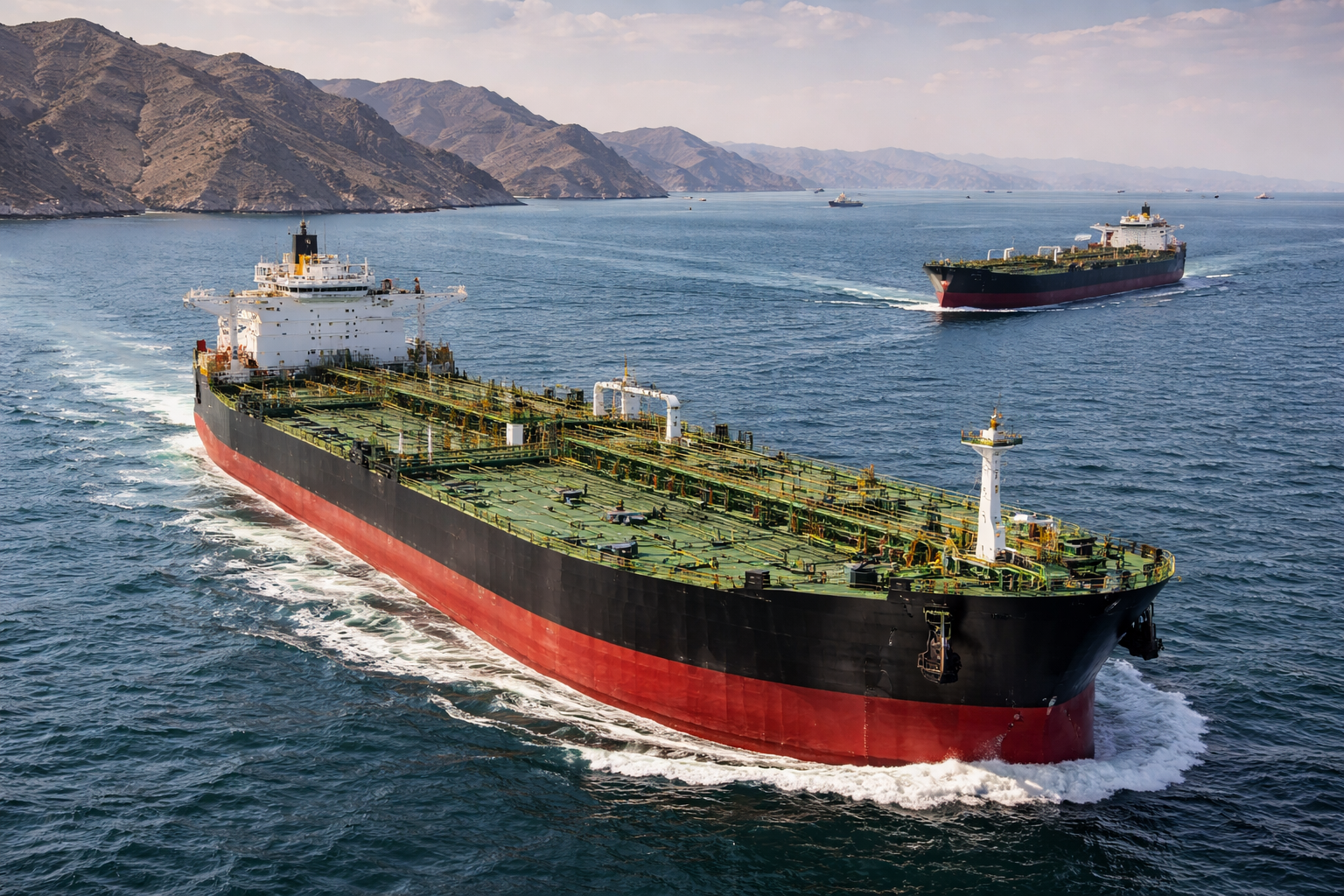
Oil prices rallied sharply on Wednesday, climbing more than 7% as escalating geopolitical tensions in the Middle East and a continued US naval blockade of Iran raised concerns over global supply disruptions.
International benchmark Brent crude settled at $119.06 per barrel, up about 7%, while US West Texas Intermediate (WTI) crude rose nearly 7% to close at $107.23 per barrel.
The surge follows comments from Donald Trump, who said the United States would maintain its blockade of Iran until a nuclear agreement is reached.
“The blockade is somewhat more effective than the bombing,” Trump told Axios on Wednesday. “They are choking like a stuffed pig, and it is going to be worse for them. They can’t have a nuclear weapon.”
Blockade and Strait tensions drive supply fears
The ongoing standoff between the US and Iran has intensified pressure on global energy markets, particularly due to the strategic importance of the Strait of Hormuz.
Iran has refused to reopen the Strait until the US lifts its blockade, effectively choking off a key artery for global oil shipments.
Roughly 20% of the world’s oil typically passes through the route, making any disruption highly sensitive for prices.
Efforts to restart negotiations to end the conflict have stalled in recent days, further dampening hopes for a near-term resolution.
Iran’s ambassador to the United Nations, Saeed Iravani, sharply criticized US actions, urging the Security Council to condemn what he described as unlawful interference.
“Such conduct is nothing but another clear example of the US addiction to lawlessness and constitutes a flagrant violation of the Charter of the United Nations,” Iravani’s letter reads.
UAE exit adds uncertainty to oil markets
Compounding the geopolitical tensions, the Organization of the Petroleum Exporting Countries is grappling with the unexpected departure of the United Arab Emirates, one of its largest producers.
While analysts suggest the move may have a limited immediate impact, it signals potential shifts within the global oil supply framework.
Strategists at ING described the UAE’s exit as “a big blow” to OPEC, noting it could weaken the cartel’s influence over oil markets and benefit major importers.
“However, in the near term, the biggest driver for oil prices remains developments in the Persian Gulf and the timing of a resumption in oil flows through the Strait of Hormuz,” they added.
Analysts at RBC Capital Markets echoed a similar view, suggesting the move may point to a broader strategic realignment in the region rather than an immediate supply shock.
Supply squeeze concerns linger despite mixed signals
Despite some earlier oversupply conditions this year, analysts warn that the market may be underestimating the severity of a potential supply crunch.
“While…crude oil futures have dropped off their March highs, the physical supply squeeze for oil may be somewhat underappreciated by investors,” wrote Adam Turnquist, chief technical strategist for LPL Financial.
“Early-year oversupply has helped absorb the immediate shock better than feared, while markets still face normalization that could take months”, he added.
The UAE’s planned increase in production following its exit from OPEC+ may eventually ease some supply concerns, but analysts caution that such changes will take time to materialize.
https://invezz.com/news/2026/04/29/oil-surges-7-as-trump-vows-iran-blockade-strait-risks-rise/


