


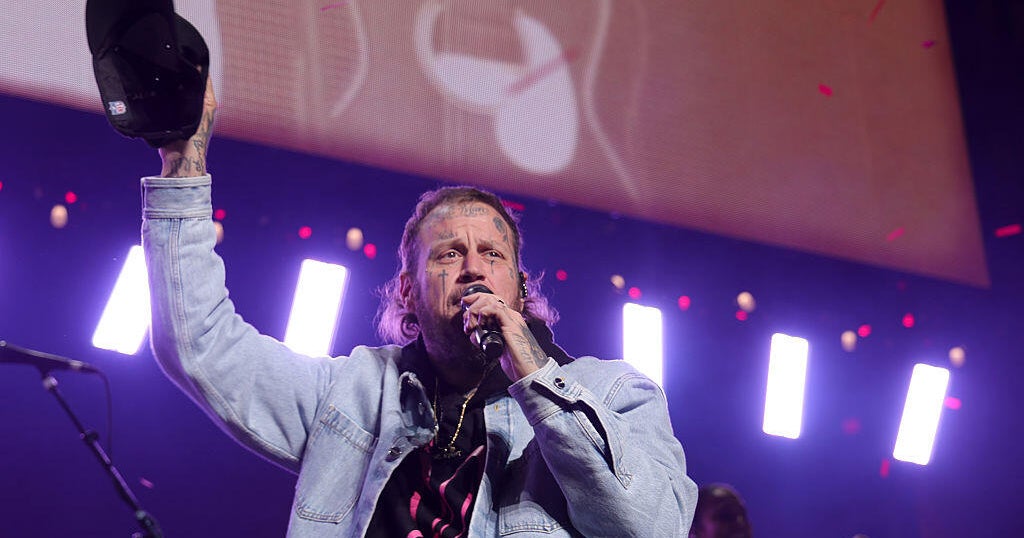
Tennessee’s governor pardoned country star Jelly Roll on Thursday for his criminal past in the state, acknowledging the Nashville native’s long road back from drugs and prison through soul-searching, songwriting and advocacy for second chances.
The rapper-turned-singer, whose legal name is Jason Deford, has spoken for years about his redemption arc before diverse audiences, from people serving time in correctional centers to concert crowds and even in testimony before Congress.
Republican Gov. Bill Lee issued his pardon after friends and civic leaders of the Grammy-nominated musician joined in an outpouring of support.
He has said a pardon would make it easier for him to travel internationally for concert tours and to perform Christian missionary work without requiring burdensome paperwork.
Michael Loccisano/Getty Images for iHeartRadio 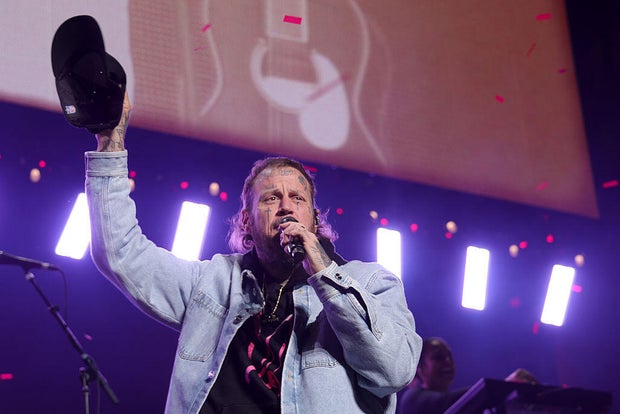
He was one of 33 people to receive pardons Thursday from Lee, who for years has issued clemency decisions around the Christmas season. Lee said Jelly Roll’s application underwent the same monthslong thorough review as other applicants. The state parole board gave a nonbinding, unanimous recommendation for Jelly Roll’s pardon in April.
“His story is remarkable, and it’s a redemptive, powerful story, which is what you look for and what you hope for,” Lee told reporters, adding he hopes to meet Jelly Roll for the first time soon.
Beginning at the age of 14, Jelly Roll was in and out of jail for about a decade for convictions including aggravated robbery, shoplifting, drug possession and drug dealing.
In January 2024, “CBS Sunday Morning” interviewed Jelly Roll inside the Metro-Davidson County Detention Facility in Nashville, where he had once been an inmate. At the time, Jelly Roll had just been nominated for two Grammys.
“There was a time in my life where I truly thought … this was it,” he told “CBS Sunday Morning.” “And then coming here, you know, just after getting nominated for two Grammys, it just hits different…I didn’t think I’d get emotional, to be honest.
He told “CBS Sunday Morning” he wrote hundreds of songs while in jail.
Unlike recent high-profile federal pardons, which let people off the hook for prison, a pardon in Tennessee serves as a statement of forgiveness for someone who has already completed a prison sentence and been released. Pardons offer a path to get certain civil rights restored, such as the right to vote, although there are some limitations under state law, and the governor can specify the terms.
Jelly Roll broke into country music with the 2023 album “Whitsitt Chapel” and crossover songs like “Need a Favor.” He has won multiple CMT Awards, a CMA Award and also picked up seven career Grammy nominations, three of them recently.
Much of his work has become associated with overcoming adversity, like the song “Winning Streak” that tells the story of someone’s first day sober. Or the direct-and-to-the-point, “I Am Not Okay.”
In making his case to the parole board, Jelly Roll said he first fell in love with songwriting while in custody, stating it began as a therapeutic passion project that “would end up changing my life in ways that I never dreamed imaginable.”
Beyond his sold-out shows, he’s brought his story to the Senate, where he testified in January 2024 about the dangers of fentanyl, describing his drug-dealing younger self as “the uneducated man in the kitchen playing chemist with drugs I knew absolutely nothing about.”
“I was a part of the problem,” he told lawmakers at the time. “I am here now standing as a man that wants to be a part of the solution.”
Jelly Roll’s most serious convictions include a robbery at age 17 and drug charges at 23. In the first case, a female acquaintance helped Jelly Roll and two armed accomplices steal $350 from people in a home in 2002. Because the victims knew the female acquaintance, she and Jelly Roll were arrested right away. Jelly Roll was unarmed, and was sentenced to one year in prison plus probation.
In another run-in 2008, police found marijuana and crack cocaine in his car, leading to eight years of court-ordered supervision.
Friends and civic leaders backed the pardon application, citing Jelly Roll’s transformation.
Davidson County Sheriff Daron Hall, who runs Nashville’s jail, wrote that Jelly Roll had an awakening in one of the jails he managed. Live Nation Entertainment CEO and President Michael Rapino cited Jelly Roll’s donations from his performances to charities for at-risk youth.
The parole board began considering Jelly Roll’s pardon application in October 2024, which marks the state’s five-year timeline for eligibility after his sentence expired. Prominent Nashville attorney David Raybin represents Jelly Roll in the pardon case.
Lee’s office said no one was pardoned Thursday who had a homicide or a sex-related conviction, or for any crime committed as an adult against a minor.
https://www.cbsnews.com/news/jelly-roll-pardoned-tennessee-governor/
