


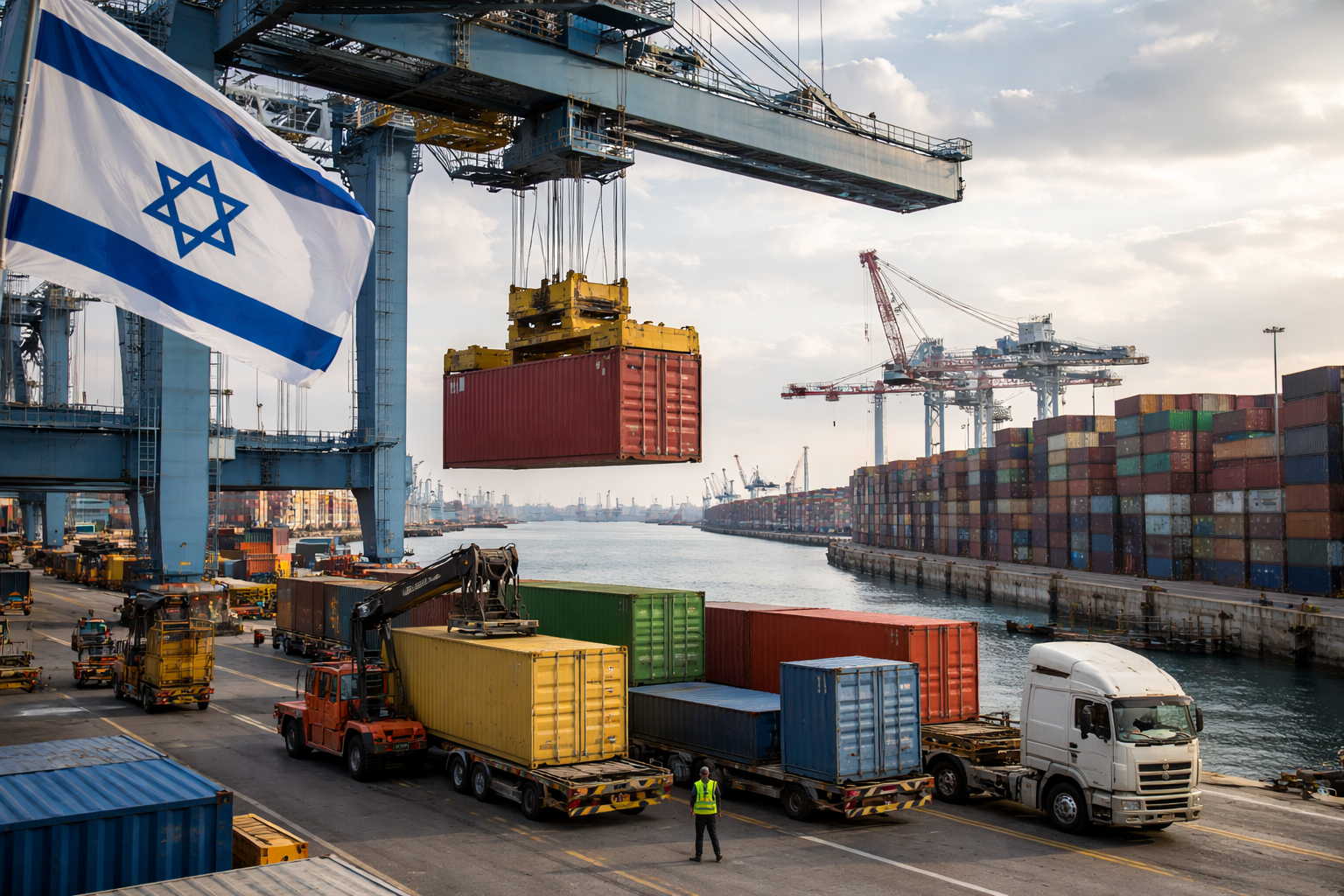
Israel’s economy expanded 3.1% in 2025, rebounding from growth of about 1% the previous year, as investment and exports picked up and heavy government spending during the Gaza war bolstered activity.
Official data released on Monday showed the recovery exceeded expectations and could gather pace provided a fragile ceasefire holds.
The expansion outperformed the average growth rate of advanced economies, with output rising faster than the OECD average of 1.7% and the roughly 2% growth recorded in the United States.
It also beat the Bank of Israel’s earlier estimate of 2.8%, with the central bank forecasting a sharper acceleration to 5.2% this year.
Per capita economic growth stood at 1.7% in 2025, reflecting a modest improvement in living standards after a period marked by conflict-related disruptions.
Investment and exports lead the recovery
Growth last year was driven by a 7.1% increase in investment and a 5.9% rise in exports, alongside a smaller increase in consumer spending.
Economists said elevated state expenditure, particularly on defence during the two-year conflict, also played a role in cushioning the economy.
“The economy is recovering,” said Yonie Fanning, chief strategist at Mizrahi Tefahot Bank in a Reuters report.
“The indications for the first quarter of 2026 are also positive. That sets the basis for continued recovery.”
Fanning said the economy was now seeing a release of pent-up demand after the war, combined with rising supply in sectors such as real estate, trends that could continue into 2026.
Fourth-quarter surprise on ceasefire boost
Momentum strengthened toward the end of the year.
Gross domestic product grew at an annualised 4.0% in the fourth quarter from the previous three months, beating market expectations of 2.6%, according to a Reuters poll of economists.
The surge was powered by a 33% jump in exports following an October ceasefire between Israel and Hamas.
Third-quarter growth was also revised sharply higher to an annualised 12.7%.
“This is a relatively robust print, especially the business sector activity, impacted by a strong contribution from net exports,” said Jonathan Katz, chief economist at Leader Capital Markets in the report.
Cooling inflation raises rate-cut expectations
The growth data followed figures showing inflation easing sharply.
Israel’s annual inflation rate fell to 1.8% in January, its lowest level since mid-2021, down from 2.6% in December, according to the Central Bureau of Statistics.
With inflation now within the government’s 1–3% target range, pressure is mounting on the Bank of Israel to cut interest rates again.
The central bank has already reduced rates twice after holding them steady through most of 2024.
“Most people in the market don’t expect it to stay on hold,” Fanning said.
The Manufacturers Association of Israel also urged another rate cut, arguing that the current 4% policy rate was high compared with other countries and risked strengthening the shekel, which could hurt exporters.
The shekel was flat at about 3.09 per dollar, near a multi-decade high, while Tel Aviv share indices edged up to 0.3%.
https://invezz.com/news/2026/02/16/israels-economy-grows-3-1-in-2025-economists-see-continued-recovery/
