






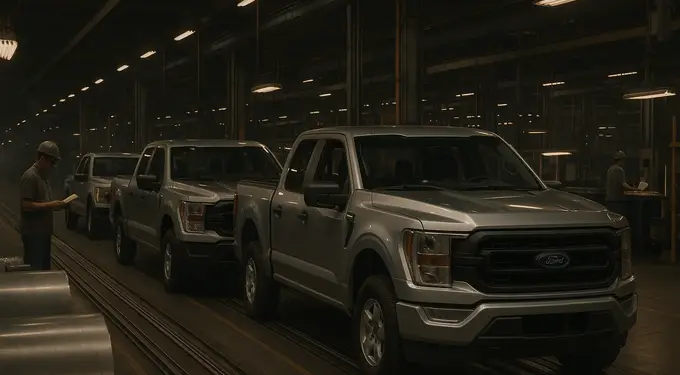
Ford Motor Company reported a notable decline in vehicle sales in the United States during the first quarter of 2026.
The automaker announced on Thursday that total sales dropped by 8.8% year-on-year, reaching 457,315 vehicles between January and March.
The fall reflects the ongoing adjustments within the automotive industry as manufacturers continue to respond to changing consumer demand, production shifts, and market pressures.
Despite the dip in overall sales, the company emphasized that certain vehicle segments continue to demonstrate strong demand among customers.
Ford shares fell 1.11% to $11.54 on Thursday’s trading.
Hybrid and electric vehicle sales see sharp decline
Sales of hybrid and electric vehicles experienced a significant downturn during the quarter.
Deliveries of hybrid models fell 19.4% compared to the same period last year, with 41,159 units sold in the first three months of 2026.
The decline was even more pronounced in the electric vehicle segment. Ford’s electric vehicle sales dropped 69.6% during previous years, with only 6,860 EVs delivered during the quarter.
The figures highlight the volatility within the electric vehicle market as automakers continue to refine their strategies amid shifting demand and competitive pressures.
Company leadership highlights strong demand in key segments
Despite the overall decline, Ford executives stressed that several core product lines continue to perform well.
According to Ford Blue President Andrew Frick, the company remains focused on maintaining its share in the retail market while adapting to changes in the broader automotive landscape.
Frick stated that the company’s team worked hard during the quarter to maintain retail share while navigating industry shifts.
He also emphasised that consumer demand remains strong for certain key segments, including the company’s F-Series trucks, sport utility vehicles, and the Ford Pro commercial business.
The company aims to focus on its strongest segments while continuing to offer customers a mix of both affordable and premium vehicles.
Pickups and vans made up more than half of Ford Motor’s total sales, accounting for approximately 56%.
The company said its strategic shift toward higher-margin SUVs, including the Expedition and Explorer, is delivering results.
Sales of large SUVs—comprising the Expedition, Explorer, and Bronco—rose nearly 18%.
This product mix shift also supported a modest increase in Ford’s estimated retail market share, which edged up 0.2 percentage points to 11.6%.
Looking ahead, Ford expects to enter the second half of the year with a more streamlined portfolio focused on high-demand models, as F-Series inventory levels stabilize and momentum in the Explorer and Bronco lineup continues to build.
Industry faces affordability and Economic pressure
The decline in Ford’s sales reflects broader challenges facing the US auto sector in 2026.
The industry is currently grappling with high vehicle prices, rising insurance and financing costs, and economic uncertainty, which have slowed purchasing decisions among consumers.
In addition, tariff policies and trade uncertainties have increased manufacturing costs for automakers, putting further pressure on the sector.
Many companies have absorbed billions of dollars in tariff-related expenses instead of passing the costs on to already price-sensitive consumers.
Market forecasts suggest that US vehicle sales may decline slightly in 2026 compared with last year as the industry adjusts to these economic pressures and evolving government policies.
https://invezz.com/news/2026/04/02/ford-sales-drop-8-8-as-ev-slump-deepens-suvs-offer-support/


