


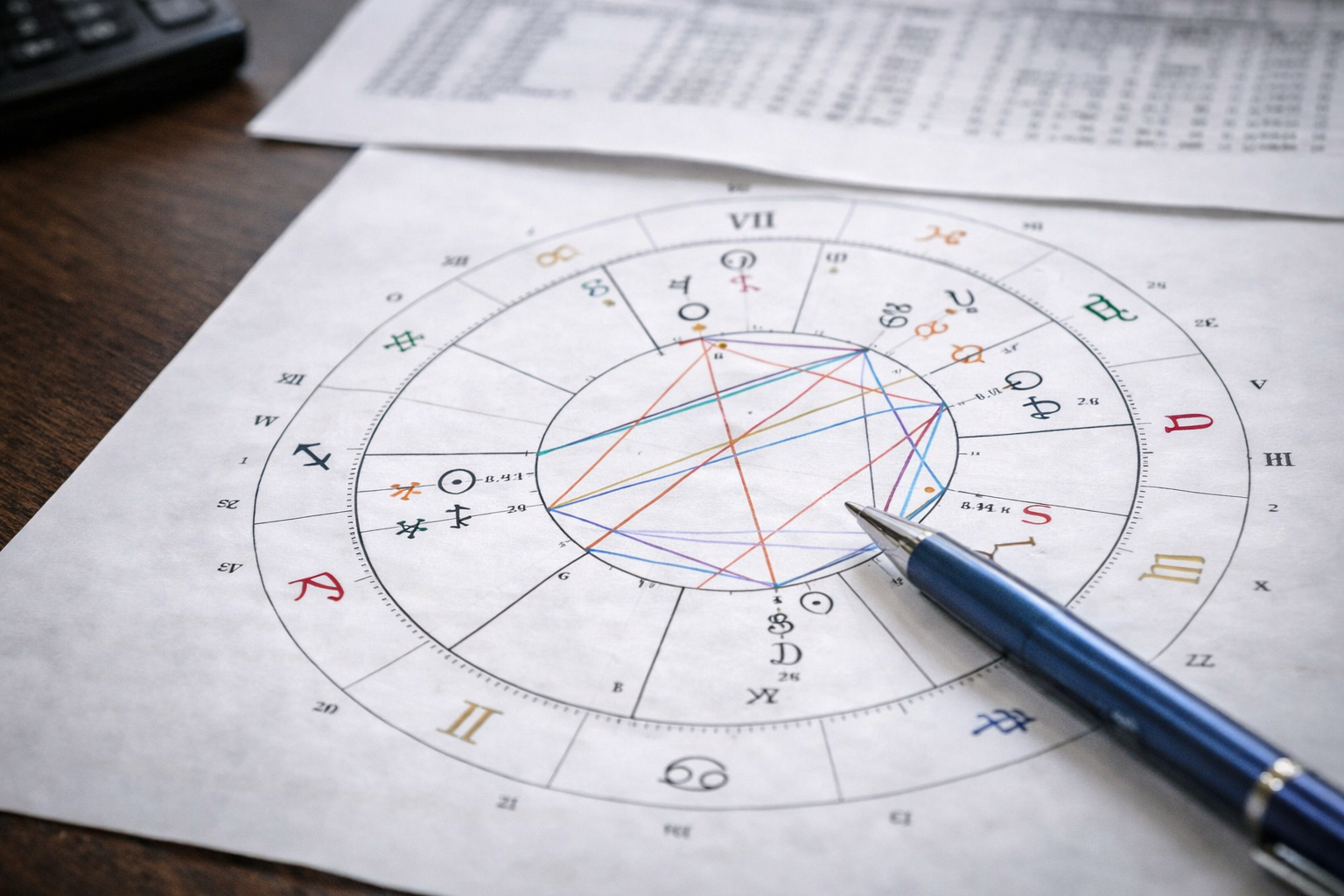
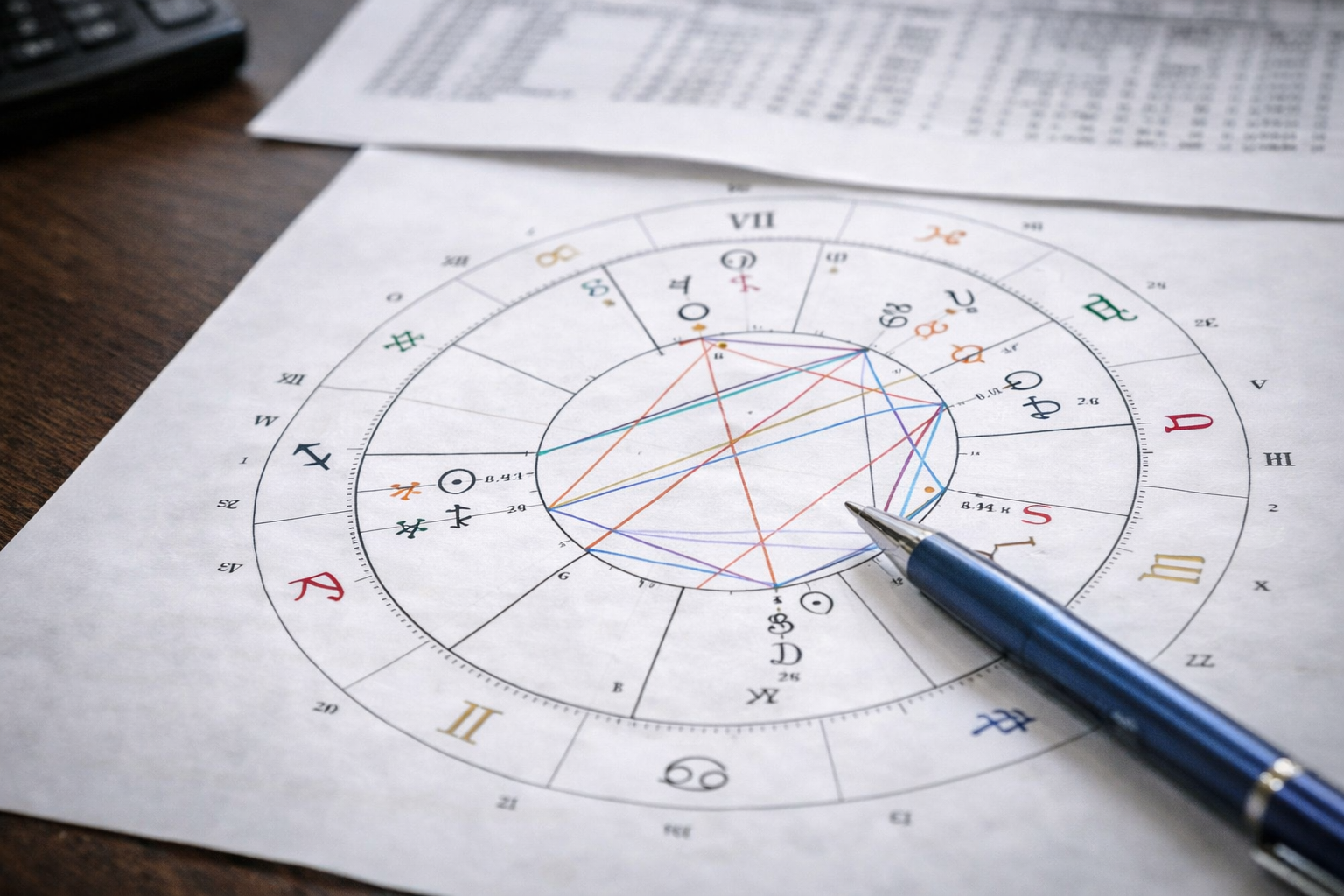
Amid the intensity of Wall Street trading, investors are increasingly turning to AI-driven sentiment analysis to shape forecasts.
Yet, a section of the market continues to place faith in astrology, betting that planetary alignments can predict bull runs more effectively than traditional quantitative models.
Last month, a report by the Financial Times said Elon Musk had suggested timing a potential IPO of SpaceX to coincide with the alignment of Jupiter and Venus.
The episode echoed a saying widely attributed to legendary financier JP Morgan: “Millionaires don’t use astrology, billionaires do.”
The remark has long circulated in market lore as shorthand for elite investors’ openness to unconventional tools.
There is a debate whether Morgan actually said that or not — astrologer Karen Christino suspects it originated with Sydney Omar, the American astrologer who was a counsellor to the rich and famous — but Morgan’s interest in astrological prediction and his association with Evangeline Adams, a famous astrologer of his time, is widely documented.
To be sure, Morgan is reported to have taken an interest in astrology only during the later years of his life, by which time he was already a success.
How does financial astrology work?
Put simply, financial astrology is based on the idea that market behaviour reflects collective human psychology, which in turn is influenced by cyclical planetary movements.
The framework treats markets as social systems rather than purely mechanical ones.
“The question isn’t whether planets cause market moves (they don’t), but whether a widely shared belief system influences enough market participants to produce a detectable signal,” Richard Peterson, CEO at MarketPsych, tells Invezz.
“At MarketPsych, we measure how narratives and collective beliefs move asset prices. In that framework, astrology functions like any other belief-driven narrative: if enough traders act on it, coordinated behaviour can generate real price patterns not because of celestial mechanics, but because of human herd psychology.”
Peterson says this way, similar to technical analysis, sometimes the astrologers get it right for a while.
“Having a framework like astrology (or technical analysis) often gives investors an outlet for their unconscious judgment, which can be better-than-average when it allows them to tap into their pattern-recognition intuition and long experience,” he says.
Practitioners are known to map key market events — such as stock index highs and lows, crashes, rallies or shifts in investor sentiment — against planetary cycles involving Saturn, Jupiter, Uranus and eclipses.
Each planet is associated with broad themes: Saturn with contraction and discipline, Jupiter with expansion and optimism, Uranus with disruption and volatility.
By studying planetary transits, conjunctions and retrogrades relative to a market’s “birth chart” — for example, the founding date of a stock exchange or a company’s IPO — astrologers attempt to identify periods when risk appetite, liquidity or structural change is likely to rise or fall.
Musk, SpaceX and planetary timing
For example, Susan Gidel, a known financial astrologer and author who specialises in the commodity markets, looked up the birth chart of SpaceX, which was incorporated in Delaware on March 14, 2002.
She tells Invezz that Jupiter, the planet of success, was exactly conjunct the position of Musk’s Sun in his birth chart, both at 05 degrees of Cancer.
“This alignment happens just once every 12 years. So, for starters, I think he (Musk) used an astrologer to pick the SpaceX incorporation date and time. To my eye, that type of connection does not happen by accident,” she says.
According to Gidel, the SpaceX incorporation date puts its Sun at 23 degrees of Pisces, which also forms a supportive aspect to Musk’s natal Jupiter at 27 degrees of Scorpio, indicating that the company will bring success to Musk.
She says this year’s Jupiter–Venus conjunction at 25 degrees of Cancer on June 9 forms a “grand trine” with Musk’s Jupiter and the SpaceX Sun, suggesting unusual ease in generating wealth and success.
“So, it makes sense for an IPO/stock listing around that time. What’s more, the Jupiter/Venus conjunction is especially strong this year because Jupiter is in its very most-favorite sign of Cancer, where it is “exalted” and can pretty much snap its fingers to get whatever it wants,” she said in emailed comments.
Jupiter and Venus are considered benefic planets symbolising success and wealth, and their conjunction is seen as supportive for financial outcomes.
Interestingly, Gidel notes that the same configuration occurred in August 2025, around the time Musk was awarded a $29 billion pay package in Tesla shares.
“Before that, the last time they were conjunct in Cancer was in August 2001 and June 2002. So, this is rare, indeed,” she says.
Gidel analyses several markets — including bitcoin, crude oil, gold, the Nasdaq-100 and the S&P 500 — to forecast potential highs and lows, though she does not recommend buy or sell dates.
Asked whether belief systems like astrology are more appealing when markets are volatile or unpredictable, Gidel says,
“Market volatility, I think, always spurs interest in answering the question of “why.” What is making the market behave this way? And, ultimately, after sorting out the news and the technical market indicators you come to the behaviour of people making trading decisions. Why do they do what they do at this particular time? I think how people respond to the energy of the planets in the sky helps explain that,” she says.
Global faces of financial astrology
Gidel is one among many worldwide who claim a steady following of investors looking for cosmic signals to complement technical indicators.
In the US, Ray Merriman of Merriman Market Analyst and, in the UK, Christeen Skinner are also known for putting out predictions based on planetary cycles.
Rajeev Prakash, an astrologer based in Indore in central India’s Madhya Pradesh, has been closely monitoring the movements of various global financial markets, including equities, precious metals, currency pairs, yields, and treasury bonds for over 20 years, and boasts of having 30,000 clients across the world – mostly institutional clients in the US, he tells Invezz.
Prakash, who predicts Bitcoin will further fall to $55,000 and has been long on gold and silver since 2024, claims he saw the 2008 financial crisis much before Wall Street did.
“About 15 days before the crash, on January 5, 2008, we issued advertisements in about 10 to 15 newspapers in India about our prediction that global markets would suffer a crash between January 14 and 24, as nobody was willing to publish it as a news article,” he says.
Perhaps the most legendary name in the field remains William Delbert (WD) Gann, often hailed as the “original wizard of Wall Street.”
A prolific stock and commodity trader who began his career in the early 1900s, Gann moved to New York to establish his brokerage, Gann & Company.
He famously blended financial data with astrology and sacred geometry to time market entries on the New York Stock Exchange and the Dow Jones commodities market.
Gann’s methodology was rooted in “Natural Law,” utilising geometric proportions—the circle, square, and triangle—to find hidden order in price movements.
His track record was formidable: in November 1928, he precisely predicted a market top for September 1929, followed by the catastrophic Great Depression.
His techniques, such as the Gann Square of Nine, remain staples for technical analysts even today.
Parallel to Gann was Evangeline Adams, the twentieth century’s most influential American forecaster.
Operating from her office in New York City’s Carnegie Hall, Adams provided astrological counsel to thousands.
Her reach was vast, touching millions through a syndicated radio show, newspaper columns, and best-selling books.
Adams’ fame was cemented by her uncanny accuracy and legal resilience.
She gained notoriety for predicting the 1899 Windsor Hotel fire, one of New York’s deadliest disasters.
In 1914, she faced trial for fortune-telling, but was acquitted after the judge famously declared she had raised astrology “to the dignity of an exact science.”
Adams claimed to have guided the hands of titans like JP Morgan and Charles Schwab, and her legacy is defined by her dual predictions of the 1929 stock market crash and the United States’ entry into World War II.
Written in the stars, regulated on earth: regulators’ stance
Despite the growing popularity of astrology as a tool for financial predictions, global market regulators remain firmly grounded in earthly law.
For those attempting to turn horoscopes into high-finance advice, the message from authorities is clear: the stars do not exempt you from the rulebook.
In India, the Securities and Exchange Board of India (SEBI) has long maintained a sceptical distance.
As early as 2010, the regulator issued a blunt cautionary note to the public: “Do not be guided by astrological predictions on share prices and market movements.”
In November 2023, SEBI took decisive action against P. Krishnakumar and Jagadeeshan S., barring the duo for one year and ordering a refund of over ₹30 lakh.
The pair had been selling “astrology-based prediction packages” through their website, ymforecast.com.
To be sure, the penalty stemmed from the two acting as investment advisers without being certified to do so, and was not exactly a statement against financial astrology per se.
Moving west, the US Securities and Exchange Commission (SEC) has dealt with even more egregious cases where mysticism masked misconduct.
In 2012, the SEC charged one Orlando-based broker, Gurudeo “Buddy” Persaud, for orchestrating a Ponzi scheme under the guise of an unconventional trading strategy.
Persaud lured investors into his firm, White Elephant Trading Company LLC, with promises of 6% to 18% returns.
He failed to disclose that his entire strategy rested on the belief that lunar cycles and gravitational forces dictate mass human behaviour—and by extension, the stock market.
The SEC’s complaint revealed a classic Ponzi structure: Persaud used new investor capital to pay off old investors while siphoning off $415,000 for personal expenses and losing $400,000 in the markets.
The regulator even punctuated the case with a touch of wit.
Eric I. Bustillo, Director of the SEC’s Miami Regional Office, remarked: “Persaud preyed on people who trusted him by promising high and steady returns while hiding his unconventional trading strategy. When Persaud blatantly lied to investors and hid their losses… he should have known that an SEC enforcement action was in the stars.”
What’s the verdict?
As we head deeper into 2026, the debate remains as polarised as ever.
Is financial astrology a legitimate “meta-tool” for timing, or simply a sophisticated form of pattern-seeking?
“Investing requires navigating uncertainty, and the human brain is poorly equipped for that. We are pattern-seeking and wired to find structure in ambiguous environments. Astrology offers a coherent framework that imposes order on an uncertain future, which is precisely its appeal under pressure (e.g., it had a strong resurgence during the COVID lockdowns),” says Peterson.
He adds that for high-net-worth individuals, an additional factor is the illusion of control, which is the tendency to attribute past successes to one’s own judgment and timing.
“A decision framework, even an unconventional one like astrology in some cases, can feel like due diligence. And it provides psychological cover when the outcome disappoints.”
Peterson points to academic literature exploring the “Lunar Effect,” where full moons appear to correlate with sleep disruption and enhanced risk aversion among market participants.
“But whether these patterns are robust or simply statistical noise remains an open question,” Peterson admits.
However, mainstream academia remains largely unmoved.
Byoung-Hyoun Hwang, Associate Professor of Finance at Nanyang Technological University, likens the “accuracy” of astrology to a statistical inevitability.
“If you have thousands of people flipping coins, some are bound to achieve the ‘impressive’ feat of getting heads 20 times in a row,” he told CNBC.
For Hwang, the lack of solid evidence that fortune-telling can reliably predict corporate performance makes it a dangerous primary decision tool.
Bruno Schneller, Managing Partner at Erlen Capital Management, offers a more balanced view.
“Financial astrology remains a colourful fringe in an otherwise evidence-based field. It’s fascinating as a cultural phenomenon and a human behaviour story, but I’d advise investors to treat it with healthy scepticism rather than as a primary decision tool,” he tells Invezz.
Can astrology explain AI’s disruption of world markets?
On being asked for her prediction of the US equity markets in 2026, given how the AI theme has been acting as a great disruptor, Gidel says,
“AI might be the current disruptor, but there is always that element of new and change in the stock market. Think of automobiles and radio in the early 20th century–the disruptors of their day. So, I just stick to what the astrological cycles have shown over history and apply that to the future.”
To that end, she says she has been looking for a stock market correction of at least 30% since last April based on the sextile (60-degree) aspect between Saturn and Uranus, their final significant aspect in this cycle that began in 1988, based on performance in previous cycles.
“At this point, that would equate to about a test of the April 2025 lows. If that does not occur by end of Q1-ish, then the about 20% correction of April 2025 will have been it. In either case, I’m expecting a rally to new highs and a peak in 2030-2031 as Jupiter opposes Saturn and Uranus. Then, a significant bear market into lows in mid-2032 when Saturn and Uranus once again conjoin by sign and degree. In previous cycles, that low has been one that stood for the entire 45-year cycle.”
As for the buzz surrounding Musk potentially timing the SpaceX IPO for June 2026, Peterson views it through a more terrestrial lens.
“Regarding Musk: I’d interpret the Jupiter-Venus timing less as traditional astrology and more as an appreciation for a rare and measurable astronomical event. Musk is a scientist and engineer at heart, and the orbital alignment of two planets is quite cool. That said, he’s clearly also having some fun with it. Pinning a landmark IPO to an unusual cosmic date is attention getting and good press (as we see with your coverage!). He’s a great storyteller, not an astrologist.”
https://invezz.com/news/2026/02/21/financial-astrology-why-some-investors-trust-stars-over-spreadsheets/
