






*Names changed to protect their identities.
Lancaster, United Kingdom – Maya* and Daniel* sit in a spare room at Global Link, an NGO helping migrants. Neither has heard from family or friends in Iran since the internet was shut down on January 8 during nationwide antigovernment protests.
Both came to the UK separately: Maya, a graduate student from near the capital, Tehran, six years ago and Daniel, a support worker from Sine in northwestern Iran, three years back. Both have family still in Iran.
Maya has yet to hear from her elderly parents on the outskirts of Karasht near Tehran. How Daniel’s father, who is sick with cancer, is coping remains unknown.
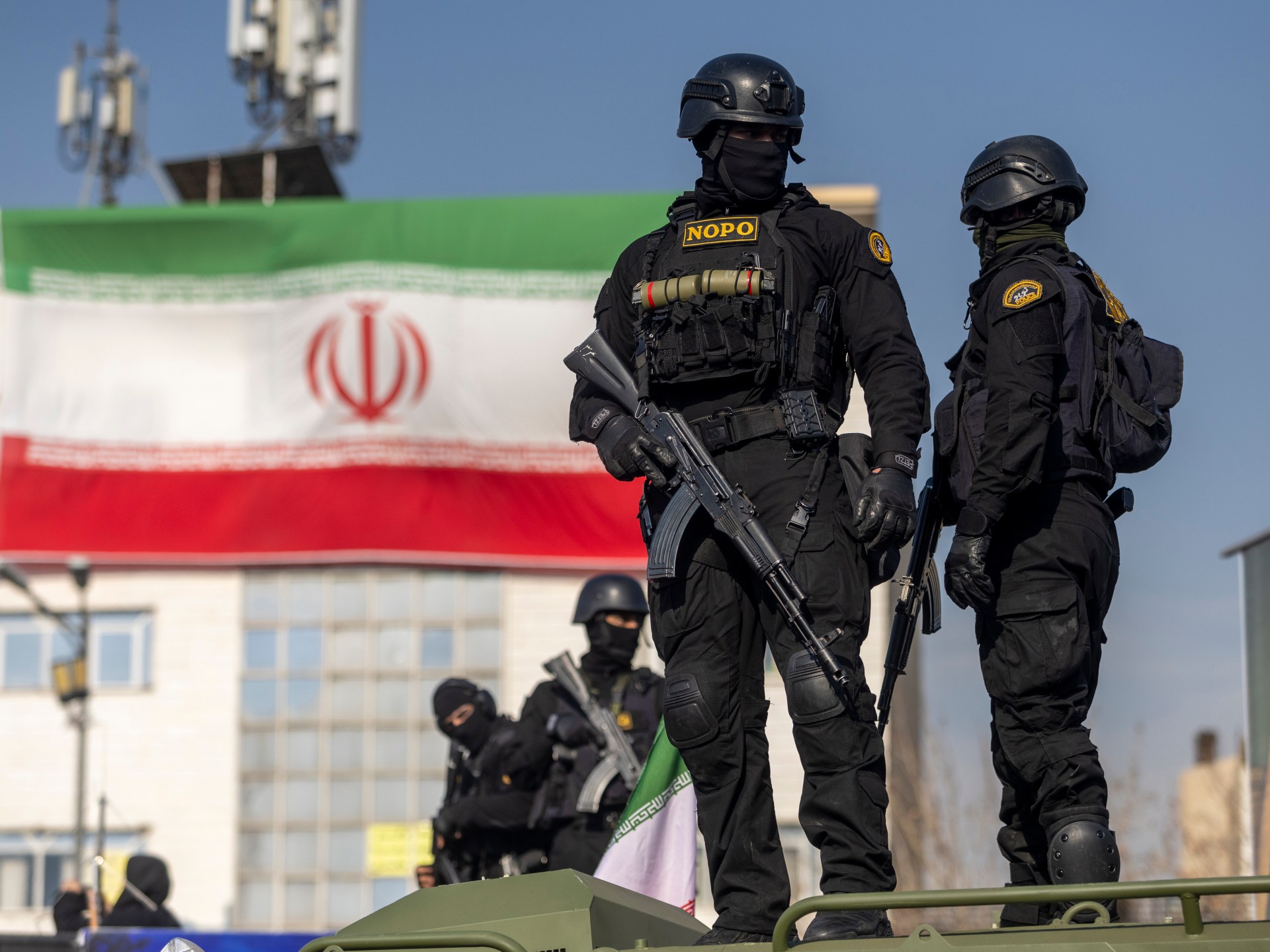
There is still no confirmed death toll for the latest round of unrest to have engulfed Iran since the national currency, the rial, crashed on December 28, leading traders of Tehran’s bazaar to take to the streets to voice their anger in a protest that spread across the country and evolved into a serious challenge to the government.
Speaking on Saturday, Supreme Leader Ali Khamenei acknowledged that “several thousand” people had been killed in the unrest, which he accused the United States and Israel of fuelling. The government has recognised the protesters’ hardships, pledging to address mounting economic grievances, but also said the demonstrations that saw government buildings attacked were later hijacked by “terrorists” and elements trained and armed by outside powers.
“I have a lot of stress,” Daniel said, his measured voice showing some degree of the tension that he and Maya have been living through. Before the communications shutdown, Daniel, who at university had been detained for his pro-democracy activism, learned that a number of his friends had been arrested.
Both Maya and Daniel lived through previous bouts of unrest but believe the demonstrations of recent weeks may mark a sea change in Iran’s direction. “I believe it’s not like before … because the economy’s collapsed,” Maya said.
She went on to describe those she calls the “losers” of Iranian society – the people, she said, “who can’t provide a meal for their family. They are tired, you know, fed up of being ashamed in front of their own family, to not be able to provide for them. And if they don’t die in the street, they will die from starving maybe the next year or next six months.”
The inflation rate in Iran is among the highest in the world. Even before the recent collapse of the rial, inflation was about 40 percent as the cost of chronic economic mismanagement and years of crippling Western sanctions conspired to hollow out what was left of Iran’s economy.
Maya spoke of those she used to pass in the metro on her way into Tehran, hawking whatever they could to feed themselves and their families. She recalled one older lady, shaking in humiliation at where she had found herself before overhearing her daughter reassure her. “And I realised that was the first time that lady, that middle-aged lady with a teenage girl, has had to do that, and she was ashamed,” Maya said.
Both speak to friends and family members in the United States and Canada. Daniel has one friend in Erbil, the capital of northern Iraq’s semiautonomous Kurdish region, who has been able to talk to people in Iran for a few minutes every morning.
They have both heard unverified rumours, including militias patrolling the streets of Iran’s towns and authorities charging family members $3,000 – the price, they allege, of a bullet – before allowing them to recover relatives’ bodies.
They have also heard of the the desire of Reza Pahlavi – the son of Iran’s last shah who was toppled by the Islamic revolution of 1979 – to return to Iran before dismissing the royal claimant as simply past rubbish that the country had already thrown away.
“Day and night are connected for us,” Maya said, describing how time loses all meaning in the absence of news from home.
Mornings no longer feel like the start of a new day so much as the continuation of the past night, she said. “It’s a continuous morning because you’re waiting for your parents, or you’re waiting for news because I don’t know what will happen,” she added.
Maya described the uncertainty as a permanent presence, like a looming deadline, that refuses to shift despite the temporary distractions of friends or socialising. “You might have the best ever meal, but you don’t enjoy it fully because in the back of your head, you’re worried about things.”
Daniel leaned forward, his voice breaking, “I stop everything, you know. … Every time I am on the phone and try to ring to Iran, and I try. … Life is up to me, and my job is going very, very badly. … Every time I’m unconscious that, yeah, when I sleep, I have a very, very bad dream, and yeah, everything is very bad.”
Neither Maya nor Daniel knows how things will pan out. Even if the government falls, the economic conditions would remain desperate. There are also too many factions, both domestic and international, interested in gaining power.
Current events are like a fever, Maya said.
“When you have a high fever, [you] can’t function, so revolution is like a fever which burns even after revolution. It’s going to burn everything together and only … the more powerful one or more brutal one will survive.”
https://www.aljazeera.com/features/2026/1/18/everything-is-bad-fear-and-anxiety-grip-iranians-abroad-amid-protests?traffic_source=rss


