






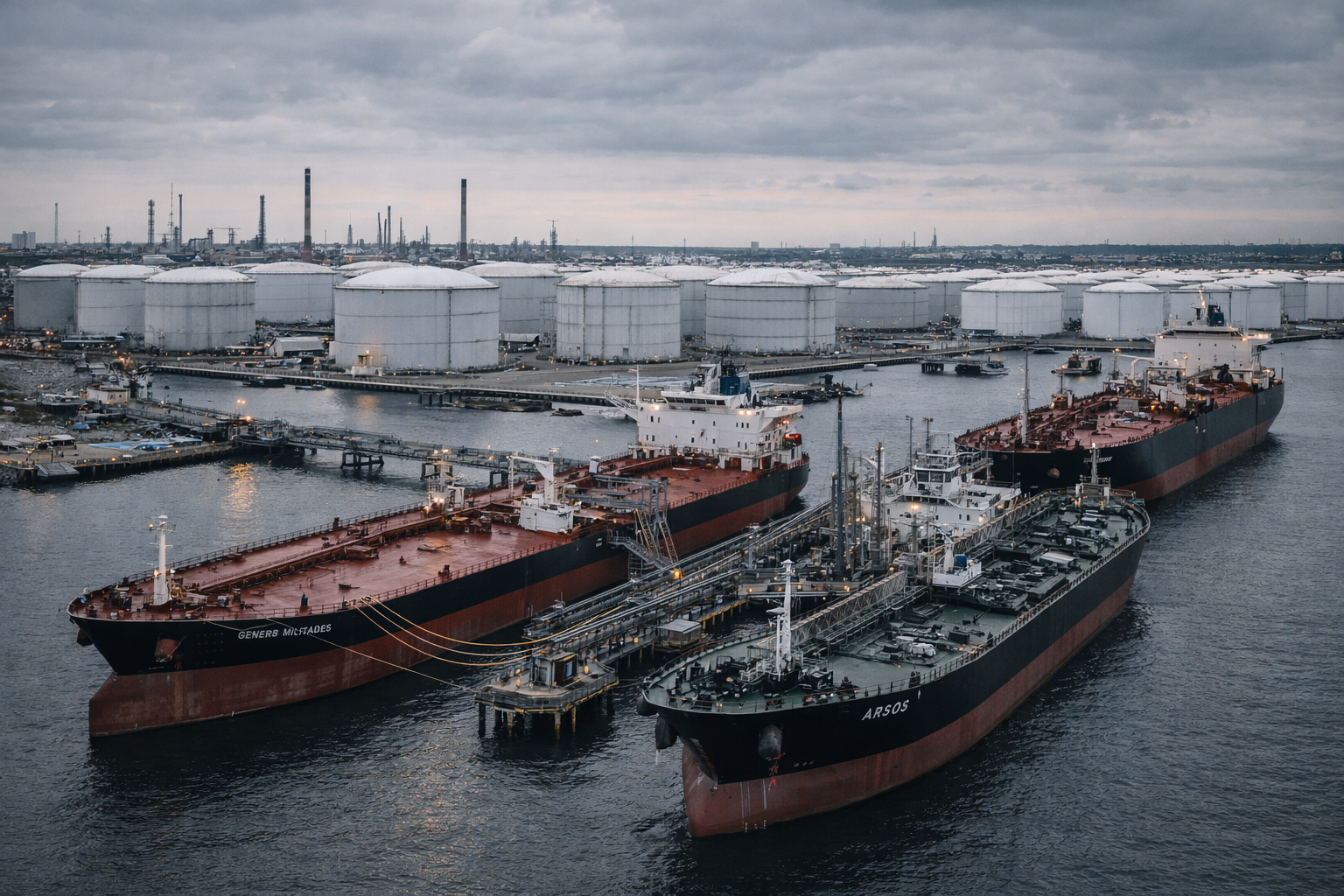
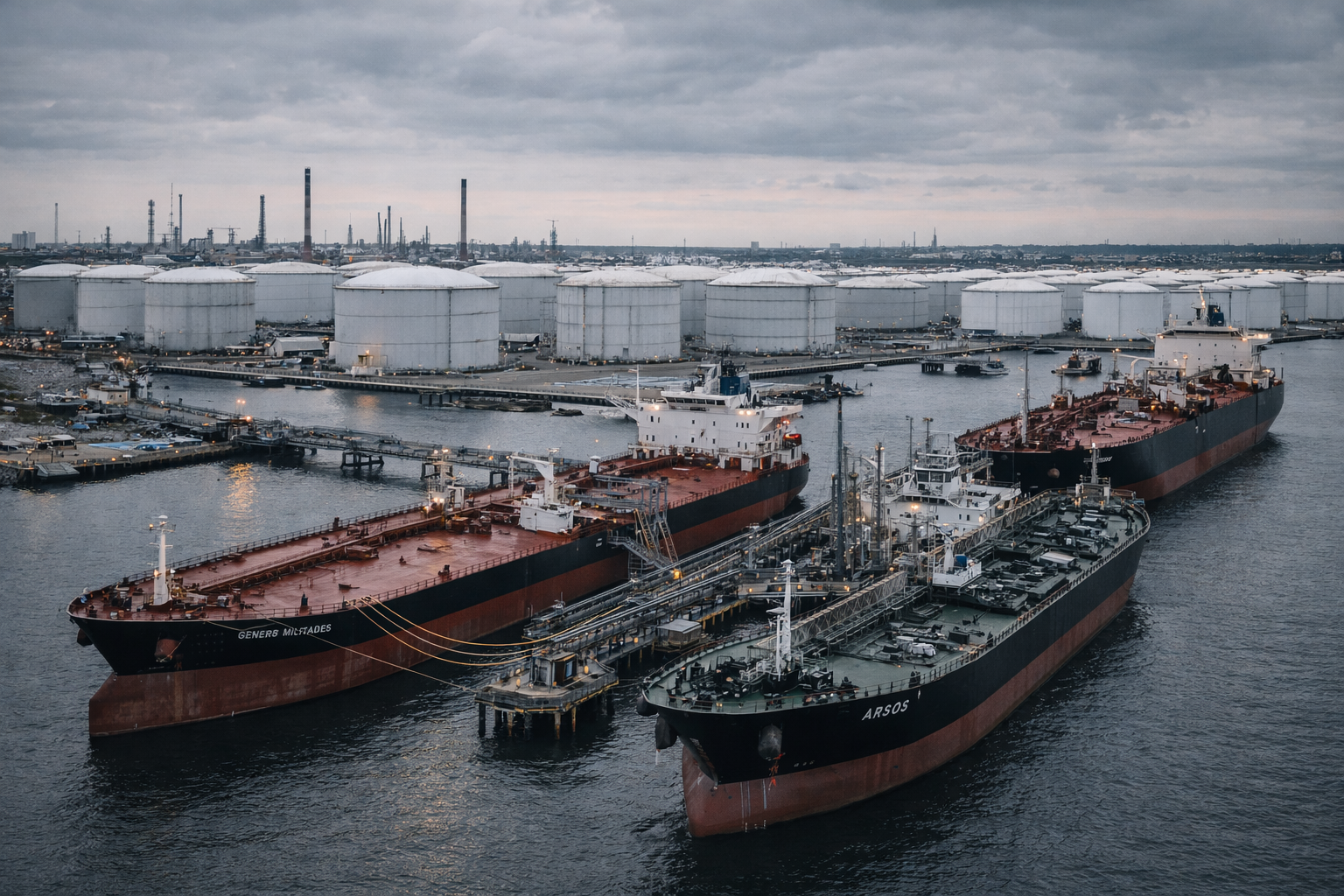

Oil prices dropped on Tuesday, driven down by indications of possible US-Iran negotiations to de-escalate tensions, which eased market fears over supply disruptions linked to the US presence near the Strait of Hormuz.
The West Texas Intermediate crude price was last at $97.13 per barrel, down 2%, while Brent was at $98.21 a barrel, down 1.2% from the previous close.
Following the US military’s initiation of a blockade on Iran’s ports, both benchmarks saw gains in the prior session, with Brent rising by over 4% and WTI by nearly 3%.
The US military announced on Monday an expansion of its Strait of Hormuz blockade, which now covers the Gulf of Oman and the Arabian Sea.
This action immediately impacted shipping, with data showing two vessels changing course within the strait as the blockade began.
In retaliation for the failure of weekend crisis talks in Islamabad, Iran issued a threat to attack ports in nations bordering the Gulf.
Diplomacy and sustained price pressure
Dialogue between Washington and Tehran continued on Tuesday, with US President Donald Trump claiming that Tehran initiated the contact.
For his part, Iranian President Masoud Pezeshkian stated his willingness to maintain the dialogue, provided it adheres to international law and regulations.
In a recent interview with Fox News, US Vice President JD Vance expressed cautious optimism regarding diplomatic efforts to de-escalate the potential conflict between the US and Iran.
Vance indicated that meaningful progress has been made in negotiations, even without a major breakthrough.
He characterised discussions held over the weekend as constructive, providing US officials with a clearer understanding of Iran’s negotiating position.
Meanwhile, energy prices are expected to remain high and could even increase further, according to US Energy Secretary Chris Wright.
Speaking at the Semafor World Economy Forum in Washington, Wright attributed the sustained price pressure to ongoing disruptions in vessel traffic through the critical Strait of Hormuz, stating that normalization of this shipping route is necessary for prices to stabilise.
ANZ analysts estimated that roughly 10 million barrels of crude oil per day have been removed from the market.
Furthermore, they note that an extended US blockade could potentially reduce crude shipments by an additional 3 million to 4 million barrels per day (bpd).
The oil market no longer needs a worst-case escalation to justify higher pricing levels. Tight balances alone are sufficient to sustain the price of Brent near or above recent threshold levels.
Global response and long-term price outlook
Britain and France, among other NATO allies, chose not to participate in the blockade. Instead, they pushed for the essential waterway to be reopened.
The global energy market is experiencing its most significant shock ever, prompting warnings from the International Monetary Fund, World Bank, and International Energy Agency (IEA).
These bodies urged countries to refrain from hoarding energy supplies or implementing export restrictions.
IEA head Fatih Birol stated on Monday that while the agency is currently not planning further strategic oil releases, it is ready to act if the situation demands it.
Conversely, the Organization of the Petroleum Exporting Countries (OPEC) reduced its global demand forecast for the second quarter by 500,000 bpd in its latest monthly report.
“In any case, with little indication that the Iranians will open the Strait of Hormuz any time soon, it seems reasonable to expect oil to be elevated for some time,” Ira Kawaller, Founder of Derivatives Litigation Services, LLC, said in a FXStreet report.
The WTI Light Sweet Crude Oil futures contract is the most actively traded crude oil futures contract.
Although this contract has monthly expiration dates extending for the current year, the next ten calendar years, and two additional contract months, trading volume is heavily concentrated in the contracts with the nearest expiration dates.
Volume for the most distant expirations is often sporadic.
Futures markets suggest that oil prices are expected to peak next month before declining.
A year from now, these prices suggest that crude oil may well be on the order of 25 percent cheaper than it is today.
https://invezz.com/news/2026/04/14/crude-falls-on-us-iran-talks-forecasts-see-25-drop-in-a-year/


