








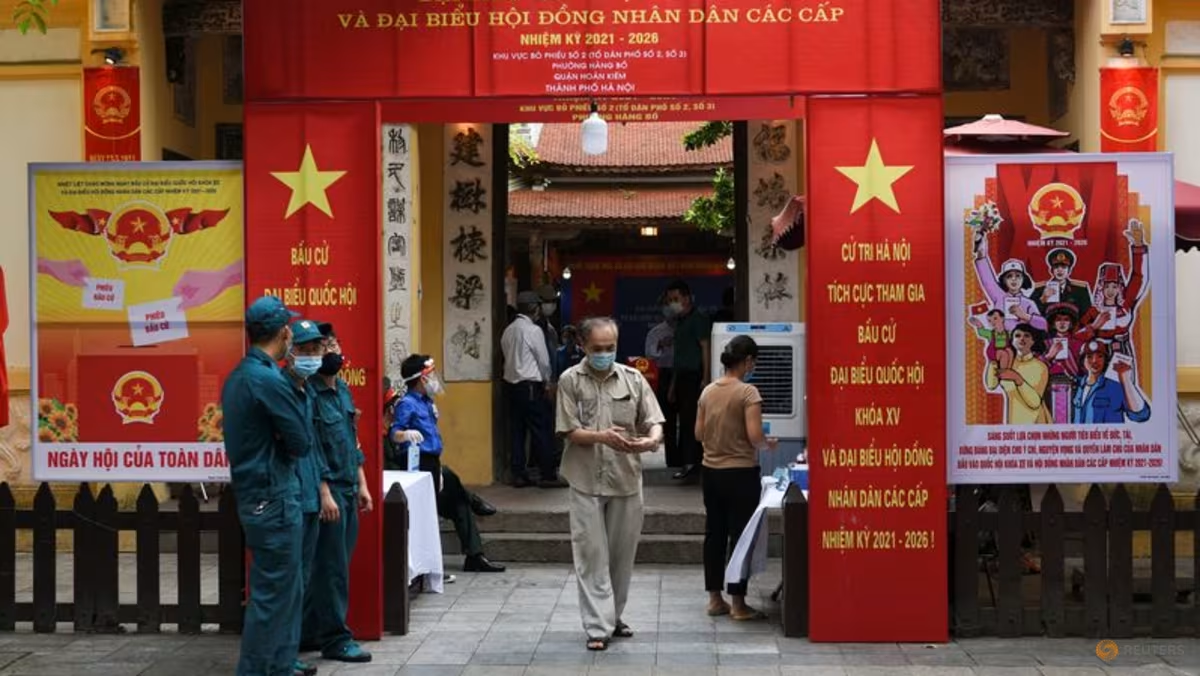
HANOI: Tens of millions of Vietnamese go to the polls on Sunday (Mar 15) to elect 500 members of the National Assembly from a list of candidates almost exclusively fielded by the ruling Communist Party.
The five-yearly elections, in which nearly 73.5 million registered voters will also choose representatives for local councils, are one of the few nods to democratic practice in the tightly controlled one-party state, where the most powerful positions are decided by Communist senior officials ahead of the vote.
Nearly 93 per cent of the 864 candidates running for the national parliament are Communist Party members, while 7.5 per cent are independents, according to the national election council, down from 8.5 per cent in 2021, leaving no doubt the party will maintain its overwhelming dominance in the assembly.
In the current legislature, the Communist Party, which has ruled the country unopposed for decades, holds 97 per cent of the seats.
The parliament has virtually no power to challenge the party’s key decisions, including on personnel, but it has occasionally amended proposed laws.
The opening plenary session is scheduled for early April, when lawmakers are expected to approve the state’s top leaders previously nominated by the party, including the president and the prime minister.
The party confirmed To Lam as its general secretary – the country’s most powerful position – during its five-yearly congress in January, when it also selected the 19 members of the politburo, its top decision-making body.
Party officials are expected to formally announce their nominees for state leadership before parliament’s opening session, with Lam’s elevation to the presidency widely viewed as a formality.
The move would allow the former head of public security to hold both powerful roles for five years, aligning Vietnam’s political structure more closely with that of neighbouring China where Xi Jinping also occupies both positions.
Among the candidates are several prominent business leaders who are party members, including Nguyen Thanh Tung, the head of Vietcombank, Vietnam’s largest bank by market capitalisation, and Le Hong Minh, who is the chairman of technology firm VNG, which owns the country’s most popular messaging app Zalo.
Around 55 per cent of the candidates are men, a proportion similar to the last election. In the 2021 vote, women won about 30 per cent of the seats.
Parliament chairman Tran Thanh Man told local media the election results would be announced on Mar 23.
Turnout has exceeded 99 per cent in each of the last seven parliamentary elections, according to the state news agency.
https://www.channelnewsasia.com/asia/vietmam-communist-party-parliament-election-5994211


