


South Korea and Taiwan, with their mix of gas-dependent grids and Gulf-dependent import strategies, look most vulnerable.
Right now, both countries are scrambling to secure supplies. Unlike the European Union, whose stockpiles can cover about a third of annual consumption, their storage capacity is minimal: Enough to cover less than two months of imports in South Korea, and under a month in Taiwan.
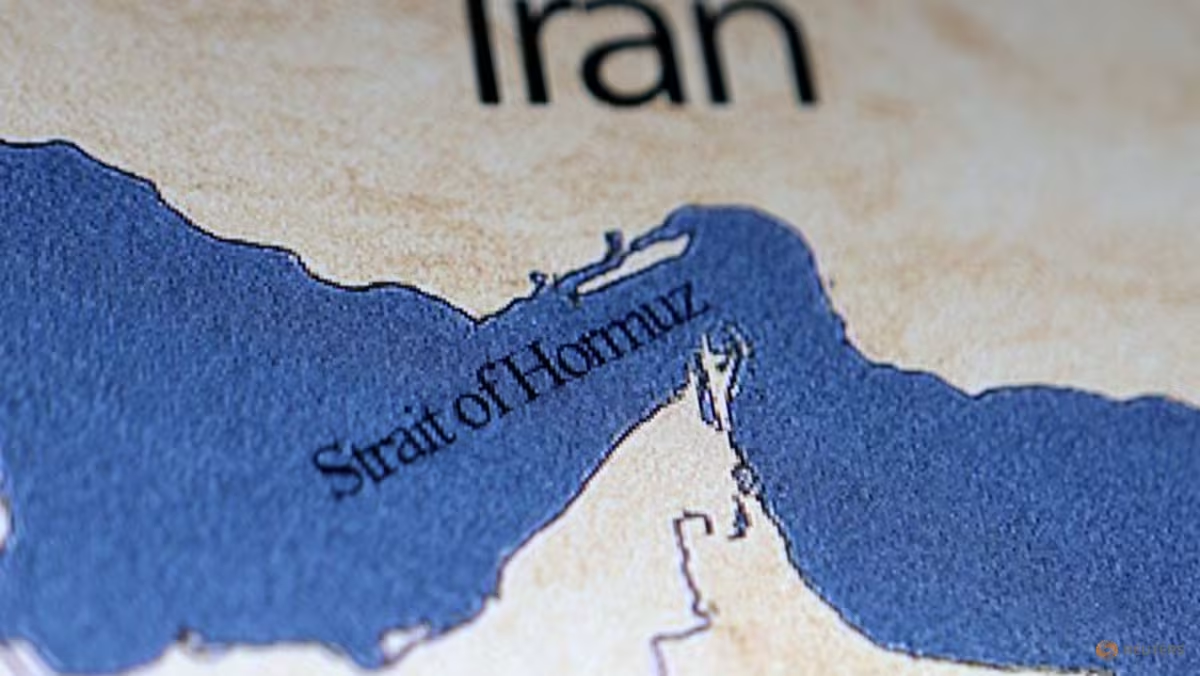
Once ships currently en route have disgorged their cargoes in early April, any ongoing disruption at the Strait of Hormuz is going to quickly bite into power supply. That will be a problem for electricity-hungry foundries churning out the billions of chips powering our electronic devices.
WAKE-UP CALL
There are ways to soften the blow. LNG is available on the spot market, but at a hefty price premium that may become even steeper if the crisis at Hormuz continues. The key Asian contract is still trading at about one-sixth of the levels it hit after the Russian invasion of Ukraine in 2022.
Australia and the US, which vie with Qatar for the title of top LNG exporter, tend to be more flexible in the conditions they attach to their sales, and may see an opportunity to make spot sales and take market share.
Japan, which is still comfortably supplied from other sources and sees itself as a promoter of LNG globally, may want to help out, as my colleague Javier Blas has written.
https://www.channelnewsasia.com/commentary/iran-war-strait-hormuz-lng-exports-taiwan-south-korea-ai-chip-production-5976556
