




Web 3 Journalist
Tim Hakki
Web 3 Journalist

Share

Fact Checked by
CryptoNews Editorial Team
Author

Bitcoin (BTC) and global equity markets have stabilized above key psychological price levels, shaking off an early-week sell-off triggered by geopolitical tensions in the Middle East.
While Bitcoin is trading firmly above $70,000 and the S&P 500 has recovered lost ground, the bond market is signaling that the coast is far from clear.
Yields on U.S. Treasuries have surged for four consecutive days, warning traders that the combination of energy shocks and sticky inflation could keep the Federal Reserve hawkish for longer.
Discover: The best new crypto around!
Bitcoin and Stocks: Reading the Risk-On Signal in the Price Charts
The price of Bitcoin is around $70,500 as of Friday, marking a resilient 6% rebound for the week. The leading cryptocurrency briefly touched $73,470 on Wednesday, recovering sharply from a slide to near $63,000 over the weekend. That initial drop was driven by a spike in oil prices following reports of blocked transit in the Strait of Hormuz, a move that rattled risk assets globally.
The recovery has been mirrored in the equity markets. S&P 500 futures bounced from a multi-week low of 6,718 to reclaim the 6,840 level, stabilizing after the U.S. pledged naval escorts to secure energy transport routes.
This synchronized price action highlights a rising correlation between crypto and traditional equities. Bitcoin briefly reclaimed $73k despite war chaos, yet its tight coupling with the S&P 500 suggests it remains vulnerable to broad macro sentiment rather than acting as a detached safe haven.
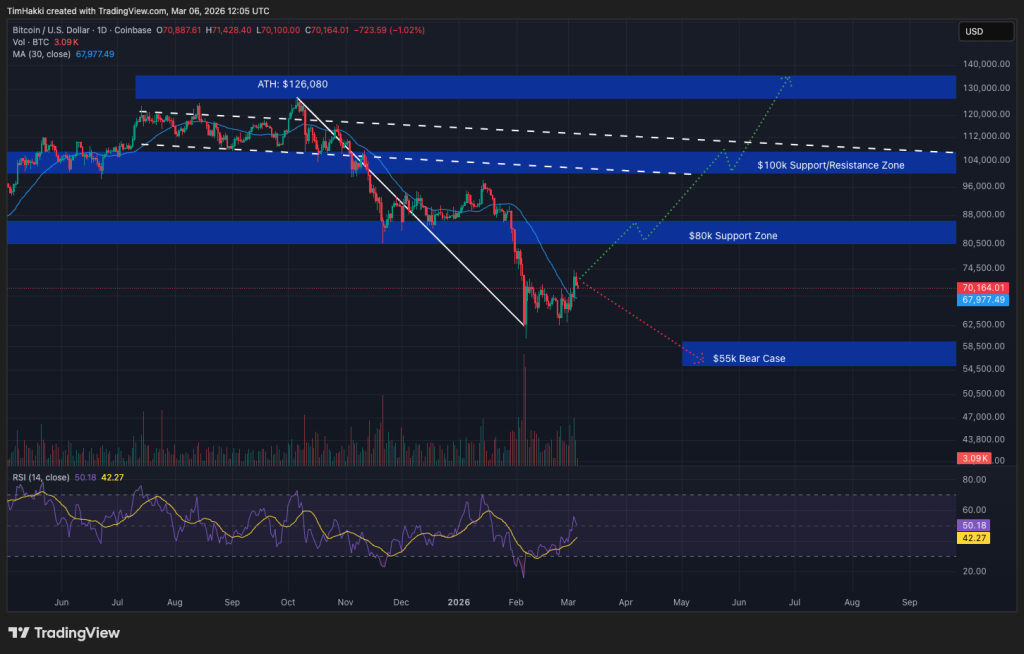
If Bitcoin can maintain support above $72,000, it builds a base to challenge the $74,000 local high. However, if the correlation with equities holds and stocks roll over, the $65,000 level becomes the critical invalidation point for this relief rally.
Bond Yields Flash Warning: Why Traders Can’t Ignore the Macro Noise
While equity traders are buying the dip, bond traders are pricing in risk. The yield on the 10-year U.S. Treasury note has climbed from 3.93% to 4.15% in just four days. Bond prices move inversely to yields, and this sharp move suggests capital is demanding a higher premium for inflation risk.
The two-year yield, which is highly sensitive to Fed policy expectations, has jumped to nearly 3.60%. This repricing directly impacts risk appetite; higher yields typically drain liquidity from speculative assets like crypto by offering a more attractive risk-free return.
Fed rate cut hints had previously sent BTC flying past $72k, but the bond market is now effectively taking those chips off the table.
Data from CME Fed funds futures confirms the shift in sentiment. Investors now see less than a 50% chance of two rate cuts this year, a steep drop from the nearly 80% probability priced in before the conflict began.
If the 10-year yield breaks above 4.20%, it could exert heavy downward pressure on Bitcoin’s price. If yields stabilize or retreat below 4.00%, it would likely greenlight the next leg up for risk assets.
While some point to recent surges in altcoin ETFs as evidence of persistent institutional appetite, cautious analysts note that oil shock impacts are often delayed. If energy prices bleed into broader inflation data, the Federal Reserve may have to hold rates high, capping the upside for Bitcoin and stocks alike.
The Levels That Change Everything: What Traders Are Watching
Traders are focusing on three critical levels to determine the market’s next direction:
First, watch Bitcoin at $74,000. This is the immediate resistance cap; a daily close above this level would signal that the market has fully absorbed the geopolitical shock.
Second, monitor the 10-Year Treasury Yield at 4.2%. This is the danger zone for risk assets. If yields push through this level, expect algorithmic selling to hit both the S&P 500 and Bitcoin.
Finally, the invalidation level sits around $63,000. If the current stabilization fails, a break below this support would suggest the downtrend is resuming.
Discover: The best pre-launch crypto sales!
https://cryptonews.com/news/bitcoin-price-stocks-stabilize-bond-market-risk/
