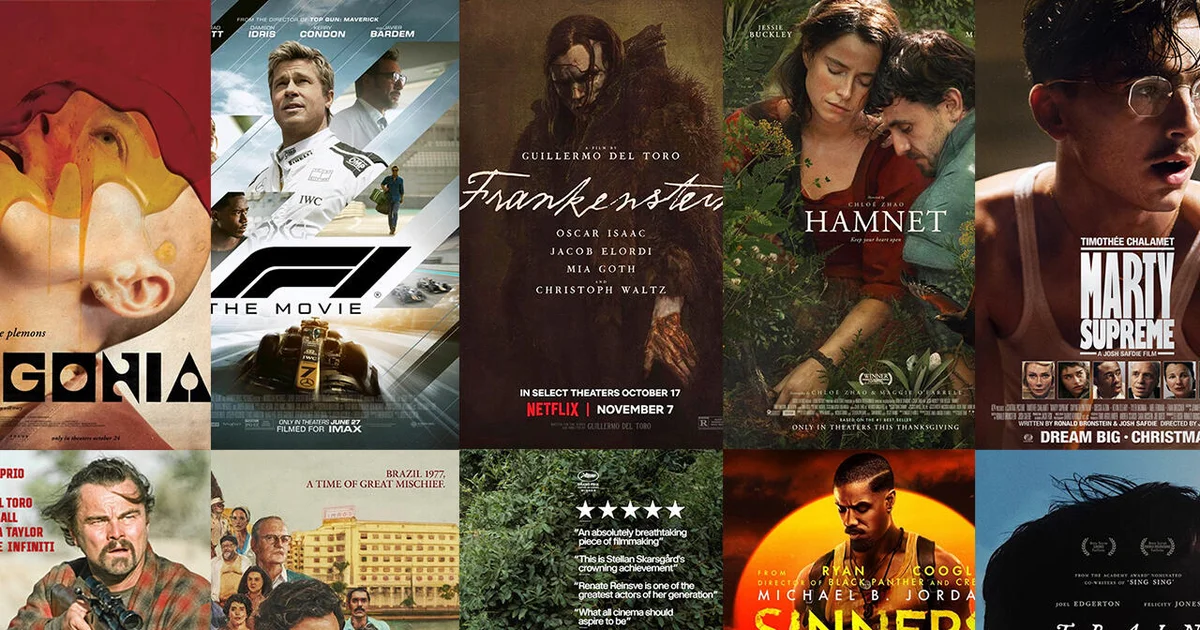
Watch scenes from the films nominated for the Oscar for best picture, as well as interviews with the filmmakers below. The 98th Academy Awards will be presented Sunday, March 15.
Focus Features; Apple Original Films; Netflix; A24; Warner Brothers; Neon 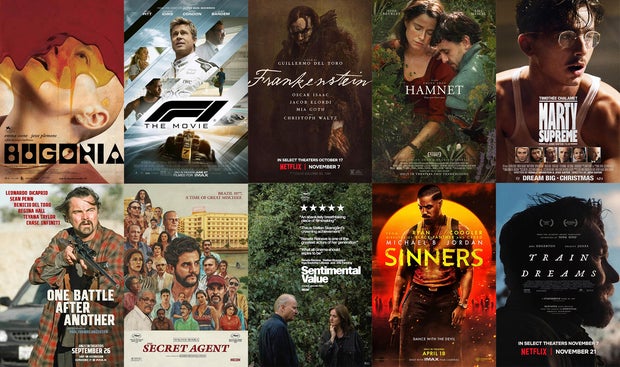

“Bugonia”
Inspired by a 2003 Korean movie called “Save the Green Planet!,” Yorgos Lanthimos’ “Bugonia” blends dark comedy, satire, and pointed social commentary about corporate greed, internet and social media propaganda, and how the plight of bees is a sign of the dangers confronting mankind in the face of climate change.
Best actress Oscar nominee Emma Stone plays Michelle Fuller, a Big Pharma corporate executive who is kidnapped by a pair of conspiracy theorists, Teddy and Don (Jesse Plemons and Aidan Delbis), who believe Michelle is key to an alien plot to take over the world.

Written by screenwriter Will Tracy, the film was originally developed for Ari Aster (“Midsommar”), before Lanthimos came on board. A master of the darkly comic, his previous films include “Dogtooth,” “The Lobster,” “The Favourite,” and “Poor Things.”
“I was immediately blown away,” he told The Hollywood Reporter about the script. “I felt it was so funny and entertaining but also extremely impactful and made you really think about things deeply.”
In a conversation at the BFI London Film Festival, Lanthimos talked about the ending of the film, which is both grand and intimate, and about people’s reactions: “Some of them are like, they see it as totally bleak and desperate, and others see it as hopeful. And I think that’s interesting, and that’s where we try to maintain some kind of ambiguity because it tells a lot about you – like, how you experience this and how you see the world. I love that to happen.”
At the Venice Film Festival, Stone said that the themes of “Bugonia” reflect our current reality: “There’s so much that’s happening that’s reflective of this time in our world and it’s told in a way that’s really fascinating and moving, funny and f***** up, and alive.”
In a conversation for the Dolby Creator Talks Podcast, Oscar-nominated composer Jerskin Fendrix described his unusual approach to writing the film’s score, which ranges from grandiose to sorrowful. Without having read the script, or watched any footage, he composed music following months of “esoteric” research he conducted based on just a few words given him by Lanthimos, which included bees, basements, and spaceships. “I was starting to get a bit paranoid,” he said, not being allowed into any discussions during pre-production. He then recorded about an hour of music — some purely orchestral, some for synthesizers, and some a mixture – that Lanthimos placed at specific points in the movie. “I think the reason that a lot of the music actually echoes the psychology — especially of Teddy, this kind of really frantic grandiosity, but paranoia, and so on — is because I was basically in the same position for at least a year, by virtue of Yorgos’ direction,” he said. [Listen to the track “Resurrectionem” from Fendrix’s “Bugonia” score.]
- “Bugonia” has been nominated for four Academy Awards.
“F1”
Among the year’s top popcorn films was “F1,” starring Brad Pitt as a Formula 1 race driver who is brought out of retirement to help mentor a rising young star on the track. Despite the marquee names of Pitt, Javier Bardem, Kerry Condon, and Damson Idris as the hotshot driver, the main attraction was the visceral racing sequences, with the stars driving modified race cars fitted with fist-sized, remote controlled cameras.

Editor Stephen Mirrione said he did not know anything about Formula 1 racing before working on “F1,” for which he received his fourth Oscar nomination. (He’d won for the Steven Soderbergh film “Traffic.”) In an interview for Avid, Mirrione said he fought against the viewer feeling “race fatigue.”
Before filming, races were designed with storyboards and based on the contours of individual racetracks. Compiling footage from as many as 30 cameras shooting a single racing sequence, and using maps as a guide, Mirrione would review the footage for specific angles, to see if the storyboards worked or not, and to maintain continuity.
“You want to be sure that the racing sequences were not just about the excitement of watching a race, but that there was always storytelling and narrative information all the way through,” he said.
Director Joseph Kosinski filmed race footage over both the 2023 and 2024 seasons, shooting at the tracks between practice runs and qualifying races. Footage from actual F1 races, including crashes, was incorporated into the story, with drivers like Lewis Hamilton and George Russell factored in.
Production sound mixer Gareth John, of the film’s Oscar-nominated sound team, told Variety that during one sequence, Max Verstappen, driving for Red Bull, crashed into McLaren’s Oscar Piastri. “All the authentic chaos is happening in front of us in real time,” he said. “Many of the things that happen in this film have happened for real, and they’re pilfered from actual F1 events.”
The sound team strategically planted microphones throughout the cars driven by Pitt and Idris, as well as around the tracks, to get the sounds of engines, squealing tires and crowd noises. And while many of the races were mixed to include Hans Zimmer’s score, Silverstone was run without music. “It was trying to keep that energy up just with sound effects,” said re-recording mixer Juan Peralta.
Peralta, a longtime Formula 1 fan, told the Dolby Creator Talks Podcast, “In all my years of watching Formula 1, I’ve only ever watched it either live, which is really loud, or on TV. It’s been a broadcast. So, to put it in a theater with all these speakers and all this dynamic range, it was challenging. You know, I don’t want it to sound different than the actual cars, but I want it to be a cinematic experience. So it was like, you know, doing that little tightrope walk.”
- “F1” is nominated for 4 Academy Awards, including best picture.
“Frankenstein”
Mary Shelley’s Gothic novel “Frankenstein, or the Modern Prometheus,” published in 1818, has been the basis of innumerable horror films, most famously James Whale’s 1931 version, starring Boris Karloff as the Creature imbued with life by a scientist daring to be God. That film, and Shelley’s text, have been lifelong obsessions for Mexican director Guillermo del Toro, whose horror and fantasy films (including the Oscar-winning “Pan’s Labyrinth” and “The Shape of Water”) have welcomed audiences into wondrous, tactile worlds of awe and danger.
Del Toro talked with “Sunday Morning” about Shelley, who was 19 when she penned the story, and why it had endured: “It was written by a teenager that was full of questions and rage and rebellion. You know, it’s the same questions we have now: What are we? Why am I human? Why am I here?” That questioning is dramatized by his Creature, played by best supporting actor nominee Jacob Elordi.
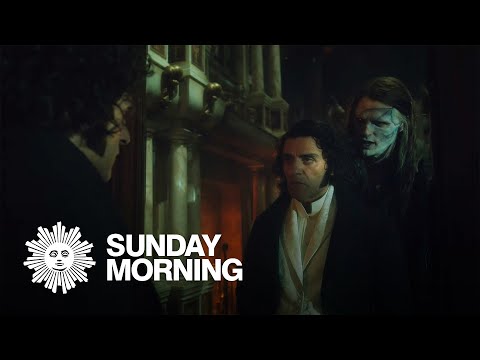
For del Toro, there is an appeal to monsters: “Monsters tell you, look, it’s okay to be you. It’s okay to be imperfect. … We are all creatures. I mean, we have a world that tells you you shouldn’t be a creature, but in reality we’re all weird in some way.”
Del Toro’s fascination with “Frankenstein” has fueled his love of cinema and literature since he was a child. “It’s in all of my movies,” he said. “All 13 movies have elements of the film. ‘Pinocchio’ is another prodigal father asking for forgiveness of his child. My first movie, ‘Cronus,’ deals with eternal life. ‘Shape of Water,’ certainly, the idea of the monster being of the same essence as the main female character, and the female character recognizing herself in it. … I mean, my first crush was Mary Shelley. I truly can tell you this, you are born to sing one or two songs in your lifetime. This is my song.”
“Hamnet”
Adapted from Maggie O’Farrell’s novel, “Hamnet” is a fictionalized tale about William Shakespeare’s family, imagining that the tragedy surrounding the death of his young son, Hamnet (played by Jacobi Jupe), inspired him to write his timeless work, “Hamlet.” Best actress Oscar nominee Jessie Buckley plays Agnes, William’s wife, and it is her emotional performance that both grounds the story, and elevates it to a universal tale of pain, grief and acceptance.

Buckley (who won the BAFTA, Golden Globe (Drama), Critics Choice and Screen Actors Guild Award for her performance) told “Sunday Morning” that when she started shooting the more difficult scenes, she told her husband she needed to go away for two weeks. So, Buckley went to Hampstead Heath, a vast green space in London, where she’d go swimming each morning. “I just need to be in nature and start my day and wake up that way, and then go to the set and see what came out,” she said.
What came out was a performance radiating fire and tenderness. She says director Chloé Zhao (an Oscar-winner for “Nomadland”) reminded her cinema is not just escapism. “Our jobs as actors and the storytellers are to touch the most heightened expressions that are too hard to hold on our own,” Buckley said. “I get to incubate the bits of us, myself, the shadow bits.”
Asked what are those “shadow bits” that came out for her role, she laughed, “I’m not telling you! You have to watch it and make up your own mind.”
The emotions in Buckley’s powerful performance, Zhao told the American Film Institute, were a collective grief shared by everyone on the set. “We also spoke very personally about loss in their own lives. I’ve said to everyone from the beginning that they should bring their own to set every day. Like, it’s not just preserved for the actors, the space. This is community spaceholding day after day after day. “
In an interview for Vanity Fair’s Notes on a Scene, Buckley, Zhao and Mescal described dramatizing Agnes’ emotions following the death of her son, when William announces he is leaving for London – abandoning her in her grief. He goes to kiss her goodbye; she moves to strike him. The physical violence wasn’t written in the script, but Buckley went for it.
“In moments like this, when the emotions are so charged, the camera will restrain itself from pushing for emotions, because the space is like a bomb about to explode,” said Zhao. “We actually wanna stand back because we want the audience to feel the impact of that shockwave. ‘Cause when you go in there, for some reason, you actually do the opposite. So we stayed wide.”
“But it also feels theatrical,” Mescal said. “It feels like in the world of Shakespeare, like you’re watching, kind of in a meta sense, you’re watching actors in a frame – not that you don’t see wide shots in films, but I feel like some of the more emotionally-charged moments that you would see people jump in on in different films, you don’t [here].”
“And also the unpredictability,” said Zhao, “’cause the camera isn’t there. They have all this space, and the wild animals come out of them!”
“I was so thrilled when that happened!” Mescal said.
“I didn’t even know it was gonna happen,” said Buckley. “And you get a shock when these things come up! Makes me scared watching it now!”
In the film’s climactic scene, when Agnes attends a Globe Theatre production of “Hamlet,” her emotional attachment to the actor playing the dying Hamlet is itself meta: he’s actor Noah Jupe, brother of Jacobi Jupe, who played her dying son. Noah told Time Magazine, “Two months into their shoot, I was shooting something in Greece, and I got a call from my mom and Chloé, and they’re very giddy and smiling. They say to me, ‘How would you feel about playing Hamlet?’ It was obviously something that you just cannot turn down.”
“Marty Supreme”
In director Josh Safdie’s comic-drama “Marty Supreme,” set in 1950s New York, shoe salesman Marty Mauser (best actor Oscar nominee Timothée Chalamet) is convinced he is the world’s greatest ping pong player – and by the looks of it, he is. A striver and a hustler, Marty will stop at nothing to achieve his dream of winning the world championship, even if it means being deceitful, disloyal or larcenous. And he’s not above dognapping.

In a featurette for Fandango, Safdie described the making of the semifinals scene, and how the perspective of Paltrow’s character is key:
“This scene in particular is the intoxication of Marty,” said Safdie. “This is how he infects other people. This is what makes Marty a beautiful person, is that burning desire and that passion inside of him can be infectious. And it’s about the glory of youth, the glory of stardom, the glory of theater, and the adoration that it can bring. And because this story is told through Kay’s point of view and she’s kind of awakening from a malaise – she’s a dormant person, she’s given up on her dream – and coming into this scene and seeing somebody who’s actively pursuing their dream in the most intense way. She’s coming in mid-movie to that dream. You know, it was very important to understand her point of view of this young man.”
Safdie continued: “That was something that I just told to both Géza (Röhrig) and Timmy. This is why you’re doing it. You’re doing it for the adoration. You’re doing it for the fun. You’re letting people know that you’re more than just an athlete. You know, you’re a dancer. You’re inspiring people. You’re making it fun. you’re making it entertaining. … So, there’s a moment in the scene after they do their exhibition point, after they put on this incredible display of talent, Géza lobs up the ball, to allow Marty to just end the game. And the way that you let out, it’s one of my favorite parts of the movie, the way that you let out a little laugh, like your boy is handing it to you and you’re gonna win the semi-finals and you let out a little and then you go in for the slam and then you guys embrace in a way that is so inspiring to me because that is what it’s all about, is moments where you realize you’re not in it alone, and I love that.”
“One Battle After Another”
Paul Thomas Anderson’s “One Battle After Another,” adapted from the Thomas Pynchon novel “Vineland,” is an absurdist comic thriller inspired by the revolutionary movements of the 1960s and ’70s, speaking with the immediacy of today’s headlines, wrapped around the story of a father desperately trying to connect with his daughter.
After launching the audience into the violence of a revolutionary group called the French 75 (and the government’s equally violent response to it), the film jumps ahead 16 years to where the former bombmaker, hiding out under the alias Bob (best actor Oscar nominee Leonardo DiCaprio), is trying to raise his daughter, Willa (Chase Infiniti), through a haze of inebriation and paranoia. It’s not for nothing that Willa finds herself parenting her parent.

The story, which involves a maniacal military officer, a martial arts instructor shepherding illegal immigrants, a cabal of White supremacists, hired assassins, and a network of cross-border revolutionaries who gain sanctuary at a convent, is one of the most brazen comedies in recent years. “One Battle After Another” was named best film by the New York and Los Angeles film critics, the National Board of Review, the BAFTAs, and the Critics Choice Awards, and won the Golden Globe for best film (comedy or musical). It also received top prize from the Directors Guild of America and the Producers Guild of America.
In a DGA conversation between Steven Spielberg and Paul Thomas Anderson, they discussed the film’s tone. Spielberg compared “One Battle” to “Dr. Strangelove” and how Stanley Kubrick handled comedy and a very serious subject, the end of the world. “This brings a kind of absurdist comedy taken very seriously,” said Spielberg, “because it’s so much a reflection of what’s happening today every day throughout this country. But it takes it to a point where you want to laugh because if you don’t laugh you’re going to start screaming, ‘This is too real.’ And so, you’ve got that outlet.”
The bravura chase sequence at the end, involving Willa, a killer (John Hoogenakker), and her dad, was filmed on a stretch of highway in California’s Anza-Borrego Desert State Park that they found by chance. Anderson told the DGA audience, “I have to admit that we went into this movie without that as our ending. We knew that all our participants were headed to the desert, and we knew we were going to have our man save the day in some way. And exactly how it was all going to go down was unclear to us. And in location scouting and driving, we drove on those what we call the ‘river of hills.’ It was just a stretch of road. And that sequence blossomed from the location scouts of driving down there, where you realized it’s very scary to drive those hills because you come up over those, you’re going 65, 70 miles an hour, there’s no one around, but it is blind. You’re blind coming up. … You’re like trusting that nothing’s there. You’re trusting that everybody’s going to keep moving.
“And I was just videoing with my phone and the more you were kind of static, the more you would lose the horizon line. And it became very, very scary. And then I found when I would zoom in on my phone, it was even scarier. Especially if something was there. Then we kind of ended up after these River of Hills at this massive thing that they call the Texas Dip. And it was one of those lucky moments where you’re sitting in a car for four hours going, ‘God, next time maybe I’ll never go on a location scout again.’ But then you come across this and you go, ‘This is why you get in a van and you location scout. because these discoveries are there if you’re patient and the movie gods are on your side.'” Shot in VistaVision by Oscar-nominated cinematographer Michael Bauman, edited by Oscar nominee Andy Jurgensen, and scored by Oscar nominee Jonny Greenwood, the three-car chase sequence is one of the most innovative ever filmed.

- “One Battle After Another” is nominated for 13 Academy Awards, including best picture.
“The Secret Agent”
A thriller set in 1970s Brazil during a period of dictatorship (what the film ironically refers to as a time of “great mischief”), “The Secret Agent” follows a stranger, going by the name Marcelo (best actor Oscar nominee Wagner Moura), as he arrives at an apartment building in Recife, which appears to be a haven for political refugees. We learn that just as Marcelo is on a search for information about his past, he is being sought out by hitmen.
For “The Secret Agent,” Brazilian director Kleber Mendonça Filho (whose films include the violent 2019 revenge pic “Bacurau”) blends genres – part political thriller, part family drama, part exploitation film, part ridiculous fantasy – that meld into a narrative that replicates the sinister paranoia of the era. On top of it all is Filho’s nostalgia for ’70s cinema (which he previously catalogued in his documentary “Pictures of Ghosts”), that is captured as much by the style of his film as by clips from period movies. In fact, much of “Secret Agent” takes place in a movie theater, a temple to dreams and escapism – a refuge.

“The Secret Agent” won the best actor and best director awards at the Cannes Film Festival. Moura also won the Golden Globe and the New York Film Critics Circle Award for his performance.
He told Vanity Fair that “The Secret Agent” had aided in his country reflecting back at its period of dictatorship: “We have in Brazil a horrible thing called the law of amnesty, where torturers and killers and everybody just got free from what they did. When Walter Salles makes a film about that (last year’s Oscar-winning “I’m Still Here”), and it’s seen by the amount of people that saw it, and with the amount of young people that went to the movies – and the amount of people that were rooting for Fernanda Torres at the Oscars and looking at her and saying, ‘That artist represents us. There is a Brazilian artist that represents us in Brazil’ – that is great. It says a lot about our country that is in this horrible, polarized moment. … The narrative that film brings matters to us, and beyond that, people are going, ‘Oh my God, so this really happened?'”
Moura likened Filho’s film to a stone creating ripples in the water. “I think it will have a political effect, but also an artistic effect. It’s as Brazilian as you can get. It’s a beautiful film.”
Filho, a former film critic, had met and interviewed Moura at Cannes 20 years ago when the actor was there to promote “Lower City.” At a Q&A at last year’s New York Film Festival, Filho said the two met again at a Brazilian festival after Filho had directed “Neighboring Sounds.” “We established the idea of working together sometime,” he said. “Sometimes you want to work with an actor, an actress, but you really have to find the right material. I mean, you can’t just go and improvise. So, years went by, and I finally decided to sit down and write a script very specifically tailored for Wagner.”
The son of a historian, Filho, who was a child in the mid ’70s, grew up seeing his mother come home with boxes of cassettes and a Panasonic tape recorder. “There is a lot of her work, or the logic of what she did, in the film, because a lot of important information in the film comes from tapes which are analyzed in the future. I mean, I look at you here and us and this is being recorded by many devices I can see, and also by the official camera from the New York Film Festival over there – Hi! – and we are here tonight. This is September 27th, 2025. But maybe if this footage survives in 37 years, or maybe 57 years or 62 years, this will be a document, and people in the future will try to understand what the hell we were talking about, what we were wearing, and I find this fascinating, and I really wanted this to be in the film. I wanted Wagner to play a character we would really empathize with, identify with, and then at some point we would realize that he’s just a life. It’s just a life that was lost many years ago. And that’s how history unfolds, you know? I find that this is something that moves me, and I really wanted to do the film using that idea, the idea of history.”
- “The Secret Agent” is nominated for four Oscars, including best picture and best international feature film.
“Sentimental Value”
Joachim Trier, who shared an Oscar nomination for best original screenplay for his 2021 romantic comic-drama “The Worst Person in the World,” returned with that film’s breakout star, Renate Reinsve, for “Sentimental Value,” about the members of a broken family trying to mend chasms of mistrust. The film, which won the Grand Prize at the Cannes Film Festival, was nominated for nine Academy Awards; all four of the film’s leads – Reinsve, Stellan Skarsgård, Inga Ibsdotter Lilleaas and Elle Fanning – were nominated for their performances.
Trier’s film deals with memory, both actual and transformed through art into something representing memory, as Gustav (Skarsgård) seeks to make a film inspired by the life of his mother, who was tortured by the Nazis and later committed suicide. That trauma would affect Gustav, and be passed down, the ramifications of which now haunt everyone in his family, even if they are unaware of the cause.
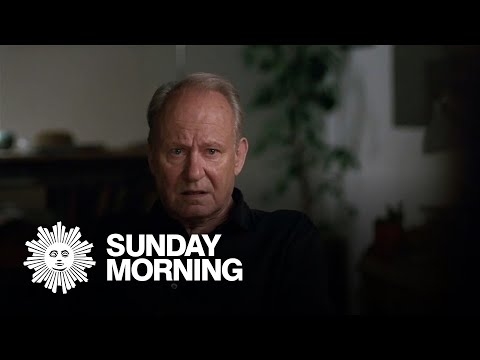
In an interview for the Criterion Collection, Trier talked about time as an element of storytelling: “I didn’t grow up on a farm where seasons come and go and everything is circular. I very much felt that time was an arrow, you know, and I think that movies are great at portraying that, because, like memory, you film your friends on Super 8 or my skate movies on Hi8mm and all these formats, and I look back at them and they are – some of them are dead now, some of them are older, you know, the city changed, they changed. Cinema can deal with that. It’s very specific. So, I think it’s coming back to those existential themes of time and memory that I care about the most in my life really.”
Skarsgård, who won a Golden Globe for his performance, has many moments in the film where the camera simply observes him – saying little with dialogue, but a lot with his expression. “I love that stuff,” he told “Sunday Morning.” “Movies, real movies are not literature. Cinema to me is what happens in the image. Not what is said; what is not said.”
Reinsve told “CBS Saturday Morning” that playing all the different emotional layers of her characters was like a puzzle: “It’s always fun. Even though I’m playing grief or something, I try to find as many layers.”
“Sinners”
Michael B. Jordan first worked with Ryan Coogler in the 2013 drama “Fruitvale Station,” the tragic story of the victim of a police shooting. They reteamed for 2015’s “Creed,” a spin-off of the “Rocky” franchise, and the first two “Black Panther” films. In “Sinners,” Jordan plays twin brothers, Stack and Smoke, who open a backwoods juke joint in the segregated South. When Coogler shared the idea of him playing two different characters, Jordan told “Sunday Morning” his reaction was, “‘I’m a do what?’ I think it was a little bit of anxiety, I think. A little bit nerves. But then, equal amount of excitement.”
But there was more than just dual roles to explore; Coogler’s film is a blend of genres, mixing a drama set in the Jim Crow South with horror, where accomplished musicians belting out Delta blues become targets for vampires (who themselves are mighty talented with banjo picking).
“I describe the film as genre-fluid,” Coogler told “CBS Mornings.” “It’s a lot of genres at different times, and hopefully they sync up.”

Oscar-nominated cinematographer Autumn Durald Arkapaw told “CBS Mornings” she didn’t want audiences to necessarily notice her work: “You don’t want to feel the hand of the creator. You don’t want to feel the technical. You want to make it so good that it feels like a dream.” She is only the fourth woman ever nominated in this category.
Jordan, meanwhile, said that shooting the film’s most intense scenes – this is a bloody vampire film, after all – was surprisingly fun. “We were cracking up laughing, trying to keep a straight face sometimes, because these circumstances are so ridiculous,” he said.
Joran won the Screen Actors Guild’s Actor Award for his performance, as did the film’s ensemble cast.
“Train Dreams”
Based on a 2011 novella by Denis Johnson, “Train Dreams” is a meditative story of a life lived mostly in isolation, in which Robert, a logger in Idaho in the early 20th century (played by Joel Edgerton), suffers trauma and grief while working on the construction of railroads in the Pacific Northwest. He is an instrument of progress, even though he increasingly feels himself isolated and anachronistic. It is a character study of one whose connections to the Earth, to other people, and to himself are tested and slowly built, erased, and rebuilt.
Director Clint Bentley (who, with co-writer Greg Kwedar, is nominated for best adapted screenplay) has cited such directors as Terrence Malick, Andrei Tarkovsky and Francois Truffaut as influences on his work — not just in the impressionistic views of nature and of man’s place within it, but also in the presence of spirits, the haunting memories of the past, and the immutable nature of time. The film is both insular (narration is spoken by actor Will Patton) and expansive (in its rapturous, Oscar-nominated cinematography by Adolpho Veloso).
The images of the film are firmly planted in the beauty of the Northwest, and some sequences (as when Robert and his wife Gladys plot out land for their cabin with stones) depict a hope for the future. But there are also surreal, haunting touches – a pair of boots nailed to a tree; a dead man’s return; a hellish horizon in flames – that show the past’s grip on the imagination. Love and ache reside side-by-side in Robert’s soul.

In a Q&A at the American Film Institute, director Clint Bentley said he’d read Johnson’s novella when it first came out, but never imagined it as a film. And then the COVID-19 pandemic happened. Producers Marissa McMahon, Ashley Schlaifer and Will Janowitz, who held the rights to the book, watched Bentley’s “Jockey” at home (Sundance had transitioned to a virtual festival when the pandemic struck). They called and asked him to consider making “Train Dreams.”
“When I reread it, not only did I fall in love with this story of Robert Grainier and what this guy was going through, but I felt – even though it’s set in the past and it’s in this very specific time at the turn of the century and a logger, it’s about a logger in the Pacific Northwest – I felt like a lot was resonating in my life, and a lot felt very pertinent to today and what we’re going through. And I felt like, well, I’m sure other people will feel that way as well.”
In a world moving at an increasingly fast pace, the lead character’s existential question is, how do I fit in? “Or do you not fit in, and just retreat to your cabin out in the woods?” Bentley said.
In an interview for Variety’s Awards Circuit Podcast, Bentley said that the loss of both of his parents in quick succession as he began preparing the film affected his understanding of art and memory: “Right after they passed, I would have these dreams that didn’t feel like dreams at times,” he said. “They felt like visitations. I believe I dreamed them, but the things that happened in those dreams — they’ve become as distinct as memories from when my parents were alive.”
That effect is present in his film, as Robert engages with visions or imaginary visitations with those who have crossed his path. “I’d lost quite a few people in my life around that time and was still kind of reeling from it,” Bentley said. “At the same time, my wife and I were welcoming our first child. All these conflicting emotions — grief and joy, birth and death — just collided. The story felt so emotionally relevant to what I was going through.
“Our subconscious holds on to things — dreams, memories, people — long after we think we’ve let them go. ‘Train Dreams’ is my way of honoring that,” he said.
See more:
https://www.cbsnews.com/news/best-picture-oscar-nominees-2026-academy-awards/