


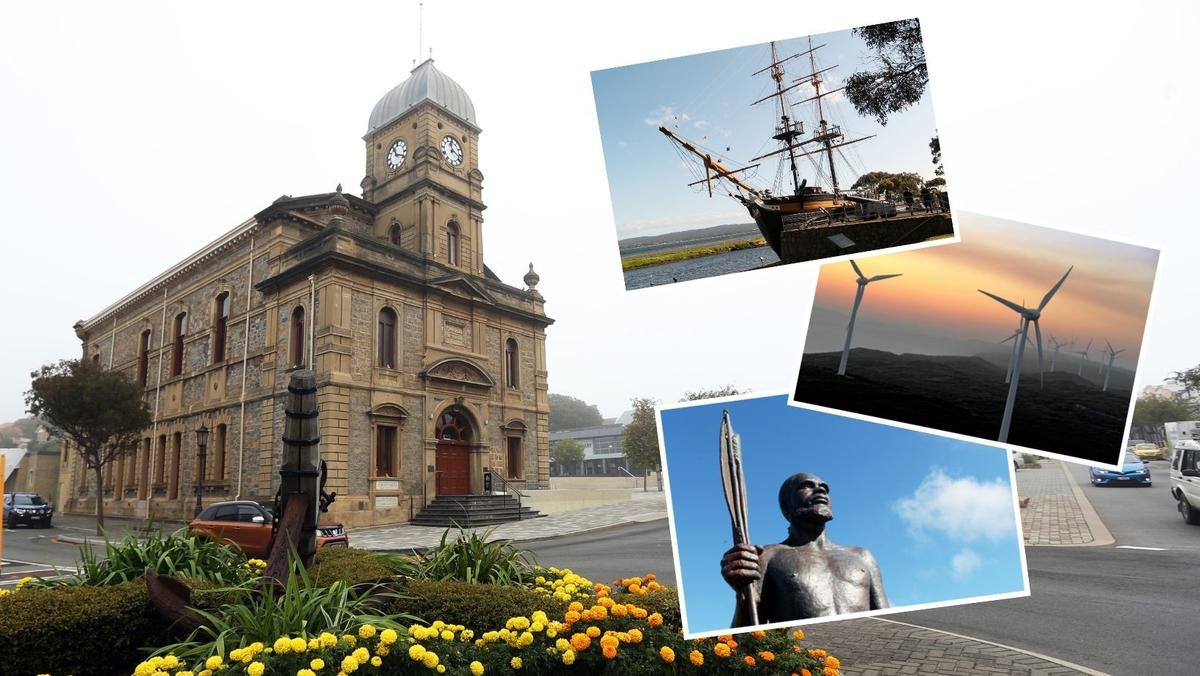
WA’s oldest settlement is turning 200 this year with the promise of a celebration the State has never seen before.
Albany, known for its granite outcrops, crystalline waters and welcoming flocks of retirees, is, on paper, officially two centuries old in 2026, three years before Perth.
The city has kicked off a year-long celebration of the milestone, which marked the first time Europeans settled in WA.
With the milestone comes a raft of events and attractions which are tipped to bring people from around the country to the city of about 40,000 people.
The dual layers of European settlement and Indigenous custodianship form the bedrock of the City of Albany’s bicentenary celebrations.
They are set to celebrate both the milestone of European settlement while also emphasising Indigenous custodianship of its native Menang Noongar people.

At the heart of the year-long festivities, branded Albany 2026, are several flagship events, each designed to amplify aspects of the city’s culture, landscape, and history.
The New Year’s Eve Kaya 2026 event kicked off the year with a blend of live performances, film, music and fireworks, while January 26 will be marked by the Binalup Festival at Middleton Beach and a Bicentenary Swim.
From March 6 to 8, the night sky will be illuminated with First Lights Kinjarling, a choreographed drone display narrated by local Menang elders to tell the creation stories of the Stirling Range, Frenchman Bay, and the Porongurups.
In the final three weekends of March, Albany will be the site of the world’s largest ever outdoor light installation, as Finnish artist Kari Kola projects an intricate network of red and green lights across 10km of the rugged slopes of the Torndirrup Peninsula in an event called Lighting the Sound.
Named for the eerie aurora australis-like reflection the lights will have on the waters of King George Sound, this record-breaking event is expected to attract about 15,000 visitors each weekend.

Tourism Council WA chief executive officer Evan Hall said the event was likely to attract people from around Australia, especially older travellers.
“Albany has always had a particularly interstate focus largely due to its history as being the point of departure for the ANZAC heading over for World War I after the last sighting of Australia so it’s a very poignant place, hence the ANZAC Centre,” he said.
“It’s always been on a lot of people’s to-do lists particularly those who might be the grey nomads travelling around Australia and so they might want to be heading to Albany for that experience and given it’s a bicentennial gives a good reason to turn up this year.
“I certainly think we will see a fair few interstate grey nomads turning up to participate in the bicentennial.”
The year is also an opportunity to reimagine existing events with annual celebrations such as New Year’s Eve, Australia Day and the yearly Taste Great Southern food and drink festival all given a special twist in honour of the bicentenary.
The Museum of the Great Southern will continue to host the Albany Then & Now exhibition, with visually-rich panoramas depicting how the city’s iconic landscapes and streetscapes have morphed over time, and the Kalguyal: Connections to Menang Country exhibition on early fishing techniques.
An interactive, location-based app will launch in June, with hundreds of Albany locals lending their voices and stories to help guide visitors around important locations in the city.
The app, called Albany Is, will allow users to activate tales such as the history of Albany’s Town Jetty, told by the fishermen who use it, when nearby the site itself.

Tourism and Great Southern Minister Reece Whitby said the celebrations was an “historical occasion” for the State.
“This special milestone will put the Great Southern firmly in the national spotlight as tens of thousands of visitors explore and connect with our incredible region,” he said.
“It’s a perfect opportunity to rediscover everything that makes Albany and the Great Southern region a special place to live and visit, through world-class events, experiences and stories from the past.
“The energy around the bicentenary is quickly growing, with this milestone set to deliver a massive boost for local businesses and local jobs, tourism operators and communities across the region, delivering economic benefits for years to come.”
Theatre also plays a key role in the 2026 calendar.
Our Place, Rain or Shine, commissioned especially for the Albany 2026 festivities, will be performed by THEATRE 180 at the Albany Entertainment Centre on September 25 and 26, and feature Albany’s identity as the main character.
Meanwhile, a collaboration between the WA Opera, Breaksea and Menang elders will result in the production The Song Catchers, featuring Tipu, a curious fox, and Marri, an echidna, as they journey through a world where songs have been silenced in a performance described by organisers as a “groundbreaking fusion of music and storytelling”.
Festivities will close in November with Carrying the Fire, a community-led event wherein hundreds of Albany locals and tourists will band together and, carrying and lamp and moving as one, walk along a yet-to-be-determined coastal trail in a poignant display of unity.
Dotted amongst these major events are moments reflecting the more familiar chapters of the city’s identity, including Statewide sporting events, legacy art pieces, workshops detailing Albany’s whaling and Anzac history, and community festivals.
Albany MP Scott Leary said Albany’s beauty will be on offer for all to see during the milestone year.

“The exposure on the region will showcase what we have for visitors, to get them coming back,” he said.
“This is a good chance to showcase Albany and the beauty of what the City of Albany has structured is there is an even spread of events.
“Lighting of The Sound will be exceptional early on and that is the catalyst for bringing people back again.
“This bicentenary is about showcasing what we have, it is our world class coastline, facilities and business that is what will take us forward.”
Major Edmund Lockyer christened the settlement Frederick’s Town in 1827, weeks after his 43-strong crew dropped anchor off its shores on Christmas Day 1826.
The area was mostly known as King George Sound until it was given its current moniker in 1831, when the small penal outpost conglomerated into the newly formed Swan River Settlement.

Long before any whispers of reference to its now-namesake Prince Frederick Duke of York and Albany, the stretch of land at the State’s southern tip had another name.
The true history of the rugged coastal town that is now a city, however, dates much further back than the details of European settlement.
For more than 25,000 years, Albany was known to its native Menang Noongar people as Kinjarling, a name aptly meaning “place of rain”.
Already punching above its weight in terms of tourism, Albany’s population is expected to swell dramatically, with the city set to accommodate almost a million tourists over the course of the year as visitors swarm from across the State and country.
Local hospitality, tourism and retail operators have been urged to prepare for the influx and tap into the opportunity presented by the extra foot traffic, with the Albany Chamber of Commerce and Industry noting that Albany 2026 will put the city “on the map like never before”.
Mr Hall said the events were likely to give Albany constant visitation through the year, making it less reliant on school holidays.
“The value for small businesses, in particularly tourism businesses, is when tourists are turning up, are visitors turning up outside those peak periods?” he said.
“That enables you to keep your business going, keep your staff and keep the shifts up for the staff and not be so reliant on an intensely business Christmas or Easter school holidays.
“Attracting people throughout the year so they’re not so reliant on those peak periods is what will be real value to the tourism businesses and all the small businesses in town … and the surrounding towns as well.”

Colonised three years earlier than Perth, and sworn to be perpetually independent of its more populous younger sibling city, Albany has since shed its skin as a lonely penal outpost to blossom into a thriving port city famous for its storied history, lively tourism scene, talented sporting pool and rich cultural life.
Optimism for the city’s prospects as a “town of magnitude” has been present since its early days.
A June 1888 article in the Australian Advertiser — an early ancestor of the Albany Advertiser — records then-mayor Williams Grills Knight speaking at the official opening of the Albany Town Hall, nine months ahead of the scheduled opening of the Perth to Albany railway line.
“The outside world are beginning to see a merit in Albany,” the article quotes the mayor as saying.
This sentiment, according to the journalist, was “shared by every man in the room”.
“Albany is on the move,” the mayor declared.
‘We mistake greatly if in a few years she does not stand forth as the most prosperous town in WA.
“Now that we have this faith in ourselves; now that the outside world are beginning to believe in us — let us be prepared to move with the age we live in.”
More than 130 years on from this fierce speech, WA’s oldest city continues to honour both its ancient and recent past while embracing its future, welcoming its milestone anniversary with open arms from its position at the State’s most southern tip.
https://thewest.com.au/news/albany-advertiser/albany-bicentenary-city-kicks-off-year-long-celebration-to-mark-200-years-of-was-first-settlement–c-21056944
