










Author
Ahmed Balaha
Author


Share


Fact Checked by
CryptoNews Editorial Team
Author

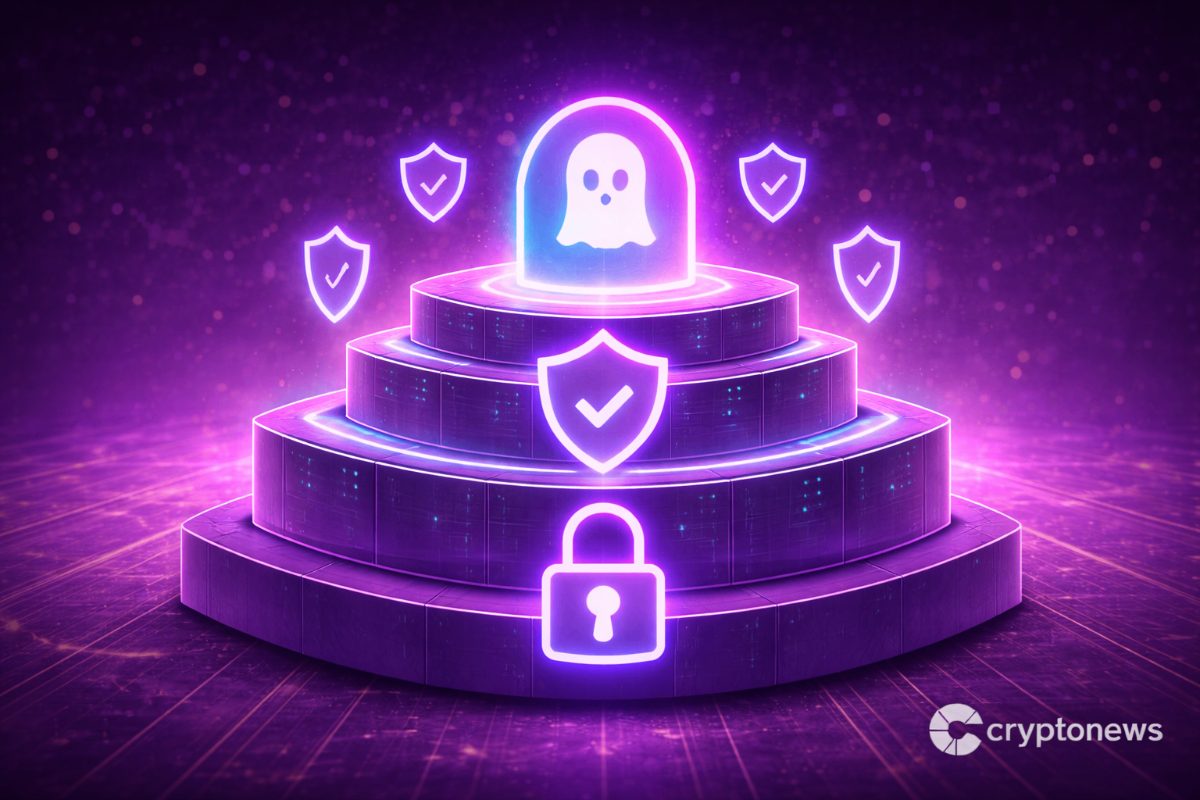
Aave Labs is going all in on security ahead of its V4 launch.
The team has spent about $1.5 million on an extensive audit program, making it one of the most intensive security reviews in DeFi so far.
The review process lasted roughly 345 days and involved several security firms, as well as a large public audit contest.
The era of “move fast and break things” is fading. In today’s market, resilience and security are becoming the real competitive edge.
- Audit Scale: The $1.5 million program covered 345 days of cumulative review across four major firms and 900+ independent researchers.
- V4 Architecture: Aave has shifted to a “security-first” model where formal verification runs parallel to code writing, not after.
- TVL Implication: The zero-critical-finding result from the public contest signals institutional-grade readiness for V4 liquidity scaling.
Aave Labs $1.5M Audit Program: What the Investment Signals About V4 Risk
The V4 audit went far beyond a normal protocol upgrade.
Backed by funding from the Aave DAO, the team brought in major security firms like ChainSecurity, Trail of Bits, Blackthorn, and Certora. Instead of one audit pass, the code was tested from multiple angles.
Altogether, the protocol underwent nearly a full year of testing by internal teams, external auditors, and independent researchers. One of the biggest phases was a six-week public security contest on Sherlock between December 2025 and January 2026.
More than 900 researchers joined the contest and submitted over 950 findings. Despite that massive review, no critical or high-severity vulnerabilities were found.
That clean result strengthens confidence in Aave’s hub-and-spoke architecture, which was designed to reduce the protocol’s overall attack surface.
Aave V4’s Layered Security Model: How It Works and Why It’s Different
Aave Labs is moving away from the old “build first, audit later” approach. With V4, security teams are working alongside developers from day one.
The framework revolves around five core ideas: formal verification to mathematically test the code, layered reviews combining manual audits and automated testing, continuous checks on every code update, ongoing bug bounties, and AI tools scanning for unusual attack paths.
The AI element stands out. Automated systems can catch edge cases that human auditors might miss. Verification firm Certora helped define strict rules, called invariants, that the code must always follow before it even reaches manual review.
Early researchers who examined the code described it as unusually clean for a pre-audit project. The architecture also reduces the attack surface, helping eliminate common DeFi exploit points before launch.
Security is becoming a major competitive advantage in DeFi. Institutional capital will not touch protocols that carry unknown smart contract risk. Spending $1.5 million upfront on security is a small price to pay for the value locked in the protocol, but it sends a strong trust signal.
The next key test will come after launch. If Aave V4 runs its first months without major issues, cautious capital that has stayed away from DeFi after recent hacks could start flowing back in.
https://cryptonews.com/news/aave-labs-security-plan-v4-audit/


