


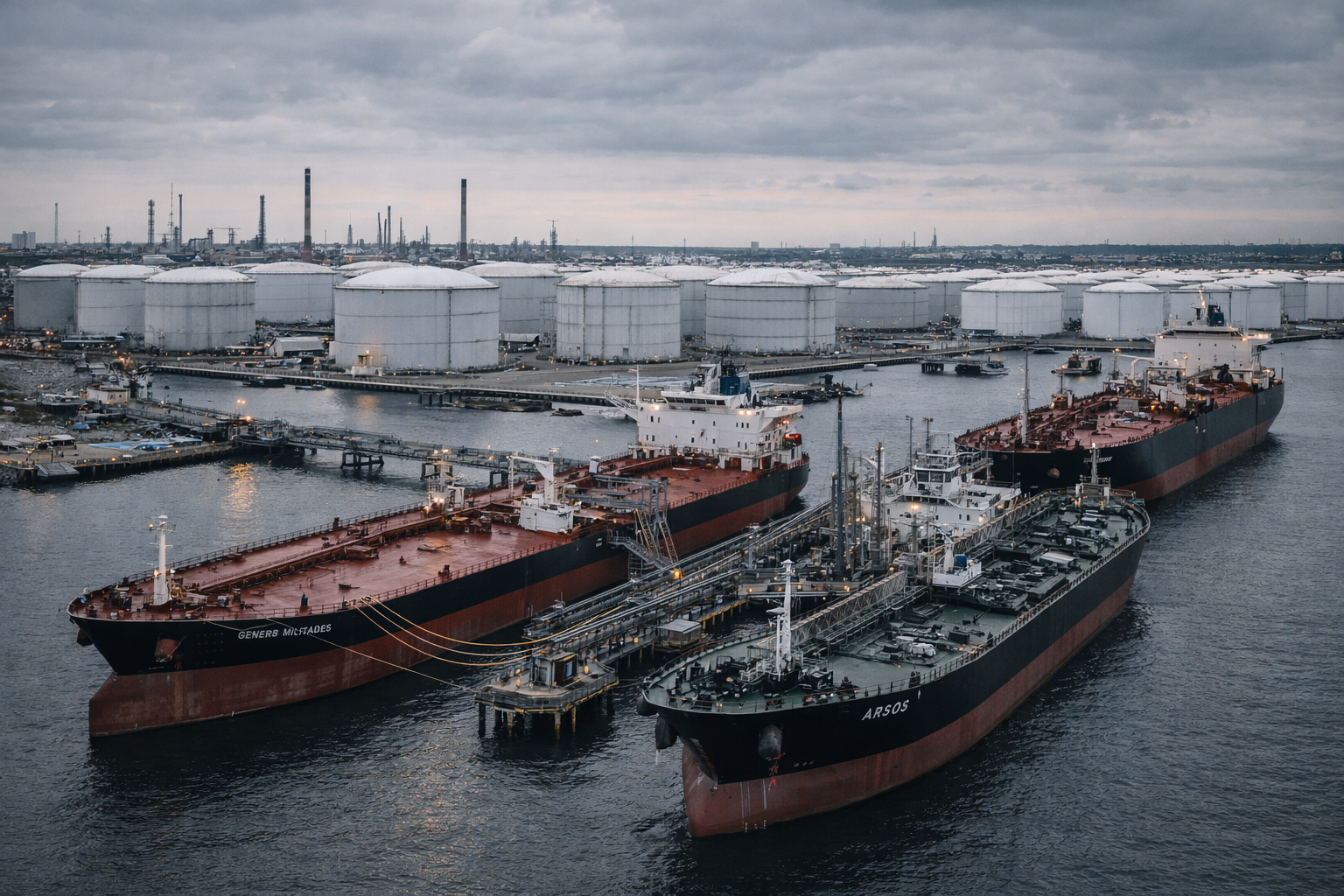
Shipping data on Monday indicated that at least seven vessels, primarily dry bulk carriers, traversed the Strait of Hormuz over the last 24 hours.
This level of activity is consistent with the subdued pace observed recently, occurring as talks between Iran and the United States remain stalled.
According to ship tracking data from Kpler and a separate satellite analysis by data analytics specialists SynMax, the vessels comprised ships departing from Iraqi ports and a single dry bulk vessel from an Iranian port, Reuters said in a report.
Reduced shipping traffic and blockade evasion in the Gulf
Shipping traffic through the vital waterway at the Gulf’s entrance is significantly lower than the pre-war average of 140 daily passages, coinciding with a tense ceasefire between Washington and Tehran that began on February 28.
The US Central Command reported on April 25 that it has redirected 37 vessels since imposing a blockade on Iran on April 13.
Despite the blockade, satellite analysis from TankerTrackers.com indicated that several Iranian oil shipments have passed through the strait.
In recent days, six Iranian tankers, carrying approximately 10.5 million barrels of oil, sailed back to Iranian ports and then successfully navigated through the Strait of Hormuz.
Additionally, a separate analysis on April 24 showed that about four million barrels of Iranian oil onboard tankers managed to pass the US blockade.
Freight behaviour
Tanker freight prices reacted sharply but differently to the conflict in the Middle East.
Both crude and clean tanker rates rose due to Middle East Gulf disruption risks, particularly around the Strait of Hormuz.
However, their trajectories are now splitting: dirty freight is becoming a selective, disruption-driven rally, while clean freight is structurally supported by tighter vessel supply and trade flow shifts, Vortexa said in its latest report.
Crude tanker freight, particularly for VLCCs (very large crude carriers) moving Middle East Gulf crude, reacted aggressively to heightened geopolitical risk.
Owners demanded a higher risk premium, and charterers quickly secured Gulf cargoes.
This sharp repricing was due to the direct threat perceived against Hormuz transits.
Suezmax and Aframax
The robust demand initially seen for VLCCs quickly extended to the Suezmax and Aframax sectors, according to Vortexa.
Crude buyers and traders, seeking replacement cargoes, increasingly focused on the Atlantic basin, thereby boosting demand for smaller crude tankers.
Simultaneously, high time spreads incentivised the use of prompt loaders.
The scarcity of available VLCCs also prompted some charterers to either divide large shipments (“split stems”) or book smaller parcels using Suezmaxes and Aframaxes, Vortexa said.
Consequently, the disruption at the high end of the crude tanker market had a cascading effect, reducing vessel availability and driving dirty freight rates upward across all size classes.
The support for Suezmax and Aframax rates proved temporary.
These rates have already retreated to levels seen before the conflict, revealing the limited scope of the initial price surge.
“Once the first wave of urgent fixing passed, demand for smaller crude tankers softened,” Wanying Zhang, freight analyst at Vortexa, said in the report.

Reopening Hormuz may not fix freight rates
“For crude tankers, particularly VLCCs, a recovery in Strait of Hormuz transits would bring cargoes back into a market where the tonnage is available, but not necessarily easy to secure.”
Despite a total non-sanctioned VLCC ballast that is approximately 26% higher than the level seen before the conflict, indicating sufficient vessel availability to handle the reintroduction of Middle East Gulf crude oil, a significant portion of this available tonnage is controlled by a small, concentrated group of owners, data showed.
This gives these owners considerable leverage over the rate at which vessels are released back into the market.
“If cargo availability improves, that concentration can help owners resist downward pressure on rates, keeping freight supported even without an outright shortage of ships.”
The clean tanker market shows greater resilience, primarily due to a significantly constrained supply buffer.
The overall non-sanctioned Long Range (LR) ballast is only about 11% higher than the average before the conflict, which is a much smaller surplus compared to the substantial buffer seen in VLCCs, according to Vortex data.
Crucially, the amount of LR ballast in the Pacific region remains approximately 18% below pre-conflict levels.
This shortfall suggests that the Pacific region lacks readily available tonnage, particularly if product flows from the Gulf were to increase.
This means that even if a reopening of Hormuz removes part of the risk premium, clean freight is unlikely to correct sharply.
“With Pacific LR availability still tight and Atlantic employment continuing to absorb tonnage, the clean market would remain supported,” Zhang said.
https://invezz.com/news/2026/04/27/hormuz-shipping-muted-amid-us-iran-tensions-freight-rates-split/
