


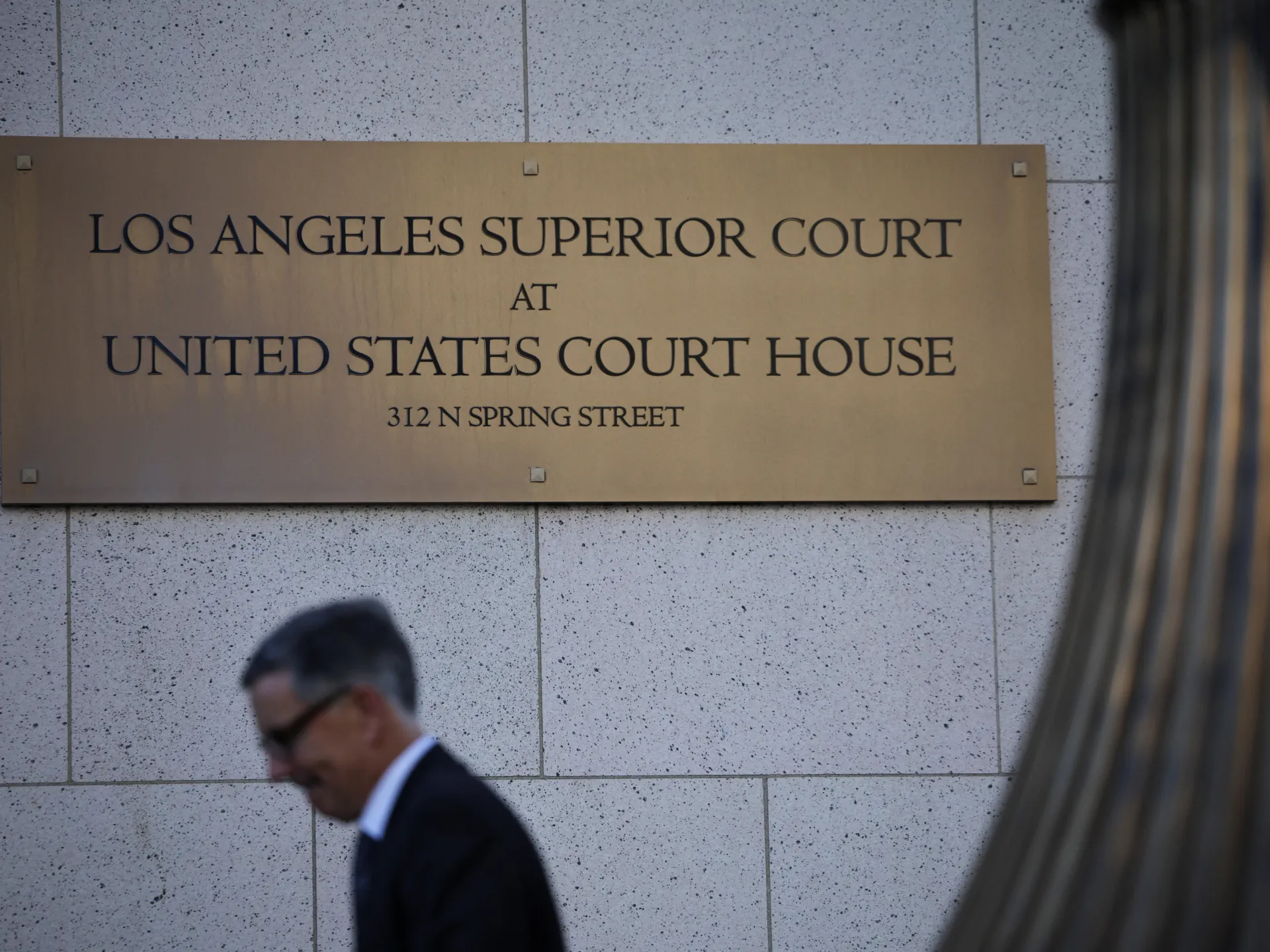
A California jury found Alphabet’s Google and Meta liable for $3m in damages in a landmark social media addiction lawsuit that accused the companies of being legally responsible for the addictive design of their platforms.
The decision was handed down by a Los Angeles-based jury on Wednesday after more than 40 hours of deliberation across nine days, and more than a month after jurors heard opening statements in the trial.
Recommended Stories
list of 4 itemsend of list
Among those who testified in the case were Meta CEO Mark Zuckerberg and Instagram head Adam Mosseri, although YouTube chief executive Neal Mohan was not called to testify.
The plaintiff in the case, referred to as KGM or Kaley, was awarded $3m in damages. The 20-year-old said she became addicted to social media at a young age, which exacerbated her mental health issues. She began using YouTube at age six and Meta-owned Instagram at age nine.
Kaley’s legal team alleged that the social media giants used designed features intended to hook young users, including notifications and autoplay features.
“Today’s verdict is a historic moment — for Kaley and for the thousands of children and families who have been waiting for this day. She showed extraordinary courage in bringing this case and telling her story in open court. A jury of Kaley’s peers heard the evidence, heard what Meta and YouTube knew and when they knew it, and held them accountable for their conduct. Today’s verdict belongs to Kaley,” lawyers for the plaintiff said in a statement shared with Al Jazeera.
Jurors were instructed not to consider the content of the posts and videos Kaley saw on the platforms. That is because tech companies are shielded from legal responsibility for user-posted content under Section 230 of the 1996 Communications Decency Act.
Meta consistently argued that Kaley had struggled with her mental health separate from her social media use, often pointing to her turbulent home life. Meta also said, “not one of her therapists identified social media as the cause” of her mental health issues in a statement following closing arguments. But the plaintiffs did not have to prove that social media caused Kaley’s struggles — only that it was a “substantial factor” in causing her harm.
YouTube focused less on Kaley’s medical records and mental health history and more on her use of the platform itself. The company argued that YouTube is not a form of social media, but rather a video platform, akin to television, and pointed to her declining use as she got older.
According to company data, she spent about one minute per day on average watching YouTube Shorts since its inception. YouTube Shorts, which launched in 2020, is the platform’s section for short-form, vertical videos that include the “infinite scroll” feature that the plaintiffs argued was addictive.
“We disagree with the verdict and plan to appeal. This case misunderstands YouTube, which is a responsibly built streaming platform, not a social media site,” Jose Castaneda, a spokesperson for Google, told Al Jazeera.
Meta did not respond to Al Jazeera’s request for comment.
Snap and TikTok were previously named in the suit but settled with the plaintiff for undisclosed terms before the trial began.
Shifting momentum
The verdict is the latest in a wave of lawsuits targeting social media companies. There is a looming federal social media addiction case slated to begin in June in Oakland, California.
On Tuesday in New Mexico, a jury found that Meta violated state law by misleading users about the safety of Facebook, Instagram, and WhatsApp, and by enabling child sexual exploitation on those platforms.
This case has been closely watched by legal experts, who say the verdict will shape future litigation.
“The fact the jury found Meta and Google liable represents that these cases have real exposure to the social media giants, and are going to frame how future litigation will proceed. Although this case will certainly be appealed, I would not be surprised if Meta and Google are already making changes within their platform to reflect the real exposure, and hopefully, the states will start to enact laws regulating social media in a manner congruent with the ruling,” entertainment lawyer Tre Lovell told Al Jazeera.
Professor Eric Goldman, associate dean for research at the Santa Clara University School of Law, echoed Lovell’s assessment.
“The Los Angeles jury verdict is the first of three bellwether trials in Los Angeles, with more bellwether trials to follow in summer, in the federal case. As such, today’s verdict is just one datapoint about liability and damages. The other trials could reach divergent outcomes, so this jury verdict isn’t the final word on any matter.”
Despite the ruling, Meta’s stock has not taken a hit, as it came the same day CEO Mark Zuckerberg was appointed to a new White House advisory council. The stock is up 0.7 percent. Alphabet’s stock, however, is trending downward in midday trading on the heels of the verdict, down 1 percent.
https://www.aljazeera.com/economy/2026/3/25/us-jury-finds-meta-alphabet-liable-in-landmark-social-media-addiction-case?traffic_source=rss
